Tuskegee Woman's Club
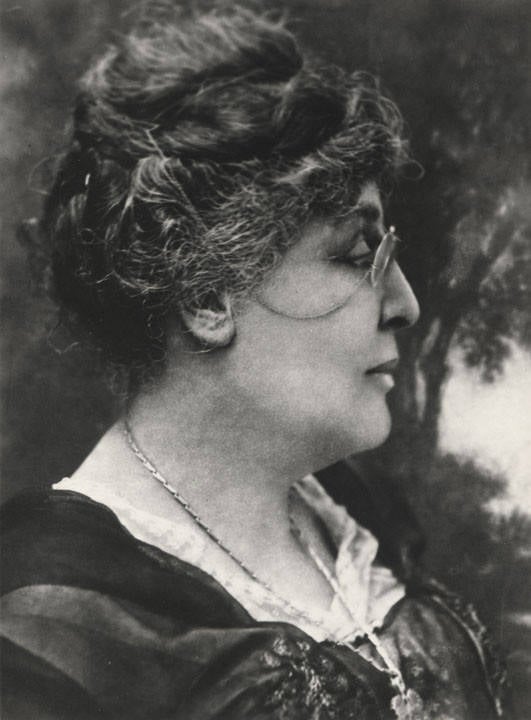
The Tuskegee Woman's Club (TWC) was an organization of mostly middle-class Black women in Tuskegee, Macon County, who joined together to advocate for prison reform, woman suffrage, improved sanitation and health in Black homes, and temperance in the Black community. Formed in 1895, the club was led by Margaret Murray Washington, third wife of Booker T. Washington and Lady Principal of Tuskegee Institute (present-day Tuskegee University). One of the most notable of such clubs, it helped form the basis of the Alabama Federation of Colored Women's Clubs and is considered an exemplar of the larger effort. Black women’s clubs like the one in Tuskegee emerged in parallel with the rise of the all-White Alabama Federation of Women's Clubs, but racial segregation prevented them from interacting.
During the Progressive Era of the late nineteenth century, Black middle-class women began to use their limited resources to uplift their communities from within. They advocated for prison reform, built schools on former plantations, and created platforms for Black political voices. Club work provided women with civic engagement opportunities that previously hadn’t been available to them.
Margaret Washington turned to club work with the goal of uplifting the local Black community from within. As her husband worked to educate and improve the economic and social conditions of largely male Black citizens, Margaret Washington realized that the educated upper middle class Black women of Tuskegee could do the same for local Black women and girls. The Washingtons believed that to survive and succeed in the Jim Crow South, the Black community should gain practical skills and adhere to codes of respectability in their dress, speech, and morality.
In 1893, she made her first public attempt to organize Tuskegee women by creating Mothers' Meetings, which evolved into a network of Black working-class and middle-class women. The meetings attempted to instill women with the skills necessary to improve their families’ standard of living. Margaret was inspired by the first Tuskegee Negro Farmers' Conference, held in February 1892, in which Booker T. Washington invited farmers and their families to experience farm-related education and discuss their unique place within the southern economy. Although Black women also attended the first Tuskegee Negro Conference, they were barred from participation as speakers because of the gender politics of the time.
Margaret Washington and the Tuskegee Mothers' Meetings caught the attention of Black women across the state, many of whom traveled great distances to attend, often with their small children. The meetings offered educational opportunities for both women and children, as well as opportunities to discuss the key issues for Black women of the day. Some 60 to 100 women regularly attended the Tuskegee Mothers’ Meetings, bringing with them some 50 children under the age of 12. Washington created a small library for the children and offered them simple lessons. The small libraries did more than provide the youth with necessary reading materials; they also served as a refuge from discrimination and as a safe harbor for their development as citizens. By 1906, Mother’s Meetings were established in numerous communities in Alabama; these programs would engage more than 600 women and become a model that was replicated in other states.

As Washington sought to expand her realm of influence, she soon formed an alliance of women to share in the responsibility of community building. In 1895, she drafted the blueprint for the Tuskegee Woman’s Club, the first official Black women's club in Tuskegee. The TWC was formally established on March 2, 1895, when nearly a dozen Black educators and wives of Tuskegee faculty packed into the small room of Dorothy Hall, located on the campus of Tuskegee Institute. After hours of deliberation, the women created the organization to promote racial uplift by cultivating political, social, and intellectual growth, as well as adherence to Washington’s code of respectability. The local chapter of Mothers' Meetings then became a supporting branch of the TWC.
The TWC created a network of educated Black women with similar interests. Among the organization’s founding members was Adella Hunt Logan, activist and wife of Tuskegee Institute treasurer, Warren Logan. Other members included wives of prominent men at Tuskegee Institute and throughout the community. The TWC began as an exclusive organization and during its initial years, members could only join through the recommendation of Margaret Washington and other founding members. This selection process became a common practice for most nineteenth-century Black women's clubs.
The TWC's early constitution promoted women’s intellectual growth and the cultivation of mainstream middle-class values of female propriety. In addition, members instructed working-class women on the importance of respectability and the interconnectedness of moral character and citizenship rights. Their community activism extended beyond conventional female spheres to spaces that men and women shared, including political organizations, mutual aid societies, and schools.
By 1905, the TWC consisted of ten departments addressing such topics as religious instruction, education, prison reform, self-improvement, suffrage, temperance, and assistance for the elderly; each department had a chairwoman. The suffrage division, led by Adella Hunt Logan, was particularly notable; the TWC understood the importance of the ballot, and Hunt's leadership helped to increase interest in the woman suffrage movement in Alabama. The suffrage division of the TWC continued its fight for the franchise long into the twentieth century and was responsible for the political education of hundreds of Black southerners. Widespread poverty and disease among Black citizens in Alabama made it essential for the TWC to prioritize education and outreach on these issues as well.
The TWC also helped to expand the influence of Tuskegee Institute leadership, known as the Tuskegee Machine, through local partnerships. With the collaboration of local Tuskegee women such as Cornelia Bowen, Bess Bolden Walcott, and Josephine Washington, the organization created in 1911 the Mt. Meigs Reformatory for Boys, which was eventually taken over by the Alabama Department of Youth Services in the early 1970s. These women also placed Bibles in prisons, championed health education throughout the South, and established an all-Black Red Cross chapter in Tuskegee, among other initiatives. Some of these initiatives can still be seen today.
Additional Resources
- Harris, Sheena. Margaret Murray Washington: The Life and Times of a Career Clubwoman. Knoxville: The University Press of Tennessee, 2021.
- Harris, Sheena. “A Woman’s Work: The Story of Cornelia Bowen and Mt. Meigs, Alabama.” The Griot: The Journal of African American Studies 39, no. 4 (Winter 2020): 27–49.
- Neverdon-Morton, Cynthia. Afro-American Women of the South and the Advancement of the Race, 1895–1925. Knoxville: University of Tennessee Press, 1989.
- Shaw, Stephanie J. What a Woman Ought to Be and to Do: Black Professional Women Workers during the Jim Crow Era. Chicago: University of Chicago Press, 1996.