Margaret Murray Washington
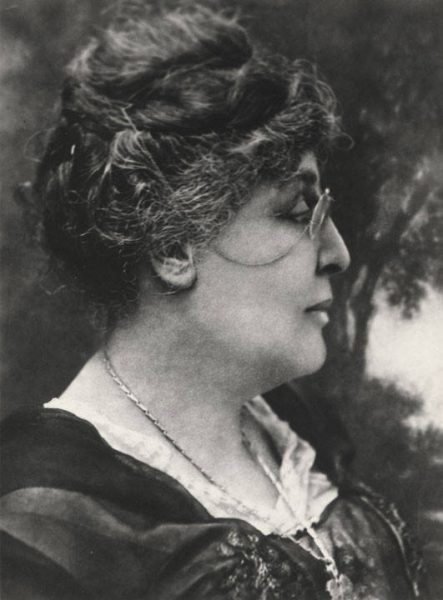
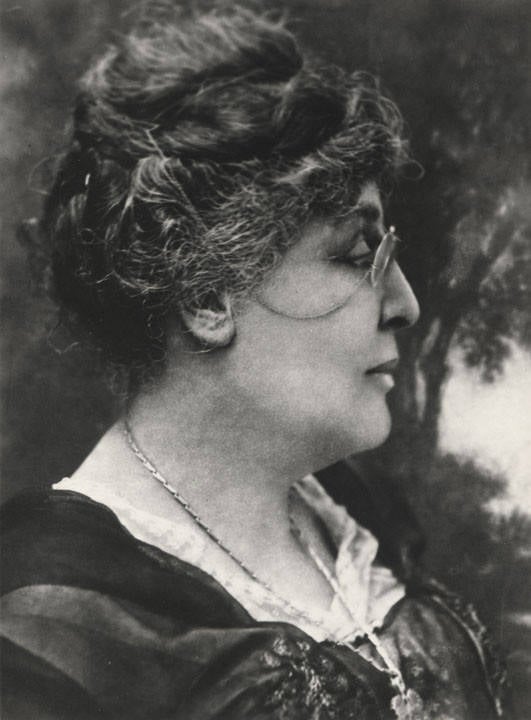
Margaret Murray Washington (1861-1925) was an important Progressive Era reformer. The third wife of Booker T. Washington, founder and first president of what is now Tuskegee University, she had her own notable career at the school, particularly in influencing the curriculum for women. Through her position, her marriage, and her work with various organizations, she was able to promote racial uplift in Tuskegee, Macon County, the state of Alabama, and the nation. She helped found and lead the Tuskegee Woman's Club, which performed important educational and philanthropic work in east-central Alabama, served as the first president of the National Federation of Afro-American Women, which later merged to form the National Association of Colored Women (NACW), and she later established the Alabama Federation of Colored Women’s Clubs. Washington was inducted into the Alabama Women's Hall of Fame in 1972 as the first Black inductee.
Margaret James Murray was born on March 9, 1861, in Macon, Mississippi, to Lucy and James Murray. She had nine siblings and was called “Maggie” by those closest to her. Her mother was enslaved and her Irish father worked the railroads. Despite her mixed parentage, Washington was born enslaved, and her first years were marked by extreme violence and poverty.
The Civil War ended when Margaret was four years old, but Reconstruction brought no relief from the burden of poverty in Mississippi. By 1868, the Murray family was in dire trouble. When Washington's father died, her mother was unable to care for all of her children on her salary as a washerwoman. A Quaker brother and sister named Saunders informally adopted Margaret at the age of seven. They encouraged her to educate herself with the goal of becoming a teacher, and she became an avid reader.
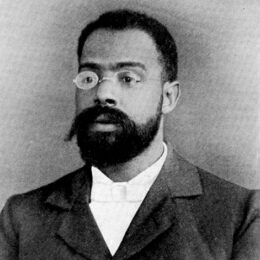
In 1881, Margaret Murray enrolled as a part-time student in Fisk University's preparatory school. She worked in the homes of faculty and staff, forming important relationships while also offsetting the cost of tuition. During her eight years at Fisk, she befriended fellow classmate William Edward Burghardt "W. E. B." Du Bois, and the two would work together as investigative journalists and editors for the school's newspaper, The Fisk Herald. This experience helped to frame her ideas about racial politics and education. Working with the school paper also thrust her into the community as she visited and reported on the progress of local Black schools. Fisk served as a crucial learning center for her vision of her role in society and influenced the campaigns she endorsed throughout her career.

Margaret met Tuskegee Institute’s founding-principal Booker T. Washington when he visited the Fisk campus as a commencement speaker. He was impressed with her work on the student newspaper and invited her to work at Tuskegee after she graduated from Fisk in 1889. A year later she was appointed Lady Principal, a position that placed her in charge of overseeing the education of women students at the school. Soon after arriving at campus, she began a relationship with the twice-widowed Booker. The two married in 1892, and she would raise his three children and later her adopted nephew and niece. She immediately joined the ranks of Tuskegee's growing Black middle class, providing her with a platform to engage in racial uplift initiatives on a national level. As an administrator at an increasingly influential Black college, she was committed to education as a pathway to full citizenship rights for African Americans. Stressing the importance of experimental learning at these educational centers, Margaret saw her work in the community as an extension of her work on campus.
As Tuskegee's Lady Principal, Washington created advanced curricular programs in math and English as well as gardening, home finance, and nutrition, in line with the Washingtons’ belief that education should focus on practical matters as well as general education. (Notably, the Washingtons’ views on education conflicted with those of Margaret’s long-time friend, W. E. B. Du Bois, who decried the view that Black education should be limited to vocational subjects.) She also focused on the promotion of women’s clubs to bolster education in the domestic arts of food preparation, horticulture, sewing, and animal husbandry such as raising chickens for egg sales.
Washington also worked to expand the institution’s influence through local partnerships, most notably in her work with the local chapter of Mothers' Meetings in Tuskegee and her creation of the Tuskegee Woman's Club (TWC) in 1895. With the collaboration of local Tuskegee women, including Cornelia Bowen, Bess Bolden Walcott, and Josephine Washington, the clubwomen established the Mt. Meigs Reformatory for Boys that was eventually taken over by the Alabama Department of Youth Services. These women also placed Bibles in prisons, championed health awareness throughout the South, and established an all-Black Red Cross chapter in Tuskegee, among other initiatives.

In recognition of her work with the TWC, Washington was elected the first president of the National Federation of Afro-American Women in 1895. A year later, this organization became the National Association of Colored Women (NACW), which advocated for a range of civil-rights issues including voting rights and integration. Throughout the course of her life, Washington would serve as the chairwoman, vice-president, and fifth president of the NACW. Her efforts within the NACW solidified her as a national leader among Black women in the reform movement. Under that umbrella, she formed the Alabama Federation of Colored Women's Clubs, which focused on prison reform, in 1898. She also helped establish The National Notes, the official publication of the NACW. As editor, she encouraged Black women to create local clubs of their own. Despite her expertise, she still faced opposition to the editing and printing of The National Notes at Tuskegee. A few unsuccessful attempts were made to relocate the Notes, but Washington managed to keep producing the organization's official publication until her death in 1925.
Washington's international influence was heightened after the 1915 death of her husband. During World War I, Black soldiers were in direct contact with cultures from around the world. Fully aware of the broadening worldview among these men, Margaret Washington believed women students were equally deserving of an education that exposed them to world cultures and wanted them to be informed in all matters of society. She promoted coursework that produced graduates who were well versed in world affairs and committed to improving Black life in the United States. Washington created the International Council of Women of the Darker Races (ICWDR) in 1922 to continue these efforts. Through the ICWDR, she established an agenda that promoted the education of Blacks the world over.
Shortly after forming the ICWDR, and after years of poor health, Margaret Murray Washington died at the family home, The Oaks, in Tuskegee on June 4, 1925, and was buried next to her husband on the Tuskegee campus.
Additional Resources
- Harris, Sheena. Margaret Murray Washington: The life and Times of a Career Clubwomen. Knoxville: The University Press of Tennessee, 2021.
- Neverdon-Morton, Cynthia. Afro-American Women of the South and the Advancement of the Race, 1895-1925. Knoxville: The University Press of Tennessee, 1989.