Nonprofit Land Trusts of Alabama

Alabama currently has a variety of nonprofit land trusts operating within the state that collectively protect and manage tens of thousands of acres. Each year, the land trusts partner with other organizations and private landowners to protect more land. Other groups not based in Alabama also manage conservation lands in the state totaling tens of thousands more acres; the largest among these groups is the Nature Conservancy.
Land trusts are nonprofit organizations that either directly manage or work with property owners to manage important habitat for the purposes of conservation, recreation, and education. Sometimes land trusts purchase property outright and manage it themselves. If property owners want to preserve important wildlife habitat on their land but don’t want to sell it, land trusts work with them to apply for a conservation easement. This is a legal arrangement between a landowner and a land trust or government agency promising that the land will be managed as a preserve while allowing landowners to retain ownership and continue traditional activities such as farming, forestry, and hunting. Landowners who place their land under conservation easements are typically entitled to federal and state tax benefits. Many of these properties also feature public trails and birding stops to enhance their value as preserves.
Land Trust of North Alabama

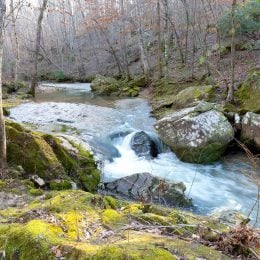
Founded in 1987 in Huntsville, Madison County, the Land Trust of North Alabama was the first land trust nonprofit in the state. Originally named the Huntsville Land Trust, it was established after local community members became alarmed at the increasing development on Monte Sano. It was renamed the Land Trust of Huntsville & North Alabama in 1998, and in 2010 adopted the name Land Trust of North Alabama to reflect the expansion of its efforts in the region. Operations are overseen by a board of directors and an executive director. To date, the organization has preserved more than 10,000 acres and has developed more than 80 miles of public trails; they are maintained by staff and volunteers. This land trust oversees 10 properties, nine of which are located around Huntsville and the tenth being Cane Creek Canyon Nature Preserve, which was established by geologist, educator, and author James Lacefield near Tuscumbia, Colbert County. As of 2026, Cane Creek Preserve comprises 700 acres of mixed forest, glades, and waterfalls. Monte Sano Nature Preserve greatly expanded the contiguous conservation lands within Monte Sano State Park, adding 1,100 acres and more than 24 miles of trails. The organization publishes its online magazine, Scenic Views, twice annually in winter and summer and offers educational programming for adults and children. Activities on the trust’s properties include guided hikes, geocaching, and a nature scavenger hunt; there is also a disc golf course at Chapman Mountain. The organization also hosts concerts at the Three Caves site at the Monte Sano Nature Preserve.
Georgia-Alabama Land Trust
The Georgia-Alabama Land Trust (GALT) was created in 2015 through the merger of the Chattowah Open Land Trust, the Georgia Land Trust, and the Alabama Land Trust. Based in Piedmont, Calhoun County, it oversees the stewardship of more than 480,000 acres in Alabama and Georgia.

The GALT directly oversees two properties: Weaver Cave Preserve in Anniston, Calhoun County, and Nancy Schuster Natoli Memorial Preserve, in Richmond Hill, Georgia. Weaver Cave Preserve is home to both Lady Cave and Weaver Cave, both of which were used by local residents for recreation, storage, and community events. Weaver Cave even hosted a restaurant in the mid-1940s. The caves are now closed to the public because they and the surrounding area are home to at least six bat species, including the endangered gray bat, Indiana bat, and tricolored bat. Weaver Cave is an important maternity roost for the gray bats, and several species use both Weaver and Lady Caves as winter hibernating roosts. The Natoli Preserve’s five acres are dedicated to conservationist Nancy Schuster Natoli, who spearheaded the preservation of land around Fort Stewart military base as a scientist and policymaker for the Department of Defense’s Readiness and Environmental Protection Integration (REPI) program, and lie within the 1,100-acre Elbow Swamp preserve. The memorial property was chosen because it highlights all of the significant ecosystems in the region: longleaf pine-dominated uplands, isolated wetlands, pine flatwoods, and riverine swamp.
In addition to the preserves, GALT manages or assists with managing other properties through conservation easements, as discussed above, and through the U.S. government’s REPI Program. Under REPI, GALT works with willing landowners to limit development near the installation to ensure that it remains consistent with military training. Through direct purchase or through conservation easements, GALT and REPI have preserved 40,000 acres around the base. GALT also manages a regional program sponsored by the U.S. Army Corps of Engineers, Savannah District, through which developers can offset projects that unavoidably harm wetlands by paying a fee, known as the In-Lieu Fee Mitigation program, with the money going to preserve other wetlands or allow for purchase of additional land for conservation. Additionally, GALT staff offer training and guidance for landowners who wish to manage their forests and other properties more sustainably.
Alabama Forest Land Trust
This organization, headquartered in Mobile, Mobile County, was founded in 1999 as the Alabama Forest Resources Center out of concern over mounting losses of Alabama’s forest and farmlands for development. The Alabama Forest Land Trust (AFLT) focuses on protecting commercial forests and farms. It adopted its current name in 2022.
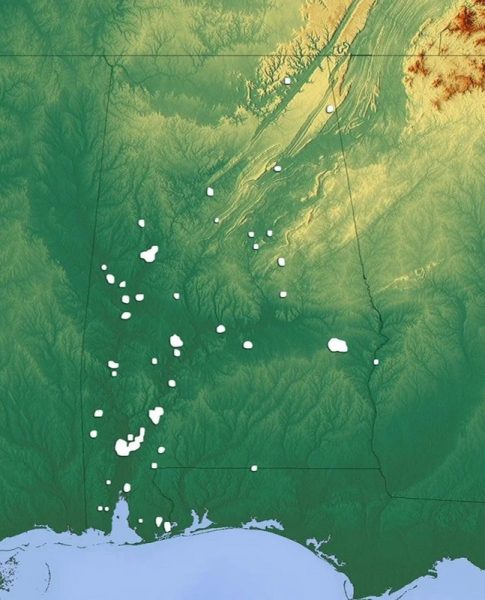
The AFLT works with landowners to preserve their land primarily through conservation easements rather than transfers of land through donations or purchases. As of 2026, it had conserved more than 90,000 acres in 24 counties and oversaw an additional 13,000 acres through the Forest Legacy Program of the Alabama Forestry Commission. The AFLT develops tailored conservation plans for participating landowners and provides annual monitoring, support, and training. The organization partners with the University of Mobile to operate the Harrigan Forest Learning Center, which is a demonstration forest on the campus that serves as an outdoor learning space. It is overseen by an executive director and a board of directors. The organization won the Land Conservationist of the Year award in 2019 from the Alabama Wildlife Federation.
Dauphin Island Bird Sanctuaries
Founded in 1992, this organization, based in Dauphin Island, Mobile County, preserved 164 acres on the island as of 2026 and is focused on preserving habitat for resident and migratory birds and preventing erosion control. Dauphin Island is one of the first stops for birds during fall and spring migration periods and has been designated America’s Birdiest City for several years by the National Audubon Society. Dauphin Island is classified as a "Globally Important Bird Area" by the American Bird Conservancy.

The preserve was originally founded in 1972 by the National Audubon Society, which managed it for 20 years. When the organization decided to end its lease with the Dauphin Island Park and Beach Board, local citizens established the Friends of Dauphin Island Audubon Sanctuary as a managing entity and took over the leases. The organization is overseen by a president and a board of directors.
The preserve consists of woodlands, marshes, beaches, and dunes. Five trails meander through the acreage, and six of the stops on the trails are part of the Alabama Birding Trails’ Coastal Birding Trail. A 1,000-foot boardwalk (handicap accessible) leads from the parking lot to a wharf overlooking Gaillard Lake. In addition to birding, visitors can also visit Indian Shell Mound Park and view a Mississippian-era shell mound. More than 350 species have been recorded on the island to date, and it is a popular destination for birders from around the world.
Freshwater Land Trust
Founded in 1996, the Freshwater Land Trust (FLT) is headquartered in Birmingham, Jefferson County, and works with partners and landowners to manage protected properties in 14 counties in central Alabama. As of 2026, FLT preserved more than 12,000 acres and 160 miles of developed trails in the Red Rock Trail System, which spans throughout much of Jefferson County, from Fultondale in the north to Bessemer in the south. It was founded in 2010 with funds from the federal Centers for Disease Control intended to foster healthy communities through establishing greenways, walking paths, and bicycle trails in Jefferson County.

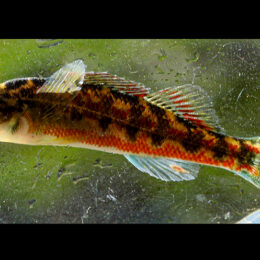
The FLT focuses on working with state and national partners and landowners to preserve habitat associated with freshwater species and ecosystems through conservation easements and land acquisition. For example, the FLT was at the forefront of the effort to acquire the land now included in Turkey Creek Nature Preserve, which is home to three species of endangered darters and is owned by the Forever Wild Land Trust. In partnership with the Birmingham’s Faith Apostolic Church, the U.S. Fish and Wildlife Service, and Samford University, the FLT also manages land on the church’s property at Seven Springs with the goal of protecting the endangered watercress darter.
The FLT also works with local communities to create nature trails, boardwalks, and other means of access to the properties they manage or for which they are partners. Its volunteers and staff offer guided hikes and tours of the properties throughout the year.
South Alabama Land Trust
The South Alabama Land Trust (SLT), headquartered in Fairhope, Baldwin County, was founded in 1990 as the Weeks Bay Foundation to serve as the fundraising arm of the Weeks Bay National Estuarine Research Reserve. It was incorporated as the South Alabama Land Trust in 2009. By 2026, it had protected some 11,000 acres of estuarine and freshwater habitat and surrounding land and managed more than 1,500 acres in conservation easements. The SLT manages 20 properties in Baldwin County and three in Mobile County that border Mobile Bay and the Fish and Magnolia Rivers. The SLT partnered with Dauphin Island Bird Sanctuaries to achieve conservation easements on 28 parcels of land on Dauphin Island as well. In addition to habitat protection, the SLT focuses on guarding the coast from storm surges through wetland restoration and supporting sustainable fisheries on the Gulf Coast.

Protected properties include 11.5 acres on Bon Secour Bay that preserve habitat for the endangered red-bellied turtle and eastern indigo snake, 478 acres on the Alabama River that are important stopovers for tropical migratory birds, and the Koontz Conservation Easement, which is home to endangered gopher tortoises. The 100-acre Wirtes property preserves the site of a historic turpentine camp. This land trust hosts Gulf Coast Nature Expo annually at Weeks Bay Plantation, as well as bird education shows, boat rides with interpretation about the bay and its wildlife, and guided trail and kayak tours of the preserve’s trails. The SLT also hosts an annual photography contest. In addition, the organization works with the Estuarine Center to fund and manage K-12 and teacher development programming throughout the year. SLT volunteers also participate in the annual Alabama Coastal Birdfest, sponsored by Alabama Audubon each April, with events at sites all along the Alabama Gulf Coast. The SLT also oversees the annual Bald Eagle Bash in Fairhope, also in April. It features local restaurants and craft breweries and live music, and monies raised by the event support conservation efforts.