William Logan Martin Jr.
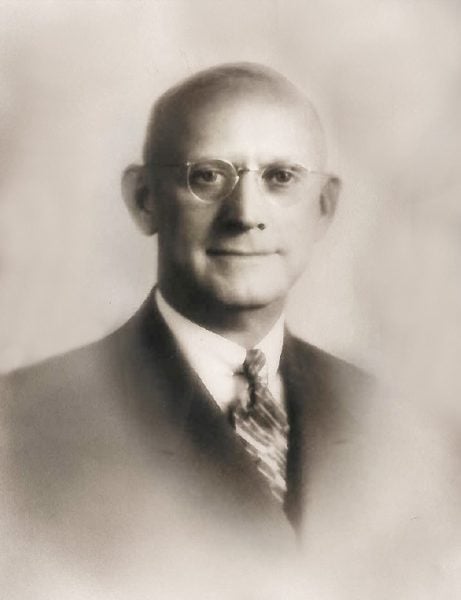
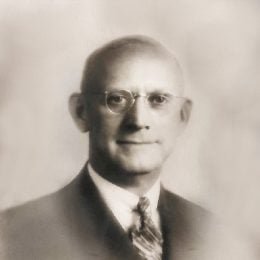
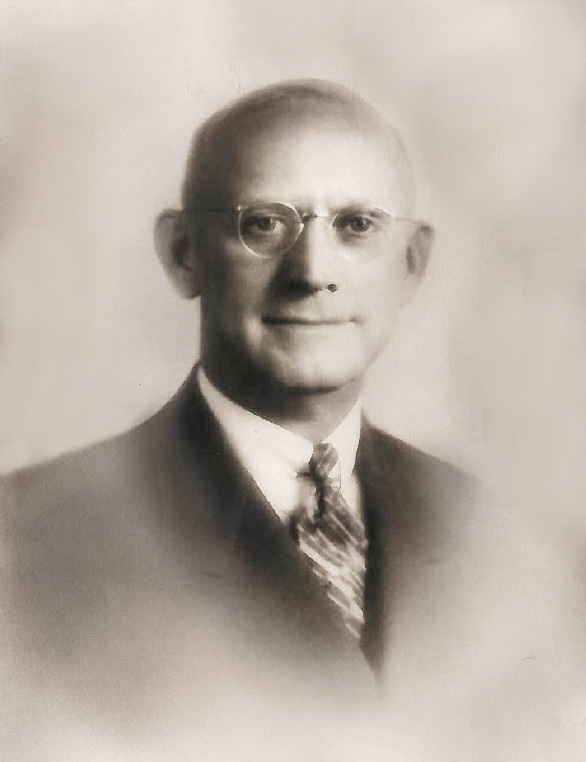
Judge William Logan Martin Jr. (1883–1959) was among the most prominent attorneys in Alabama during the first half of the twentieth century. Over the course of his long career, he served as Alabama’s attorney general, a circuit judge, a leading corporate lawyer for the Alabama Power Company, and an influential figure in both the Alabama and American Bar Associations. He was also a founder of the legal practice that became Balch & Bingham LLP, one of the state’s largest and most powerful firms. Logan Martin Dam is named in his honor.
Martin was born in Scottsboro, Jackson County, on February 20, 1883, to William Logan Martin Sr. and Margaret Ledbetter Martin. His father was a significant political figure in the state, serving as Alabama’s attorney general from 1889 to 1894 under Gov. Thomas Goode Jones and later as speaker of the Alabama House of Representatives during the administration of Gov. Braxton Bragg Comer. One of six children, Martin grew up in a politically connected family deeply involved in Alabama’s legal structure and the state’s Democratic Party.

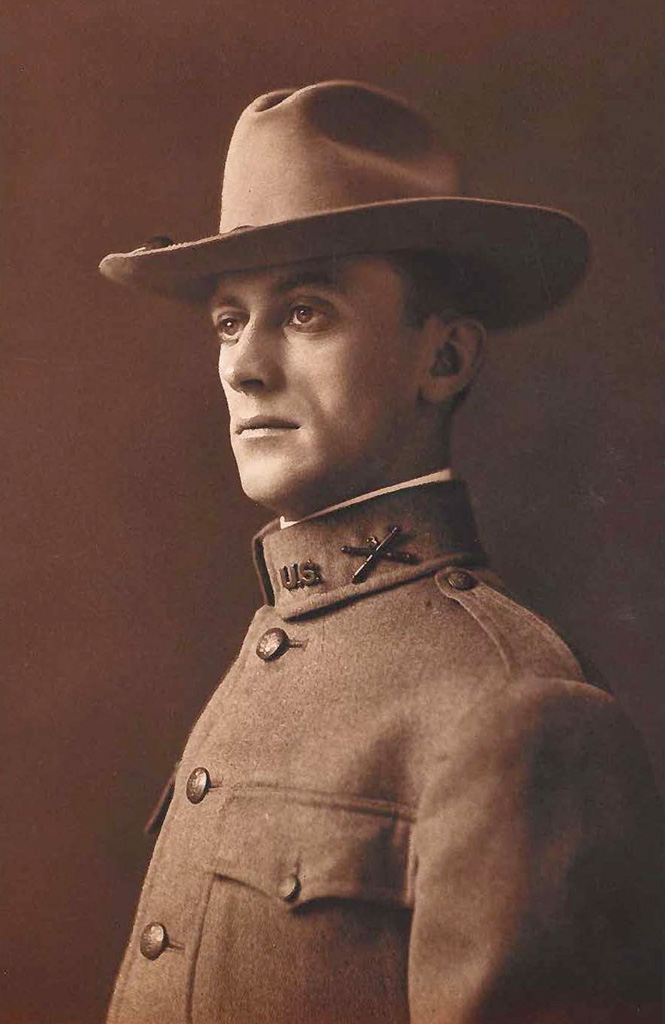
After graduating from the U.S. Military Academy at West Point in 1907, Martin briefly served in the U.S. Army before resigning his commission to study law at the University of Alabama. He earned his law degree in 1908 and joined his brother Thomas W. Martin in private practice in Montgomery. From 1909 to 1910, William served as assistant prosecuting attorney for Montgomery County. His early success led to his election as Alabama’s assistant attorney general in 1914. The following year, under Gov. Thomas E. Kilby, he was elected attorney general, a post he held from 1915 to 1919. During his tenure, Martin attempted to clean up corruption in Girard, Russell County, prior to its incorporation into Phenix City. He stepped away from state government briefly to return to military service after the United States entered World War I; he was commissioned as a major.
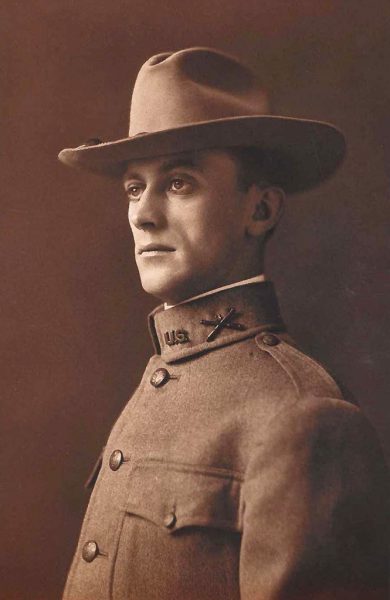
Following the war, Gov. Kilby appointed Martin as circuit judge for Montgomery County. In 1920, he moved to Birmingham and opened a private practice that grew into the city’s largest law firm, eventually evolving into Balch & Bingham LLP. During this period, Martin became general counsel and a director for the Alabama Power Company, one of the state’s most influential corporations. An attorney, utilities executive, and research promoter, his brother Thomas Martin had helped found the company and served as its president from 1920 to 1949. Indeed, during his time with Alabama Power, Thomas became one of the state’s most influential boosters. Meanwhile, William Martin’s legal work for the company placed him as well at the center of Alabama’s early hydroelectric development and its broader modernization efforts; he remained in the position until his death. Under his leadership, Balch & Bingham evolved into a nationally recognized law firm specializing in environmental policy with a globally ranked nuclear energy practice.
Martin was deeply engaged in national legal affairs. As a member of the board of governors of the American Bar Association, he served as a delegate for more than two decades. A vocal advocate of states’ rights, he frequently commented on constitutional issues, particularly during the New Deal era when federal regulatory power expanded dramatically and provoked legal and political debate across the South around agricultural and industrial policies and segregation.

In 1941, Martin and his brother Thomas founded the Alabama Research Institute, later renamed the Southern Research Institute (and now Southern Research), to promote scientific and industrial research. The organization’s early work was slowed by the U.S. entry into World War II. It resumed operations in 1943 with substantial financial support from Alabama Power. The company continues to be an important regional center for scientific research in energy, engineering, and pharmaceuticals.
Martin married Thelma Curtis Sloss in 1954. She was the former wife of George Sloss, son of James W. Sloss, the founder of Birmingham’s Sloss Furnaces, linking Martin to another of Alabama’s major industrial families. The couple had no children.
From 1951 to 1959, Martin served on Alabama Power’s board of directors. During this time, he helped guide the company’s hydroelectric expansion, including major mid-century projects on the Coosa River. The federal government authorized the development of the Coosa River in 1954, paving the way for a coordinated system of dams to support electricity generation, navigation, and flood control.
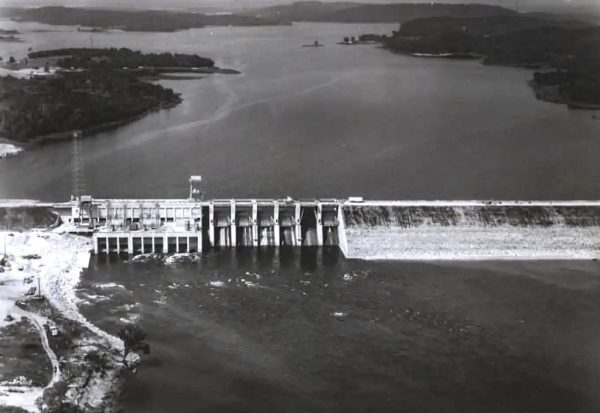
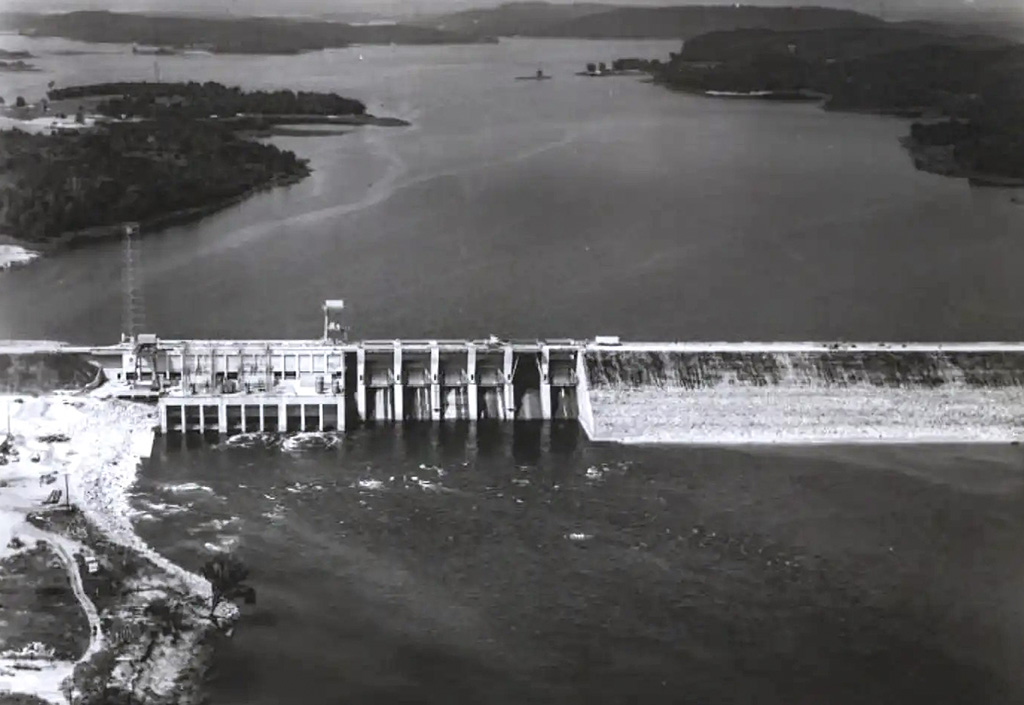
Martin died on February 25, 1959, at his home in Birmingham and was buried in Oakwood Cemetery in Montgomery. Construction of the second dam on the Coosa River began in 1960 and was named Logan Martin Dam in recognition of Martin’s contributions to the company and to statewide power development. The dam created Logan Martin Lake, a 15,263-acre reservoir that became a major recreational and economic asset in central Alabama and particularly in St. Clair and Talladega Counties, for which the lake forms the eastern and western borders, respectively.