Samuel “Sammy” Milton Lowe
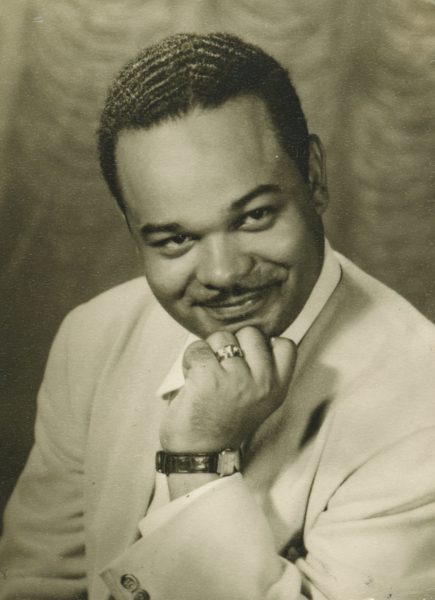
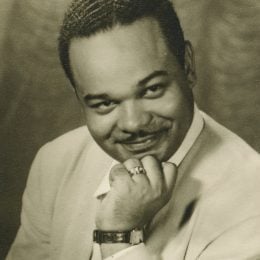
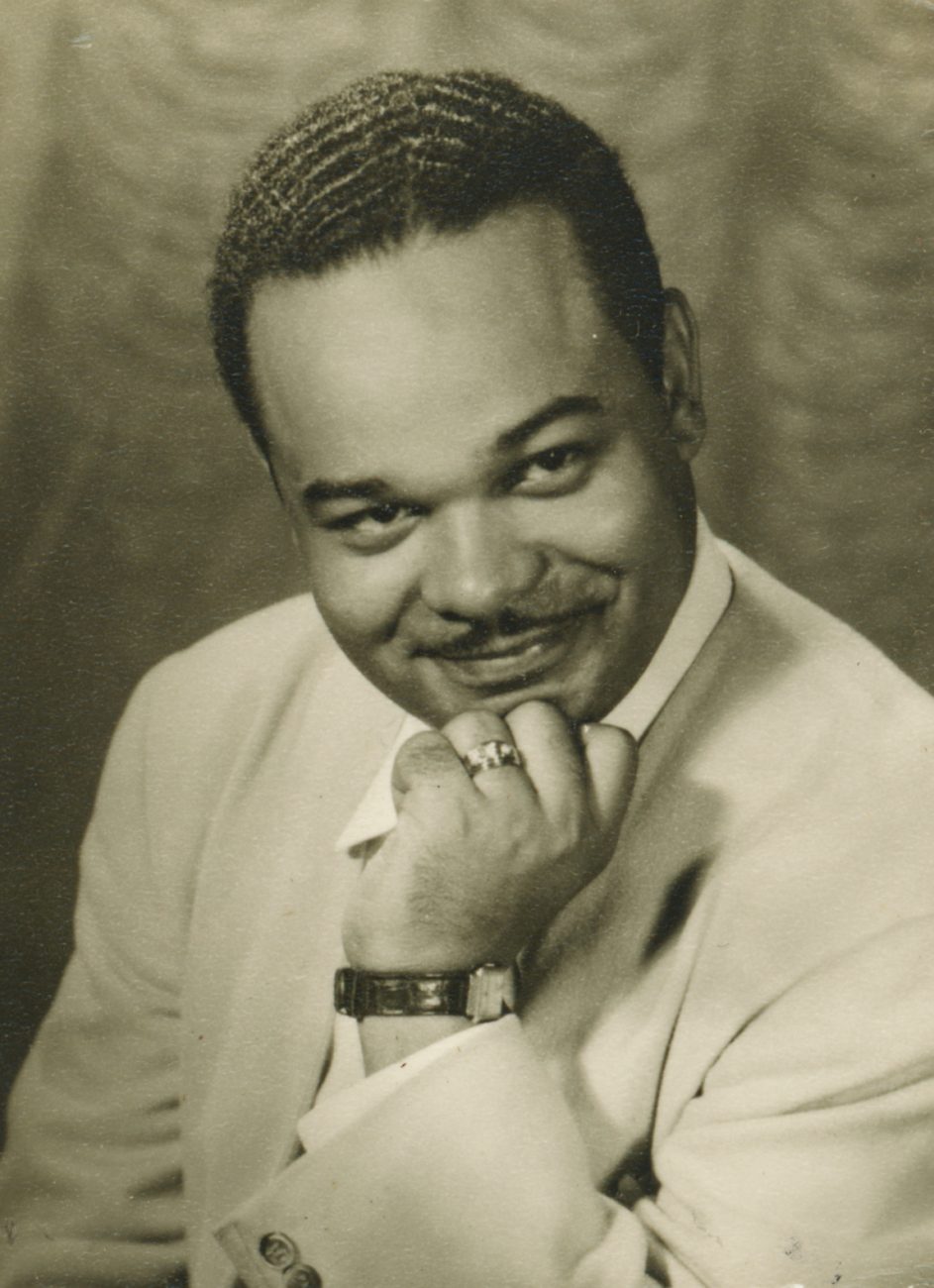
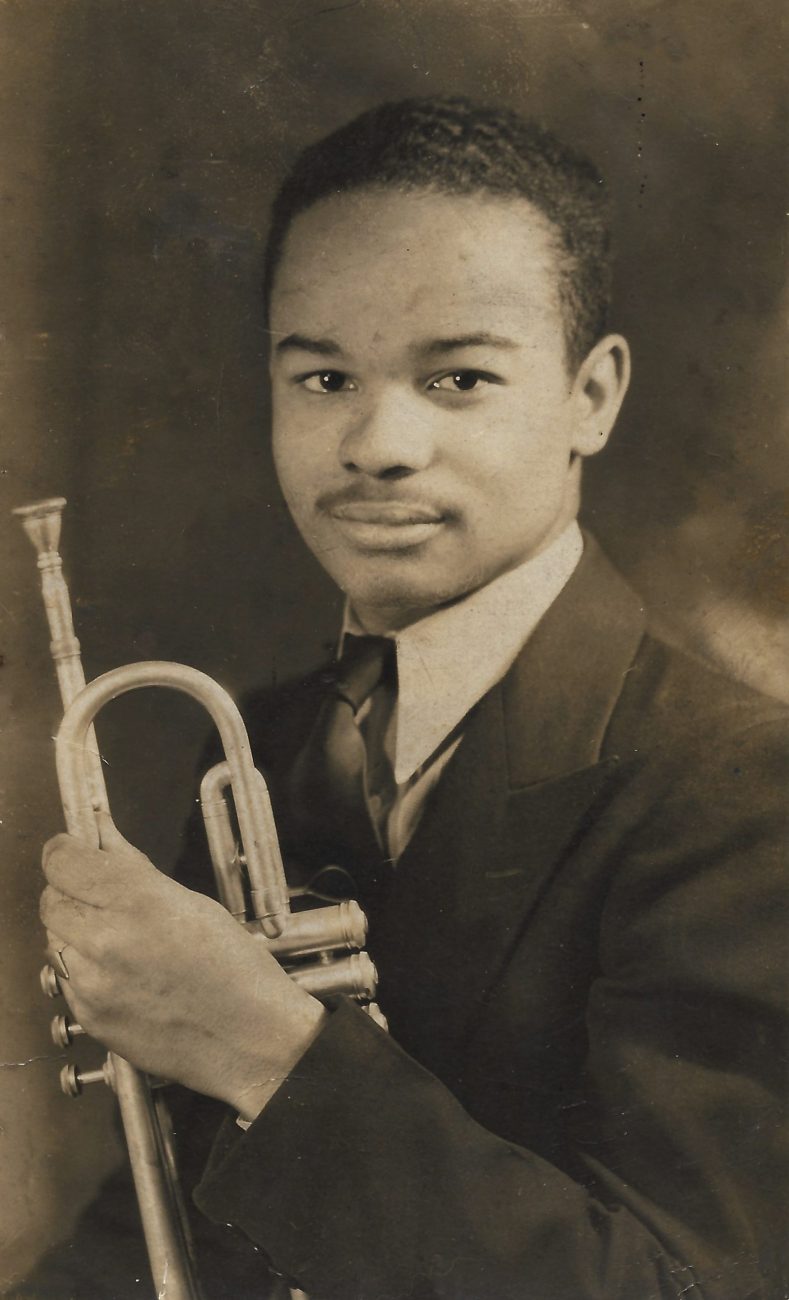
Birmingham’s Samuel “Sammy” Milton Lowe (1918-1993) was a jazz trumpeter, arranger, composer, and conductor best known for his long tenure in the Erskine Hawkins Orchestra, a nationally popular band consisting primarily of Birmingham players. At home in a range of musical settings, Lowe enjoyed a second career in the 1950s and 1960s as an arranger and music director for numerous pop and R&B acts.
Lowe was born on May 14, 1918, to Sam and Cora McCain Lowe, parents of what would be a prominent musical family in the Smithfield neighborhood of Birmingham, Jefferson County. Lowe’s older brother James “J. L.” Leroy Lowe (1912-1998) was a saxophonist, educator, and, in his later years, a passionate champion of Birmingham’s distinctive jazz history. A driving force behind the Alabama Jazz Hall of Fame, J. L. would also develop the long-running Birmingham Heritage Band to celebrate and perpetuate the local tradition. Their sister, Leatha Lowe (1916-1993), was a pianist and respected music teacher. As children, the three Lowe siblings performed as a family band, once traveling to their parents’ hometown of Livingston, Sumter County, to play a series of dances. That short tour introduced them to enthusiastic audiences, netted each sibling a small sum of money, and helped cement their lifelong love for musical performance.
The Birmingham neighborhood of Smithfield, home to the city’s burgeoning Black middle class, was also home to numerous musicians who served as early inspirations and collaborators for Lowe. Many friendships formed in his Smithfield childhood grew into decades-long musical partnerships.
Like numerous other Birmingham jazz musicians, Lowe honed his musical skills in the city’s segregated Black schools, where a network of influential music teachers offered rigorous professional training. While an elementary student at Lincoln School, Lowe and several other future members of the Erskine Hawkins Orchestra were instructed by band director Benjamin Smith. He next fell under the influence of Industrial High School’s acclaimed “maker of musicians,” John T. “Fess” Whatley, as well as of band director George Hudson. Hudson introduced him to principles of harmony and nurtured an early interest in orchestral arrangement, and Whatley recruited the teenage Lowe into his professional band, paying him for his first original arrangements.
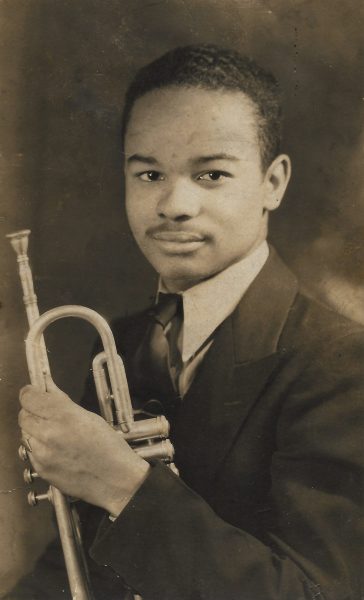
In 1935, Lowe enrolled at Tennessee Agricultural and Industrial State College (present-day Tennessee State University) in Nashville, recruited by Birmingham musicians Fred and Frank Greer. His career as a student, and his membership with the Tennessee State Collegians band, was soon interrupted, however, by an invitation to join his old friends in the Bama State Collegians. That group, made up mostly of Birmingham musicians, had begun at Alabama State Teachers College in Montgomery (present-day Alabama State University) and had quickly distinguished itself as the region’s leading collegiate dance band. It also served as the model for Lowe’s own band at Tennessee State. Throughout the Great Depression, the Bama State Collegians toured the Southeast and beyond, raising money for their school; but in 1934, after a series of successful engagements in New Jersey and New York, they decided to go fully professional, cutting their ties with the college and ultimately rebranding themselves as the Erskine Hawkins Orchestra. Settling in New York, the band sent for Lowe, who became a key ingredient in their success for the next 20 years.
In the heart of the big band era, the Hawkins Orchestra established itself as one of Black America’s leading dance bands, building a repertoire of hard-swinging tunes interspersed with sentimental ballads and southern-inflected blues. The orchestra recorded extensively for the RCA Victor label and worked for more than a decade as house band for Harlem’s Savoy Ballroom, a celebrated haven for jitterbug dancers. The orchestra’s 1939 hit, “Tuxedo Junction,” was an homage to the Ensley, Jefferson County, neighborhood of the same name, a cluster of entertainment and dance spots in which several of the band’s members had gained their first exposure to jazz. Subsequent hits included “After Hours” (1940) and “Tippin’ In” (1945).
Lowe was not the star trumpeter of the Hawkins band: the bandleader himself had made his own reputation on the instrument with his characteristic, piercing high notes. Lowe’s close friend and bandmate, Wilbur “Dud” Bascomb, meanwhile distinguished himself as the group’s most innovative and sophisticated trumpet soloist. For his own part, Lowe carved out a niche as a prolific arranger and composer, shaping the orchestra’s sound behind the scenes. As bandleader, Hawkins prided himself on having multiple arrangers in the group—pianist Avery Parrish was another standout—but the band’s arranging duties fell most consistently to Lowe. As the era of the big bands faded, Lowe and other core members of the Hawkins orchestra remained connected to each other and to the sound that had made them famous, performing together well into the 1950s, a longevity few other big bands could boast.
In 1952, Lowe married stage and screen actress Betty Haynes; they had one son, Samuel Haynes Lowe (known as Sammy Lowe, Jr.), who also became a musician. Setting out on his own, professionally, in the mid-1950s, Lowe proved adept at meeting shifting trends in popular music, applying his arranging skills to a diverse range of settings. His 1956 arrangement of the Platters’ “My Prayer” became a number one hit on the pop charts and put Lowe in demand as an arranger and conductor. In 1959, he put down his trumpet altogether to work exclusively in those roles, collaborating with James Brown, Sam Cooke, Nina Simone, and others. He scored another number one hit in 1961 with the Tokens’ “The Lion Sleeps Tonight,” and another in 1966 with Brown’s “It’s a Man’s, Man’s, Man’s World.”
Ever loyal to his old friends, he often booked his former Hawkins bandmates, including “Dud” Bascomb, Haywood Henry, and Johnny Grimes, for recording sessions he directed. He recorded occasionally, also, with his own Sammy Lowe Orchestra and in 1971 he rejoined members of his old band for the album Erskine Hawkins and his Orchestra Reunion! Live at Club Soul Sound; his son, Sammy, Jr., appeared on the album, on the electric keyboard. Always a working musician, he picked up odd jobs along the way, earning income writing advertising jingles and, in 1976, composing the soundtrack for an adult film.
Back in Birmingham, Lowe’s brother, J. L., assembled the Birmingham Heritage Band in 1976, bringing together veteran musicians who had returned home after careers in some of the nation’s leading jazz bands. With local musician, arranger, and educator Amos Gordon, Sammy Lowe contributed two original pieces, “Birmingham Is My Home” and “Magic City Blues,” to the new group. In 1978, Lowe was among the first class of six musicians inducted into the Alabama Jazz Hall of Fame. (The other inductees that year were Hawkins, Gordon, Haywood Henry, Frank Adams, and—inducted posthumously—John Tuggle “Fess” Whatley.) In photos from the induction ceremony the honorees posed with their instruments in hand; Lowe held not a trumpet but his true instrument, a pen.
Lowe’s wife Betty Haynes Lowe died in 1985 in Teaneck, New Jersey, the couple’s home of many years. Lowe returned permanently to Birmingham and for the rest of his life worked closely with the Birmingham Heritage Band. He also collaborated with his brother on a stage musical, Tuxedo Junction, which celebrated the music of the Hawkins orchestra and premiered in 1992 at the University of Alabama at Birmingham.
Sammy Lowe died on February 17, 1993. He had performed earlier that day with the Birmingham Heritage Band, then returned to the home he shared with his sister Leatha. A fire erupted in the home, taking the lives of both siblings. They are buried in Elmwood Cemetery.
In addition to his music, Lowe left behind the manuscript of a memoir detailing his long career as an artist and arranger. Though unfinished at the time of Lowe’s death and still unpublished, a copy is archived in the Birmingham Public Library. It provides one of the most extensive and personal existing first-hand accounts of a Black musician’s life on the road in the heart of the swing era.
Additional Resources
- Dance, Stanley. The World of Swing: An Oral History of Big Band Jazz. New York: Da Capo Press, 1974.
- Mathews, Burgin. Magic City: How the Birmingham Jazz Tradition Shaped the Sound of America. Chapel Hill: University of North Carolina Press, 2023.