Onnie Lee Logan
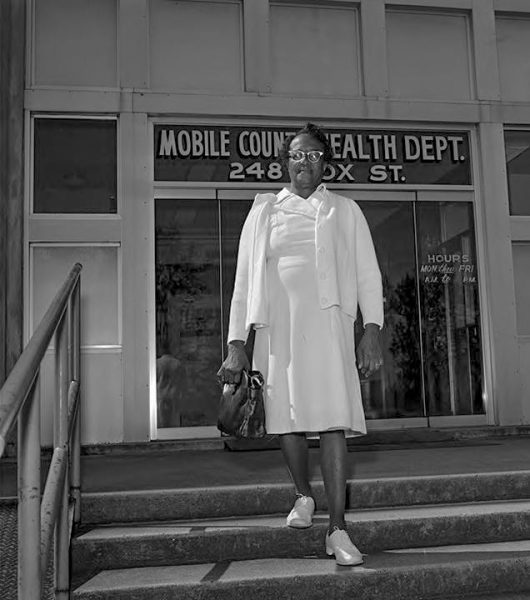
Marengo County native Onnie Lee Logan (1910?-1995) was a midwife in Mobile County whose story rose to national attention with the publication of the book Motherwit: An Alabama Midwife’s Story. Her career spanned three decades and the births of more than 1,000 infants. When a 1980 law stopped granting licenses to new midwives, Logan became the last remaining midwife in Mobile County. She served in this role until 1984, when she was asked to resign.
Onnie Lee Logan was born Onnie Lee Rodgers in Sweet Water, Marengo County, around 1910 to Len and Martha Rodgers; she was the 14th of 16 children. (Her gravestone lists a birth date of May 3, 1913, but she, like many Black people born in that era, had no birth certificate.) At the time and location of her birth, most Black families supported themselves through sharecropping. In contrast, Logan’s family owned and worked their own farm and, as such, considered themselves prosperous. In addition to farmwork, her father did carpentry and her mother was a midwife. In her oral history, Logan recounts her limited education, noting that the school year for Black children lasted only five months, and many children attended much less often than that due to the necessity of farmwork, or due to their family’s inability to pay for textbooks or required school fees. Throughout her childhood, her community often experienced racial violence at the hands of the Ku Klux Klan.
Logan had several midwives in her family, including her mother, her grandmother on her father’s side, and one of her sisters’ husbands. She was interested in childbirth from her earliest years. Although her mother never allowed her in the room during deliveries, she was frequently curious and would look through cracks as her mother delivered babies. In the early part of the twentieth century, midwives were common; half of the nation’s children were delivered with the assistance of a midwife. Doctors and hospitals were scarce, particularly in rural areas, and hospital births were too costly for many families. Most midwives at this time were Black women; they were frequently called “granny” midwives.
In her early twenties, Logan married the brother of one of her sisters’ husbands, Elmo Watkins; the couple had one child. The marriage dissolved quickly due to Elmo’s extended absences from the home. She married twice more; first to Homer George, who died after eight or nine years, and later, to James Logan, with whom she would remain married for the rest of her life.
Around the time of her first marriage, Logan found domestic work in the home of a White family. After a doctor delivered the baby of her employers, he asked Logan to assist him for the day while he delivered another baby elsewhere. Impressed with her ability to coach the laboring mother, he told her that she would make a good midwife and, in fact, a good doctor, if given the opportunity. (At the time, very few Black women had ever become doctors.) After the doctor’s encouragement, she sought out experiences to help local midwives deliver children.
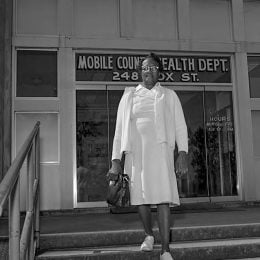
Around 1934, Logan moved to Mobile, where she worked for a Dr. Mears and his wife as a domestic worker and, later, as a caregiver for the family’s children. The doctor encouraged her aspirations to become a midwife, supporting her as she sought to gain experience by assisting with occasional childbirths throughout the years, and, later, when she sought formal training as a midwife. Logan began formal coursework at the Mobile Board of Health in the late 1940s. Given her prior experience, she was able to earn her midwifery license quickly, gaining her first permit in 1949.
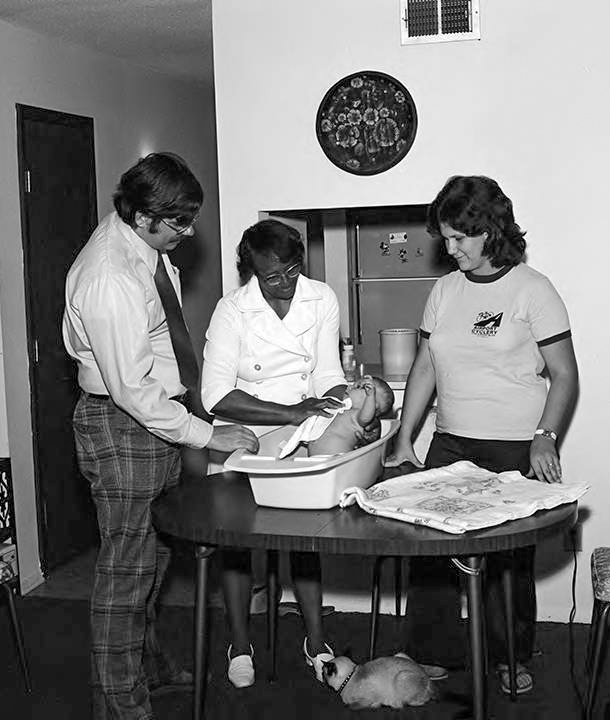
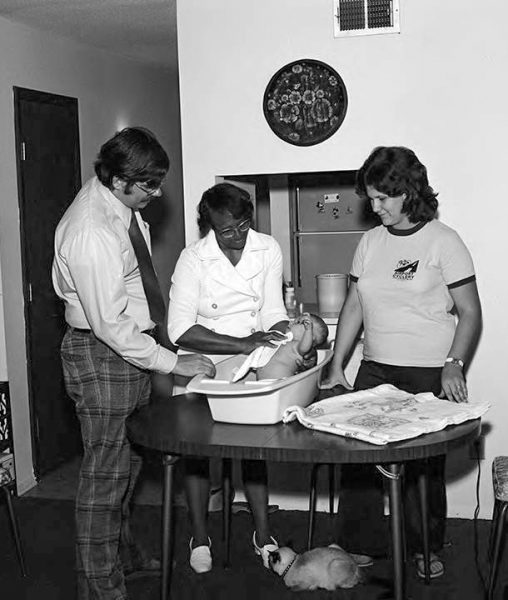
Logan worked as midwife for the next three decades, delivering more than 1,000 babies. In the early decades of her career, she most frequently delivered children for poor families, both Black and White, who often sought home births out of economic necessity. By the 1970s, home births were in a sharp decline because of changing social attitudes and increased availability of government assistance for the medical care of pregnant women, as well as statewide policies that discouraged the practice. By then, Logan was one of only a few midwives in Mobile County, and she most often delivered babies for White families seeking home births, whether for religious reasons or out of a desire for what they viewed as a more natural birth experience.
In 1980, Alabama stopped issuing midwifery licenses and prohibited the practice without a license; however, the previously licensed “granny midwives” throughout the state were temporarily allowed to continue their practice. In 1984, the remaining granny midwives, including Logan, were notified that they could no longer practice legally in the state of Alabama. (Lay midwifery remained illegal in the state until 2017, with the first new licenses granted two years later.) Logan, who was then 73 years old and the last remaining lay midwife in Mobile County, had hoped to continue her work for as long as she was physically able. Even after she was no longer allowed to deliver babies herself, she continued to assist fathers who sought to deliver their own babies at home.
Soon after Logan lost her license, she shared her story with Birmingham native Katherine Clark, then a doctoral candidate at Emory University, in a series of oral history interviews. Clark edited the interviews into the book Motherwit: An Alabama Midwife’s Story, which was published in 1989. (In addition to several novels, Clark would later publish oral histories from Alabama “Renaissance man” Eugene Walter and acclaimed author Pat Conroy.) Motherwit was, in large part, a personal memoir, offering an account of Logan’s experiences growing up in rural Alabama, as well as firsthand insight into the decline of midwifery. Interspersed with her personal history, she offers detailed accounts of her knowledge and practices regarding childbirth. In her account, Onnie frequently cites the role of God and intuition (or “motherwit”) as guiding forces in her work.
The book was well received by critics and garnered much media coverage, contributing to a renewed interest in midwifery across the nation. Her story caught the attention of feminist scholars as well as natural childbirth advocates. In 1993, excerpts from the book were selected for inclusion in The Norton Book of Women’s Lives alongside works by Maya Angelou, Simone de Beauvoir, and Anne Frank.
Logan died in Mobile on July 12, 1995. She was buried at Hawn Haven Memorial Gardens in Theodore, Mobile County. Her death was reported in the New York Times.
Additional Resources
- Logan, Onnie Lee, as told to Katherine Clark. Motherwit: An Alabama Midwife’s Story. New York: Dutton, 1989.