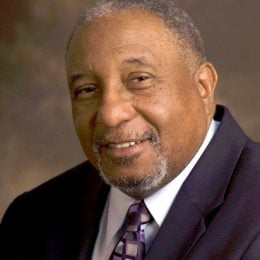
Bernard Lafayette Jr.

Bernard Lafayette Jr. (1940-2026) was a civil rights activist best known in Alabama for participating in the Freedom Rides, overseeing the voter registration campaign in Selma by the Student Nonviolent Coordinating Committee (SNCC) and helping to plan the March 7, 1965, Selma to Montgomery march. He later directed the Southern Christian Leadership Conference (SCLC)’s Poor People’s Campaign. Also an educator, Lafayette authored and co-authored several books about nonviolence and his experiences during the civil rights movement.
Lafayette was born on July 29, 1940, to Bernard Lafayette Sr. and Verdell Lafayette in Tampa, Florida. He was the oldest of eight children. At a young age, Lafayette became interested in civil rights issues. He cites the experience of seeing his grandmother mistreated on a segregated cable car as influencing his desire to fight racial discrimination in the South. When he was 12, Lafayette joined the National Association for the Advancement of Colored People (NAACP). In the late 1950s, Lafayette attended the American Baptist Theological Seminary in Nashville, Tennessee, where he became further involved in civil rights activism and also became an ordained minister. From 1958 to 1959, Lafayette attended weekly meetings held by James Lawson of Vanderbilt University’s Divinity School, who taught student workshops on Mahatma Gandhi’s approach to nonviolent resistance. In addition to these seminars, Lafayette attended classes at the Highlander Folk School, which also focused on teaching activists, including Rosa Parks, about nonviolent resistance tactics. In 1959, Lafayette and his fellow students led sit-ins at Nashville’s segregated restaurants and businesses. Around this time, Lafayette relates that he also was attending classes at Fisk University, which many other civil rights leaders attended.
In 1960, Lafayette attended an assembly of student activists led by civil rights activist Ella Baker at Shaw University in Raleigh, North Carolina. Baker urged these young leaders to stay separate from older and religious civil rights organizations and to maintain an independent organizing agenda. This meeting of more than 200 students inspired some of these activists to form SNCC, the student-led rights group devoted to direct action and voter registration in rural areas of the South. Alongside other SNCC activists, Lafayette participated in the Freedom Rides, which began in 1961.

The Congress of Racial Equality (CORE) organized the Freedom Rides to test the Supreme Court’s decision in Boynton v. Virginia that segregation of interstate transportation and associated facilities was unconstitutional. Lafayette wanted to participate in the initial Freedom Ride, but as he was under 21 when it was organized, he needed parental permission, which his parents refused to give. On May 14, 1961, the first Freedom Riders were stopped and brutally beaten in Anniston, Calhoun County, and their bus was firebombed. Because of this violence, CORE decided not to continue. But SNCC members from Nashville, led by Diane Nash, decided to continue the Freedom Rides. Lafayette was part of the SNCC group that was attacked by the Ku Klux Klan in Montgomery, Montgomery County. (Activist and future congressman John Lewis was a member of the original CORE group and also joined the SNCC group.) When they eventually reached Mississippi, Lafayette and his fellow Freedom Riders were arrested and sent to the Mississippi State Penitentiary, also known as Parchman Farm, where some, including Lafayette, spent as many as 40 days. Upon release, Lafayette was arrested again for “contributing to the delinquency of minors” because he had allegedly recruited Freedom Riders who were under the age of 18. Afterward, he remained in the Jackson, Mississippi, area to engage in voter registration work.
Much of Lafayette’s effort in Alabama occurred in Selma, Dallas County. There he played a major role laying the groundwork for the arrival of Martin Luther King Jr. and the SCLC, whose presence later brought national media attention to racial inequality in the South. At the suggestion of SNCC official James Forman, Lafayette went to Selma in October 1962 to assess whether the city would be a good place to fund a voter registration project. Amelia Boynton of the Dallas County Voters League had requested assistance from various civil rights groups to fund and organize voter registration drives. After Lafayette’s positive report, the Voter Education Project, an effort overseen by the Atlanta-based racial equality group Southern Regional Council, funded Lafayette and SNCC fieldworkers to work in the city, where he met with Boynton and others. The purposes of the Alabama voter registration campaign were to use nonviolent means to increase the number of Black voters and to prove to the federal government that local governments were discriminating against Black people trying to register to vote.
Lafayette left Selma in November to marry fellow activist Colia Liddell. In his absence, and anticipating his possible return, Boynton and other local activists established classes on how to fill out the voter registration form to avoid errors, however minor, that would result in their rejection. The Lafayettes returned to Selma in January 1963 to direct voter registration clinics, which began to steadily expand in number. Meanwhile, the number of Black citizens applying to the board of registrars to vote also increased, sparked by mass meetings that began in May. One goal of these meetings was to impress upon young people the importance of voting so that they would register when they came of age. Another aim was to instruct young people in nonviolent resistance methods in workshops, most of which took place at St. Elizabeth’s Mission. As applications increased, so did harassment of Black applicants at the hands of Dallas County sheriff James “Jim” Clark and members of the White Citizens Council. Clark arrested Lafayette in May for “vagrancy,” but the charges were dismissed as a result of efforts by his attorneys, J. L. Chestnut Jr. and Solomon Seay Jr. He was also beaten in a possible assassination attempt that June. He regularly traveled to Birmingham, Jefferson County, during the Birmingham Campaign to instruct the young participants on nonviolent resistance. He also engaged in voter registration efforts in Wilcox County. The Lafayettes left Selma at the beginning of August so he could resume classes at Fisk, but he regularly returned to the city to assist the registration campaign.
In 1963, the American Friends Service Committee (a Quaker-based social justice organization) hired the Lafayettes to experiment with nonviolent tactics in Chicago, Illinois. While in Nashville, they began the Southern Organizing Committee and had their first child, James Arthur Lafayette. They would have a second child, Bernard LaFayette III, a few years later in Chicago.
Lafayette was in Selma when activist Jimmie Lee Jackson was killed in Marion, Perry County, and he helped organize the Selma to Montgomery march to protest Jackson’s death. Thinking it would be a multi-day affair, Lafayette traveled to Chicago to recruit marchers and had planned on marching the second day. The march began on March 7, 1965, but was halted by Alabama law enforcement, who beat and tear-gassed unarmed activists in an event known as Bloody Sunday. The media coverage of Bloody Sunday prompted national and international outrage and contributed to the passage of the Voting Rights Act of 1965, which made racial discrimination in voting unconstitutional. On March 21, the Selma to Montgomery march successfully began its journey to Montgomery, with Lafayette at the rear to keep the pace.
After the Selma to Montgomery march concluded on March 25 at the Alabama Capitol, the Lafayettes returned to their work in Chicago. Because of their experience with activism in the North, Martin Luther King Jr. asked Lafayette to oversee the SCLC’s Chicago Freedom Movement in 1966. Lafayette also participated in the 1966 Chicago Open Housing Movement. In 1967, King hired Lafayette as the SCLC’s program coordinator, and he took over direction of the Poor People’s Campaign in 1968. He continued in that role after King’s assassination on April 4, 1968, in Memphis, Tennessee.
In 1969, Lafayette married Kate Bulls. Pursuing further higher education at Harvard University, Lafayette earned a master’s degree in education in 1972 and a doctorate in 1974. That year, Lafayette became the first Director for Peace Education at Gustavus Adolphus College in St. Peter, Minnesota. From 1992-99, Lafayette was president of American Baptist College in Nashville, and from 1999-2009, he directed the Center for Nonviolence and Peace Studies at the University of Rhode Island. In 2009, Lafayette became the Distinguished Senior Scholar in Residence at the Candler School of Theology at Emory University. He was the 2018 Breeden Scholar in Residence at the Caroline Caroline Marshall Draughon Center for the Arts & Humanities at Auburn University. Lafayette died on March 5, 2026, in Selma.
Selected works by Bernard Lafayette
The Leaders Manual: A Structured Guide and Introduction to Kingian Nonviolence: The Philosophy and Methodology (1995)
The Briefing Booklet: An Orientation to the Kingian Nonviolence Conflict Reconciliation Program (1995)
In Peace and Freedom: My Journey in Selma (2013)
“Nonviolence and the Chicago Freedom Movement” in The Chicago Freedom Movement: Martin Luther King, Jr. and Civil Rights Activism in the North (2015)