Hookworm Disease in Alabama
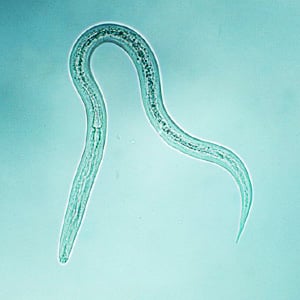
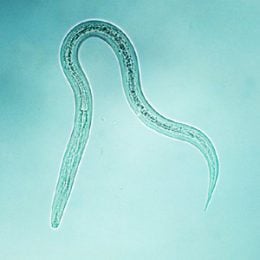
Hookworms and hookworm disease were one of Alabama’s most widespread public health concerns until the mid-twentieth century, when awareness campaigns, improved sanitation, and increased indoor plumbing helped bring about a decline. Even in more recent years, however, the disease has remained a threat in some rural areas of Alabama where sanitation infrastructure is lacking. Native to tropical and subtropical climates where soil is moist and sandy, hookworms are intestinal parasites in the Ancylostomatidae family of parasitic worms, or helminths. They are a type of roundworm found in soil that has been contaminated with feces (bodily waste) and have been infecting mammals for millions of years. Affecting both humans and animals, hookworms parasitize the lining of the intestines, where they feed on blood. The species of hookworm associated with Alabama and the southern United States is Necator americanus/N. americanus. If an infestation is severe, it can develop into an illness called hookworm disease. The name “hookworm” is derived from the worm’s hook-like mouth parts.
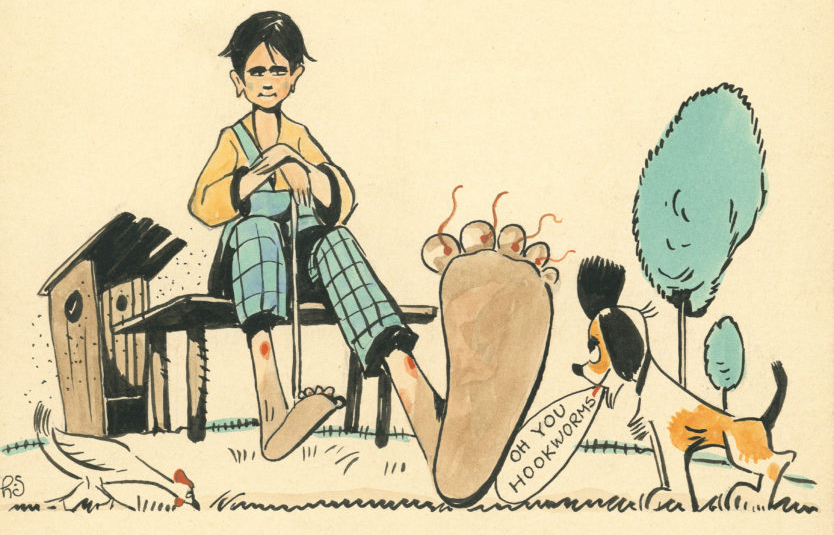
Transmission begins when soil is contaminated with feces from an infected animal or human. Feces containing hookworm eggs hatch in the soil. The eggs develop into larvae, which live off bacteria in the soil and continue to develop into immature worms. Their mouths contain cutting plates (hooks) that can penetrate human skin. Transmission commonly occurs through walking barefoot on contaminated soil. Once the hookworm breaks the skin and enters the body, an infection begins. The hookworm travels in the bloodstream to the heart and then the lungs where it irritates the throat. The larvae are coughed up and swallowed, entering the stomach. When they reach the intestines, the growing worms attach to the lining and suck the host’s blood. This blood loss in the host leads to anemia and fatigue. The worms exit the body in the host’s feces. In areas with improper sanitation for bodily waste, people may become infected many times.
Hookworm in the South and Alabama
Hookworm infections were endemic to the southeastern United States until the mid-twentieth century. Due to its warm, humid climate, sandy soil, and historically poor sanitation and hygiene practices, hookworms were much more common in the South, particularly in rural, higher poverty areas, than in other parts of the nation. Although it was likely one of the most common ailments in Alabama and the South as a whole, the presence of hookworm disease in the Americas was unknown until the early twentieth century. Prior to that time, infections either went undiagnosed or were misdiagnosed as malaria, “dropsy” (edema, or swelling), or anemia.
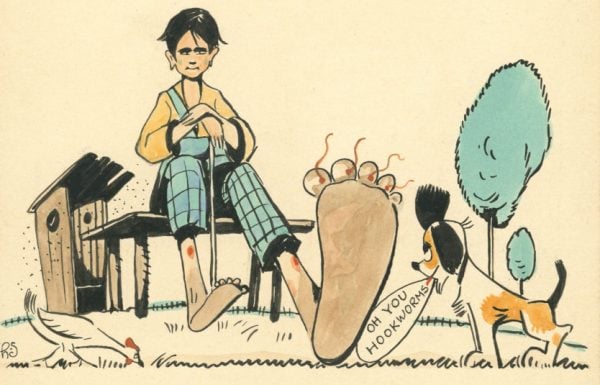
Early beliefs surrounding the disease were anecdotal, mired in racial assumptions and economic issues. Those afflicted with hookworm disease were often viewed with prejudice, perceiving their fatigue and physical appearance as signs of laziness. Yet some infected people were asymptomatic, especially if they only had a few worms. People infected with hookworms often developed an itchy rash, called “ground itch,” between their toes at the spot where larvae entered the skin. Those with repeated infections or with long-term infections could experience abdominal pain, diarrhea, loss of appetite, weight loss, fatigue, and anemia. More severe anemia sometimes led to pica (dirt-eating in response to mineral cravings). As the infection worsened, people would become so exhausted that their minds became hazy, causing them to neglect tasks and relationships. This could be particularly problematic in cases where parents were no longer able to work or care for their children. Infected children sometimes had mental and physical growth issues, and many were too tired to attend school regularly. Observers of the disease noted pale skin, sunken eye sockets, distended bellies, and emaciated shoulder blades.
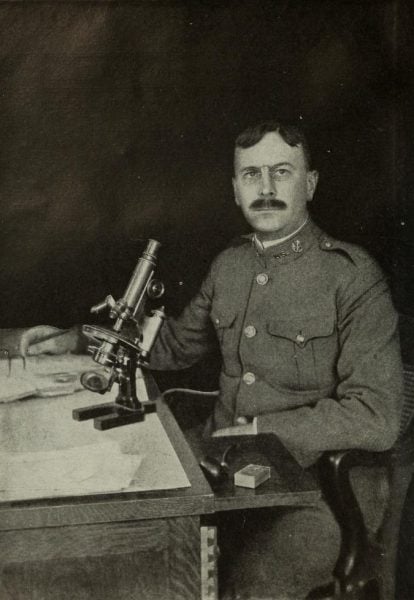
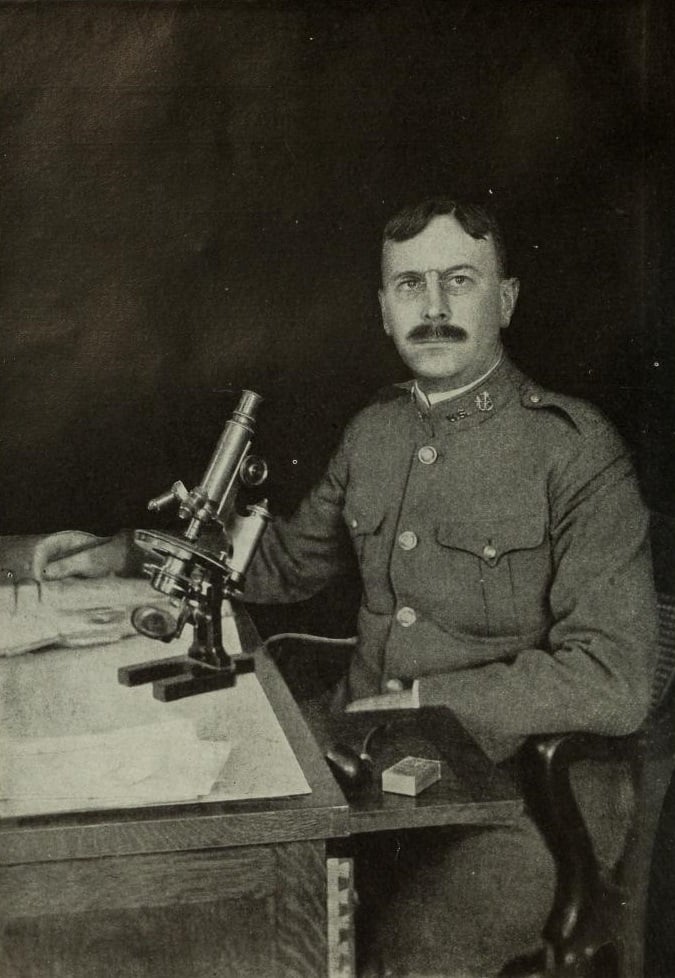
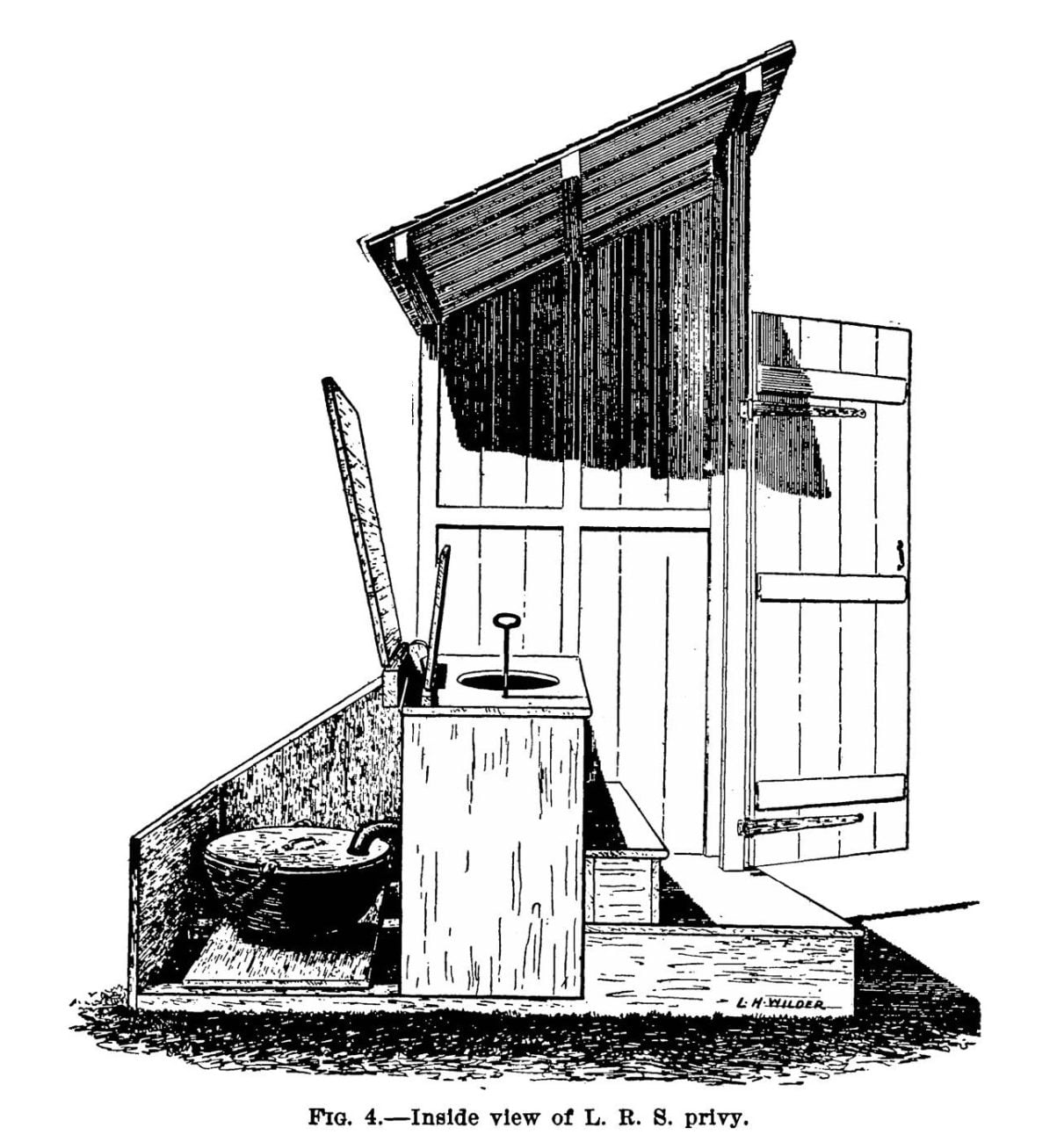
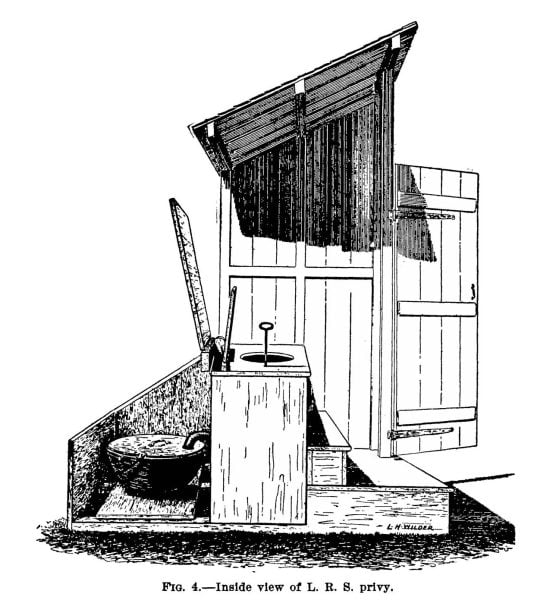
In 1902, zoologist Charles Wardell Stiles of the Public Health and Marine Hospital Service first identified Necator americanus, the American species of hookworm. In the following months, he traveled through the South to study its prevalence and found them in abundance, particularly within farms and mill villages. According to Stiles, the main issue was inadequate sanitary disposal of bodily waste. In rural areas, outhouses (also called privies) were common, yet some homes did not have any means of bodily waste disposal. Many people lived in very close proximity to their outhouses, which often led to contamination around their living quarters, especially if they were not wearing shoes. Stiles recorded more cases of hookworm infection in women and children, likely because men wore shoes for farm work or other employment. After his initial research, Stiles became a lasting advocate for improved sanitation in the rural South.
In December 1902, Stiles presented his early findings on hookworms at the Sanitary Conference of American Republics in Washington, D.C. His presentation gained widespread newspaper coverage after one reporter in attendance called hookworms a “germ of laziness.” The description brought national attention to the disease, with other commentators, including some in Alabama newspapers, borrowing the term.
Early Public Health Efforts
From 1909 to 1914, the Rockefeller Sanitary Commission for the Eradication of Hookworm Disease invested $1 million in addressing hookworm infections in southern states, including Alabama. Its efforts included extensive surveys, health education programs, and a treatment campaign. In its final report, the Commission noted that it had examined more than 12,500 children in Butler, Clay, DeKalb, Jackson, Fayette, Franklin, Lee, Macon, Marion, Russell, Tallapoosa, and Winston Counties, finding an average hookworm infection rate of 57 percent (ranging from 15 percent in DeKalb County to 94 percent in Winston County). The Commission worked closely with Alabama’s State Board of Health, as well as other state boards across the South, funding treatment for more than 13,000 people in 17 Alabama counties and giving hundreds of public presentations to more than 60,000 people in the state. In addition, the Commission provided direct financial assistance to county health department budgets; soon, state and local health departments also increased their own budgets to help meet this effort. As a result of these early initiatives, hookworm infestation numbers decreased and many of those infected were cured.
Despite these early advances, several years later, hookworm infection affected Alabama’s response at the onset of World War I. When many Alabamians rushed to enlist or were drafted, draft boards rejected about 25 percent of their prospects due to hookworm infection and other diseases and infirmities. Even those serving in the military were not immune to hookworms; one group of Alabama National Guardsmen serving near the Mexican border reported 60 percent were inflicted with hookworm disease.
By the time of the Great Depression, state and federal funds for hookworm eradication were no longer available; however, early efforts had helped somewhat. A 1930 survey conducted by Dr. Leon C. Havens of the State Board of Health and epidemiologist Ruth Castles indicated a statewide reduction in hookworms overall; however, the southern part of the state’s hookworm incidence in school children was 75 percent, many with severe hookworm disease. To increase public awareness, local newspapers routinely reported hookworm prevention and statistics, articles from county health officers, and encouraged educational programs in schools. These localized educational efforts resulted in fewer hookworms in school-age children in studies of 13 Alabama counties conducted in 1937, and again in 1951 with even lower rates of infection.
Sanitation Efforts and the Decline of Hookworm Disease
The expansion of indoor plumbing was ultimately the most important factor in the decline of hookworm cases. At the turn of the twentieth century, most Alabamians relied on outhouses and well water. By the 1920s, several pieces of legislation were passed to allow the Alabama Public Service Commission to regulate utilities as indoor plumbing became more common. However, most of these legislative items targeted areas of high-density population; thus, rural areas, where indoor plumbing was less common, received less infrastructure and oversight, and indoor plumbing was much slower to emerge in such areas. By 1940, U.S. Census records indicate that 80 percent of Alabama households still lacked complete indoor plumbing (including a flushing toilet, a bathtub or shower, and both hot and cold running water), compared to 45 percent nationally. As of 1960, 62 percent of Alabama households had indoor plumbing, and, by 1970, the number had risen to 83 percent. Throughout those same decades, hookworm cases continued to decline, and little public attention was given to the affliction.
By the 1980s, hookworm infections were believed to have been eradicated in the nation. More recently, however, inadequate sewage infrastructure has placed Lowndes County, Alabama, at particular risk, garnering international attention. A 2011 United Nations report revealed 18 percent of the county’s population was served by conventional municipal sewer systems while the remaining population relied on either septic tanks or waste trenches. The Alabama Department of Public Health estimated then that between 49 and 90 percent of the county’s residents had inadequate septic systems or no septic systems at all, with more than 40 percent exposed to raw sewage within their homes. A 2017 study of 24 households in Lowndes County reported that approximately 8 tested positive for hookworms, again likely due to sanitation conditions. In 2023, researchers from several U.S. states and Australia investigated Lowndes, Perry, and Wilcox Counties and did not find evidence of hookworms, but did find evidence of roundworm.
Additional Resources
- Ettling, John. The Germ of Laziness: Rockefeller Philanthropy and Public Health in the New South. United Kingdom: Harvard University Press, 1981.
- Jarrow, Gail. American Murderer: The Parasite that Haunted the South. New York: Calkins Creek, 2022.