Clotilda

The Clotilda was a large two-masted sailing vessel of the schooner class that was the last ship to have brought enslaved Africans illegally to the United States in 1860. Soon after it arrived in Mobile Bay, its captain burned the ship to hide the evidence, and it was lost to history. In January 2018, the ship’s supposed remains were discovered in a tributary of the Mobile River, and in May 2019, the Alabama Historical Commission (AHC) announced that the Clotilda had been identified conclusively. After several years of additional research and documentation, the AHC announced in August 2024 that the Clotilda would be best preserved by leaving it in place and physically protected.
Clotida’s Voyage
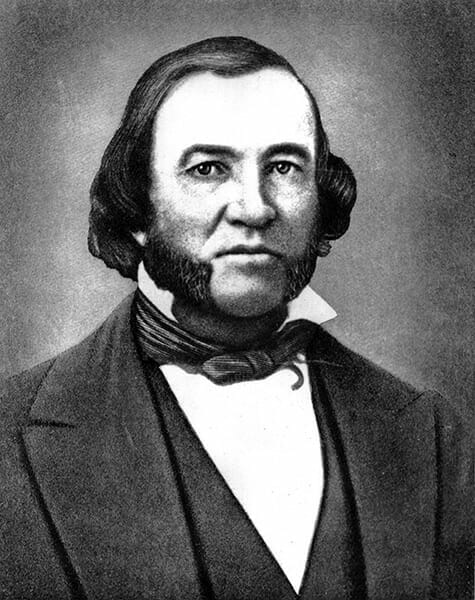
In the summer of 1860, 110 enslaved men, women, and children were purchased at the slave markets in the port city of Ouidah in the kingdom of Dahomey (present-day Benin) in Western Africa. The ship then set sail for Mobile Bay, more than 50 years after the U.S. Congress outlawed the international slave trade. Timothy Meaher, a Mobile businessman and ship builder had enlisted the help of Capt. William Foster and wagered that he could smuggle a ship carrying enslaved people into Mobile Bay. Accordingly, Foster refitted a Gulf Coast schooner, the Clotilda, into a ship that could weather a six-week Trans-Atlantic voyage.
To accomplish this clandestine feat, Foster made minor modifications to his craft, rerigging it as a brigantine, a ship with a sail arrangement that allows for a smaller crew and faster sailing than a schooner. He also added platforms, partitions, and bulkheads in the hold. Already built to maximize cargo capacity and speed, its two-masted and centerboard construction ensured that the Clotilda was well-suited for negotiating deep waters. Upon leaving Mobile on February 27, the manifest falsely listed "St. Thomas or a market" as the final destination, and the ship’s inventory listed a cargo of lumber, whiskey, flour, beef, and bread that belied the ultimate purpose.
Foster arrived off the West African coast on May 15. Coming ashore at the port of Ouidah, he made his desires known—he wanted to purchase 125 people. Concluding the sale eight days later, he returned to the ship as locals transported the captives, largely people from several ethnic groups in modern-day Ghana and Nigeria, via small dugout canoes known as pirogues. The loading process was interrupted by the appearance on the horizon of two steamships, however, which Foster deduced were elements of the U.S. Navy or the British Royal Navy patrolling the coastline to enforce prohibitions against the slave trade. He decided to leave 15 persons behind, setting sail with 110 kidnapped and imprisoned passengers. After nearly two months, the Clotilda entered the Gulf of Mexico on July 8.
Upon Foster’s arrival in the Mississippi Sound, Meaher had planned to pay the crew, use a tug boat to tow the ship up the Spanish River, and off-load the human cargo. Foster would then sail to Tampico, Mexico, where he would clean the ship and eliminate all evidence of its illegal voyage. A few minor delays, a nearly successful mutiny of the crew, and an increasing number of rumors ensued, and finally, under cover of night, Meaher successfully towed the Clotilda past the port of Mobile, up the Spanish River, and into the Mobile River near Twelve-Mile Island. Transferring the Africans to another ship, the Czar, he transported them approximately 50 miles upriver to John Dabney’s plantation in Mount Vernon, Mobile County. As their captors moved them from one location to another to avoid detection, the imprisoned Africans remained hidden within the canebrakes and swamps for 11 days. Finally, in late July, Meaher, his brothers, Foster, and a few others dispersed the Africans and forced them into enslaved labor. Rumors abounded, however, and the conspirators determined to scuttle the ship instead of cleaning her for future use along the Gulf Coast. Foster then dropped the Clotilda’s anchor near Twelve-Mile Island and set the ship afire. As typically happens, the ship burned only to the water line, and its hull remained visible at low tide.

Upon completion of this ambitious and arduous journey, Meaher, his brothers, and some friends enslaved the kidnapped Africans for the next five years. Rumors of the escapade persisted, and Timothy Meaher, William Foster, and John Dabney later faced legal action, but the only punishment meted out was a $1,000 fine levied against Foster for conspiring to engage in the slave trade. The Civil War commenced in the spring of 1861, and Foster’s offenses were forgotten. The burned hull of the Clotilda remained submerged near the confluence of the Spanish and Mobile Rivers. Ironically, in trying to destroy or even erase the evidence, Foster preserved history instead.
After emancipation, many of the Africans reunited, bought land, and created a settlement they named African Town. Residents of the community established governance by African law, retained their African names, and spoke their native regional languages, including Yoruba, Hausa, Nupe, and Fon. Oluale Kossola, known after his enslavement as Cudjo Lewis, gained some renown at the end of his life when his story was recounted in several articles and a book by noted author and ethnologist Zora Neale Hurston. The last Clotilda survivor died in 1940, and many descendants—some into the fifth generation—still live in the community, now known as Africatown.
Clotilda’s Discovery

Nearly 160 years after it was burned, the AHC announced the official identification of the Clotilda in May 2019. This public announcement marked the culmination of a search process begun in 1997, more than two decades earlier. The survey conducted by a maritime archeological team revealed that the wreck, which they called Target 005, was the oldest vessel identified within a veritable “ship graveyard” in a previously unexplored and undredged section of the Mobile River.
The scientific evidence that confirmed Target 005 as the Clotilda was convincing. The burned wreck was a Gulf Coast schooner, probably two-masted with a centerboard, and had the same dimensions as the Clotilda: 86 feet long by 23 feet wide and 6 feet 11 inches to the bottom of the hold. The ship’s design confirmed that it was built regionally or locally of white oak and yellow pine and featured pig-iron fittings. The ship was built prior to 1870 and was constructed professionally and with expertise. The Certificate of Registry states that the Clotilda launched in Mobile in 1855. According to other historical records, only four vessels had been built to those specifications, and only one, the Clotilda, was listed among 1,500 vessels recorded in archival records. Foster recorded that he scuttled the ship in 20 feet of water, and the wreck shows partial destruction by fire with the deepest point at 20 feet.
In addition to its historical significance, from a maritime archeology perspective, Clotilda is unique. According to experienced archeological divers, only 10 sites of 1,000 slave ship wrecks are diveable. The remaining 99 percent are located in salt water, where the inherent decay caused by bacteria and other organisms leaves only a ghostly outline of the ship in wood remnants and ash. Of the 10 diveable wrecks, the Clotilda is the only one that remains intact because it was sunk in fresh water and lies in dense mud that contains very little of the oxygen needed by wood- and iron-destroying organisms and chemical reactions.
Preserving the Clotilda

After the Clotilda was definitively identified, marine archaeologists gathered over a ten-day period in May 2022 to conduct an environmental study and a structural assessment of the wreck. The AHC assembled a team of experts, including RESOLVE Marine, the U.S. Army Corps of Engineers, SEARCH Inc., Diving with a Purpose, Terra Mare Conservation, the Dauphin Island Sea Lab, and Western Carolina University. The work also involved the Black Heritage Council, the Smithsonian Institution’s National Museum of African American History and Culture, and the Slave Wrecks Project, which is an international effort focused on maritime archeology, historical research, and the study of slave ships.
The team first moved a barge into place near the wreck site and conducted an informational briefing in Africatown. Next, underwater archaeologists removed fourteen trees, one stump, and a displaced buoy from the wreck site. They then removed nearly 100 disarticulated timbers and placed them in a water tank on the barge for preservation. After confirming that the area was cleared, specialists conducted SONAR and LiDAR surveys of the wreck, replaced extraneous pieces inside the wreck, and removed charred timbers to study bacteria and other organisms. They next established a map of the site and recovered a lead hawse pipe, a lead flange, and a pine hull timber. The team also took core samples of surrounding mud and conducted a 3-D software scan of artifacts. The team finally replaced timbers in the hold and secured them with sandbags.

The completion of this phase of preservation in 2022 produced a peer-reviewed study that recommended the best methods of preserving, protecting, and interpreting this unique and significant site. After much consideration, in August 2024, AHC officials announced that the wreck would be preserved in place and physically protected. The decision was made because of the state of deterioration, damage from physical impacts dating back decades, looting, and a report that the wreck may have been dynamited sometime in the mid-twentieth century. As the AHC considers developing a Maritime Archeological Program, the Clotilda brings attention to an important period in local, state, national, and international history. The Africatown Heritage House museum opened in July 2023, and historical accounts and select artifacts will record these elements of history as maritime archeology and forensic studies continue.
Africatown was named a National Register Historic District in December 2012, and both the Clotilda site and the ships’ graveyard in which it lies were added to the National Register of Historic Places in November 2021. AHC’s management of the wreck is governed by the Alabama Underwater Cultural Resources Act and the Abandoned Shipwrecks Act of 1999.
Additional Resources
- Delgado, James P., et. al. Clotilda: The History and Archaeology of the Last Slave Ship. Tuscaloosa: University of Alabama Press, 2023.
- Diouf, Sylviane A. Dreams of Africa in Alabama: The Slave Ship Clotilda and the Story of the Last Africans Brought to America. New York: Oxford University Press, 2007.
- Durkin, Hannah. The Survivors of the Clotilda: The Lost Stories of the Last Captives of the American Slave Trade. New York: Amistad, 2024.
- Hurston, Zora Neale. Barracoon: The Story of the Last “Black Cargo. New York: Amistad, 2020.
- Raines, Ben. The Last Slave Ship: The True Story of How Clotilda Was Found, Her Descendants, and an Extraordinary Reckoning. New York: Simon & Schuster, 2022.
- Tabor, Nick. Africatown: America’s Last Slave Ship and the Community It Created. New York: St. Martin’s Press, 2023.


