Richard Blauvelt Coe
Richard Blauvelt Coe (1904-1978) was a Selma-born artist and art teacher known in Alabama for his association with the Dixie Art Colony in Elmore County. Coe specialized in landscapes, portraits, and architectural subjects, notably in Birmingham, Jefferson County, and believed that American art should be created for the people, by the people. His philosophy reflected the principles of Regionalism, an American art movement that emphasized realistic portrayals of everyday life that included small towns, rural landscapes, agriculture, and labor. The movement was a response to the modern abstract art popular in Europe and elite art circles of the time. His ideals were evident in his work with New Deal arts programs in Alabama.
Coe was born on February 27, 1904, in Selma, Dallas County, to Minnie Stewart Coe, who died of typhoid fever in 1910, and Richard Kent Coe. He had one brother. Coe expressed interest in painting and drawing from a young age. His mother had studied with renowned china painter Margaret Sherratt Keys. After graduating from high school in 1922, Coe enrolled in Castle Heights Military Academy in Lebanon, Tennessee. He then briefly studied architecture at the University of Cincinnati, where he began garnering modest praise for his artistic abilities. His drawings were featured in the school’s magazine, and he painted sets for the drama club.
Coe planned to continue studying architecture at Alabama Polytechnic Institute (present-day Auburn University) in 1925. But his grandmother and aunt covertly entered his artwork in a scholarship competition run jointly by the Birmingham News and the Allied Arts Club, a short-lived Birmingham-based arts collective that included writers, artists, and musicians. Coe won the scholarship and was awarded one year’s tuition at the Grand Central School of Art in New York City. There, he studied under artists Edmund Greacen, George Elmer Browne, and George Pearse Ennis. Coe went on to attend the School of the Museum of Fine Arts in Boston, Massachusetts, for six years, receiving instruction from American Impressionist Philip Leslie Hale and English artists Rodney Burne and Robin Guthrie.
With guidance from his instructors, in 1932 Coe won the school’s Page Traveling Scholarship, allowing him to travel across Europe over the next two years. Though Coe worked from a studio in Florence, Italy, he spent most of his time exploring other parts of Italy, as well as Denmark, England, Scotland, France, and Germany while studying the artwork of the European masters. After returning from Europe in September 1933, Coe expressed his philosophy on art, declaring in a May 1934 issue of the Birmingham News that he was interested in making distinctly American art for the American people. He rejected European abstract modernism in favor of realism, which he thought was more pleasing to look at.
Settling in Birmingham, Coe began drawing inspiration from the city’s industrial landscape. He opened a studio in the Five Points South neighborhood and purchased an etching press. With this tool, he produced numerous etchings of Birmingham, including views of downtown, residential neighborhoods, Birmingham-Southern College, Sloss Furnaces, and Terminal Station.
As the Great Depression devastated economies across America, Birmingham’s full-time employment dropped precipitously with the decline of the city’s industries. Under the umbrella of New Deal relief efforts, Coe found employment with the federal Public Works of Art Project from 1933-34 and in 1937 was appointed director of Alabama’s Federal Art Project, another federal relief program under the Works Progress Administration (WPA) that employed artists to produce public art.
The Regionalism art movement largely arose during the 1930s and 1940s as artists working for the WPA sought to depict a distinct American identity rooted in the resiliency of its people and land. In that vein, from 1935-38, Coe painted an 840-square-foot WPA-commissioned mural at Birmingham’s Woodlawn High School based on artist Sidney Van Sheck’s original drawing. Titled Gloried Be They Who Forsaking Unjust Riches Strive in Fulfillment of Humble Tasks for Peace Culture and the Equality of All Mankind, the mural surrounds the proscenium (the forefront of a theater stage) in the school’s main auditorium.
Coe gained acclaim as he regularly exhibited his artwork in shows sponsored by the Alabama Art League and Southern States Art League. In the 1936 and 1937 summer seasons of the Dixie Art Colony, held in Wetumpka, Elmore County, Coe taught alongside other colony members Lamar Dodd, Warree Carmichael LeBron, Frank W. Applebee, and colony leader John Kelly Fitzpatrick.
In 1942, Coe enlisted in the U.S. Army while working for Olan Mills Inc. in Springfield, Ohio, and served eight months at Camp Atterbury in Indiana. Following his honorable discharge, he joined the drafting department at Monitor Electric Company in Baltimore, Maryland. He continued exhibiting his artwork, including a one-man show at Baltimore’s Contemporary Gallery, while also working on portrait commissions and experimenting with egg tempera (pigment and egg yolk) as a medium.
Coe married Anne Hunt in 1947; they had met when studying art in Europe. While the couple were living in New York City, Coe began working for McCall’s Needlework and Crafts magazine as an editor. The couple moved to Goldens Bridge in Westchester County, New York, in 1953, and Coe lived there for the remainder of his life. In his later decades, he continued to draw inspiration from his surroundings. His paintings of New York landscapes, street scenes, and people varied in style, ranging from outdoor scenes like Devon Yacht Club rendered with loose, fast brushstrokes, to realist, or true-to-life, portraiture. Alongside his studio practice, he remained active as a teacher, joining the faculty at the Harvey School, a college preparatory school, in Katonah, New York, and offering watercolor classes at the Kitchawan branch of the Brooklyn Botanic Garden in New York City, now known as the Kitchawan Preserve. Coe died on December 13, 1978, and was buried in a family plot in Selma.
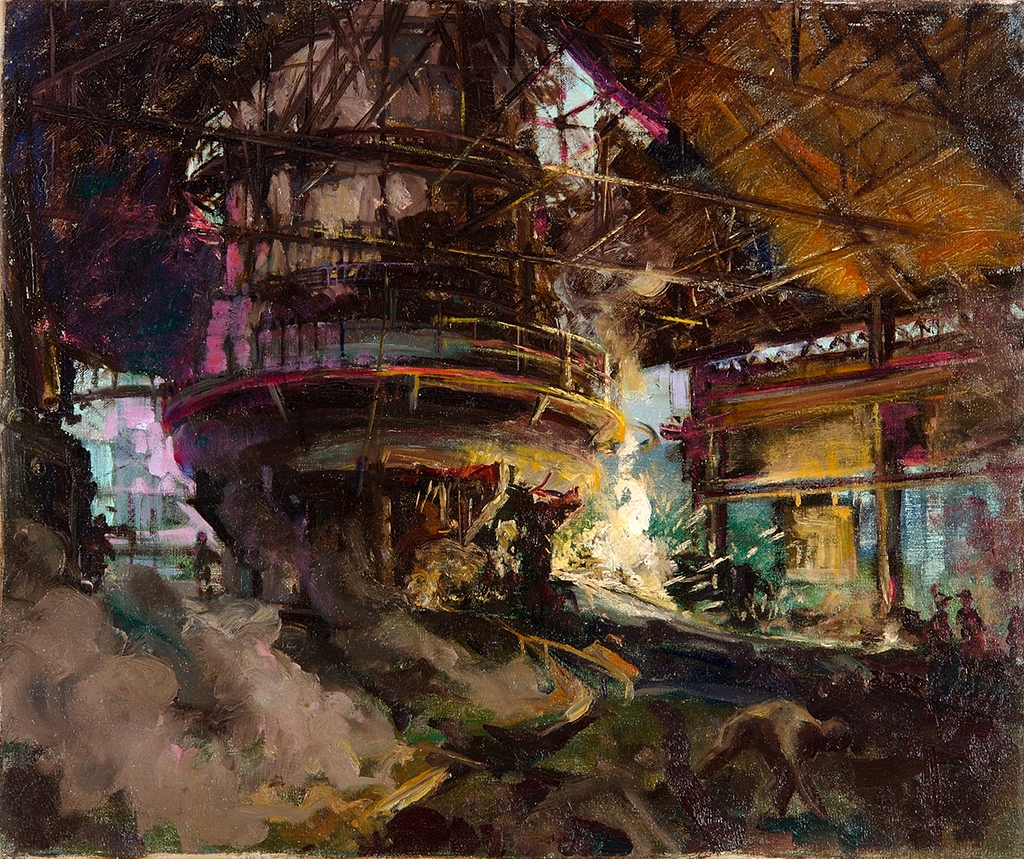
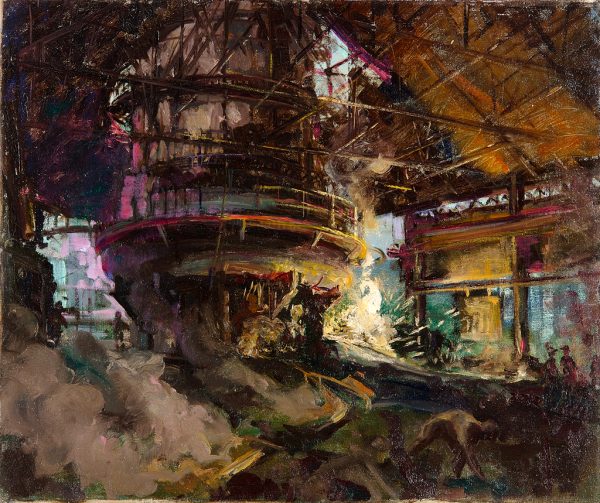
In 2018, the Birmingham Museum of Art mounted an exhibition, Magic City Realism, showcasing more than 60 of Coe’s Birmingham etchings. Several of Coe’s oil paintings are held in the collections of the Montgomery Museum of Fine Arts and the Dixie Art Colony Foundation, including Birmingham Steel Mill, ca. 1934, Winter Landscape ca. 1948, and Still Life, ca. 1970.