William McKinley Branch
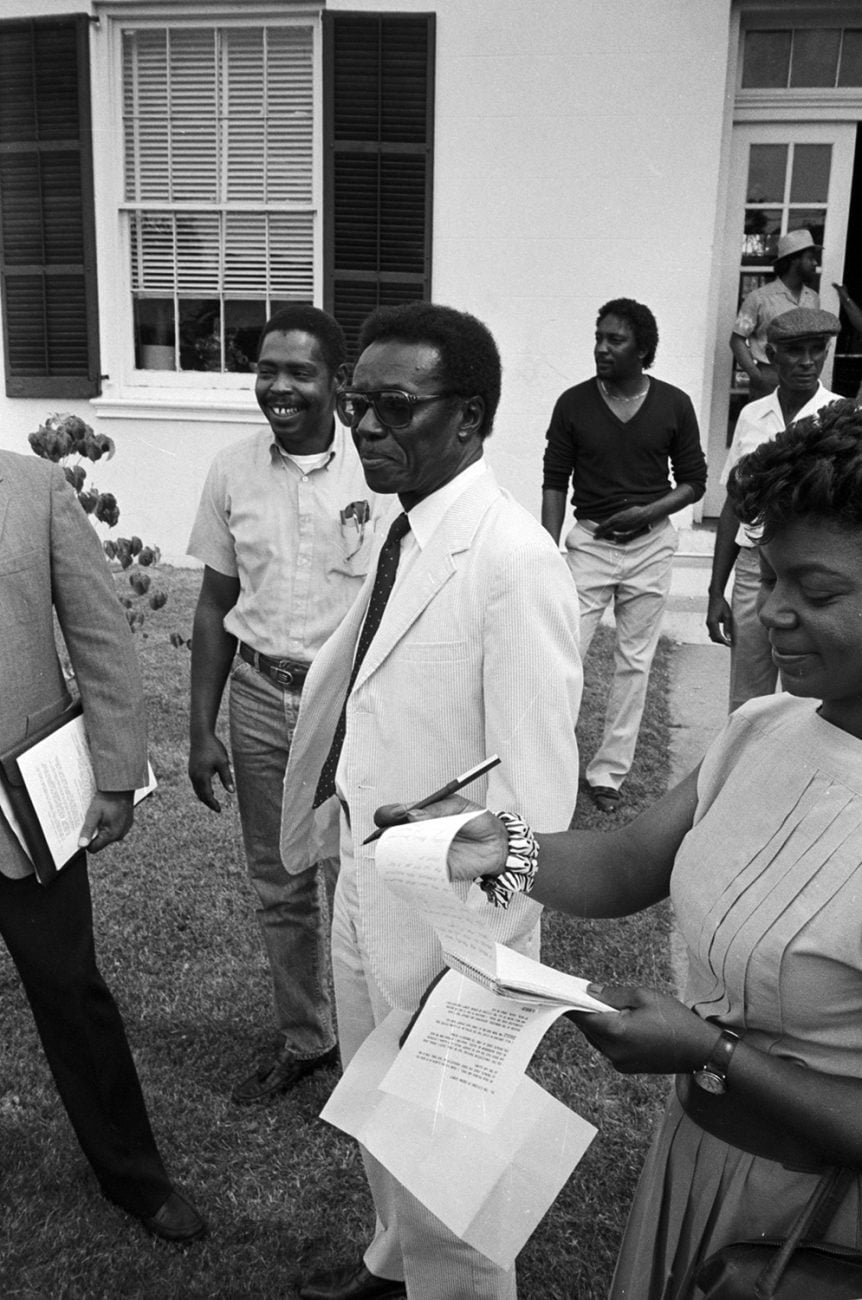
Greene County native William McKinley Branch Jr. (1918-2014) was a civil rights activist and longtime pastor. In 1970, he was elected Greene County probate judge, becoming the nation’s first Black man to serve in that role since the Reconstruction era.
Branch was born on May 10, 1918, in Forkland, Greene County. His parents, William and Pecola Branch, were poor sharecroppers. He was named after William McKinley, the 25th president of the United States, whom his father admired. After Branch graduated from the segregated Greene County Training School, he earned a theology degree from Selma University, a historically Black university (HBCU), and a bachelor of science degree from present-day Alabama State University in Montgomery, Montgomery County. He subsequently earned his law degree at the University of Illinois in Urbana-Champaign before returning to Alabama, where no law schools admitted Black students at the time.
In the mid-1940s, he married Alberta Carpenter; the couple would eventually have seven children. Branch was offered positions as a pastor in New York and Detroit, but, after praying about the matter, he chose to become a minister in Alabama. Branch then served as the pastor of Ebenezer Missionary Baptist Church in Forkland for more than 60 years.
Described by historians as a leader of Greene County’s civil rights movement, Branch organized the county’s chapter of the National Association for the Advancement of Colored People (NAACP) in the early 1950s. Through his role in the movement, Branch came to know Martin Luther King Jr., with whom he walked during the historic 54-mile Selma to Montgomery march in March 1965. Three years later, on March 21, 1968, Branch drove King from Eutaw, Greene County, to Greensboro, Hale County, for a voting rights march. King would be murdered 15 days later in Memphis.
From the late 1960s until the mid-1970s, Branch was active in the National Democratic Party of Alabama (NDPA). It was created in 1968 by John L. Cashin Jr. to oppose and compete with Alabama’s traditional Democratic Party, which was largely controlled by White supremacist George Wallace, who was reelected governor in 1970. Branch supported and benefited from the NDPA because it supported Black voting rights and political participation. In 1970, Branch, along with several additional Black candidates, ran for office under the banner of the NDPA. Branch defeated Dennis Herndon, who had been held in contempt by the Supreme Court the year prior for leaving Black candidates off the ballot, to become Greene County’s probate judge; he was the first Black man in the nation to be elected to this office since the Reconstruction era. In that same year, civil rights activist and pastor Thomas E. Gilmore, who considered Branch a mentor, was elected the county’s sheriff, becoming the second Black man in the state to hold that office. Black candidates swept every Greene County office, garnering national media attention. The election would be considered the greatest victory in the NDPA’s history.
Branch served as probate judge from 1970 to 1988. As probate judge, he oversaw wills and estates and helped with the election process. Branch’s tenure coincided with many of George Wallace’s years as governor. The two had a cordial relationship despite their significant political differences, and Branch supported him in his 1974 presidential campaign, claiming that Wallace had reformed from his segregationist days. Branch credited Wallace for helping to bring about some of the positive changes he was able to affect as Greene County probate judge. In 1976, Branch was elected as a Democrat, defeating his wife Alberta, who ran as the NDPA candidate. He ran as a Democrat because he felt the purpose of the NDPA had been fulfilled.
In 1977, Branch oversaw the establishment of Greenetrack (present-day Greene County Entertainment Center), a gambling and entertainment hub that previously included dog racing. This facility employed dozens of Greene County residents and proved to be an economic boon to the community for many years, but, as of the mid-2020s, it was heavily in debt.
As a consequence of his civil rights advocacy and his community efforts in Greene County, Branch reportedly met with several U.S. presidents. In 1993, the county constructed a new courthouse and named it in Branch’s honor. Branch died at the age of 95 on January 13, 2014, at the University of Alabama at Birmingham hospital and was buried at Ebenezer Cemetery.