Bryce Hospital Coal Mine Disaster
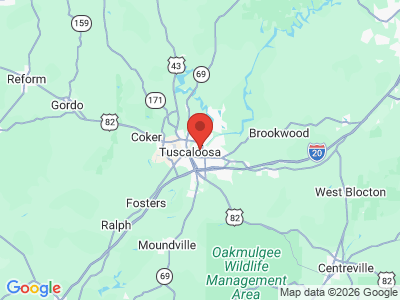
On February 20, 1901, the Bryce Hospital Coal Mine located along the Black Warrior River in Tuscaloosa, Tuscaloosa County, flooded. While 11 miners managed to escape the flood, 13 others were trapped in the mine for more than two days, and three of them perished on the day of the flooding. The widows of the three men and several survivors sued the hospital for damages, but the county court and the State Supreme Court both ruled that the hospital was not liable. The mine was closed until 1918 and was permanently shut down in 1921. The tragedy was memorialized with a historic marker in 2025.
The Alabama Insane Hospital (later renamed Bryce Hospital) operated four coal mines from 1875 until 1922. They were shaft mines, located along the bank of the Black Warrior River, at the north edge of the hospital’s campus in Tuscaloosa. The mines supplied coal for the hospital’s boilers and for the manufacture of gas, which was used to illuminate the hospital’s buildings. The mines helped the institution hold down its operating costs as the hospital was chronically underfunded by the state. In 1891, Peter Bryce, the hospital’s first superintendent, reported to his board of trustees that their institution’s low cost per indigent patient could be credited, in part, to mining their own coal and using it for fuel.
The hospital’s first mine, which began operation in 1875, was developed by an outside firm under a five-year contract. The mine produced high-quality coal from a two-foot-thick seam that was known locally as the “Asylum Seam.” In 1880, the hospital took over the operation of its mine. The Asylum Seam lies below the elevation of the Black Warrior River bottom, and there was a steady seepage of water into the hospital mines. When a mine was abandoned, its pump was removed and the mine filled with water. Therefore, it was vitally important to ensure that none of the hospital’s new mines intersected any of its old ones. By the early 1890s, Alabama’s mining laws recognized the hazard posed by abandoned mines, and mine operators were required to survey and map their mine workings and to show on these maps the positions of any old mines nearby.
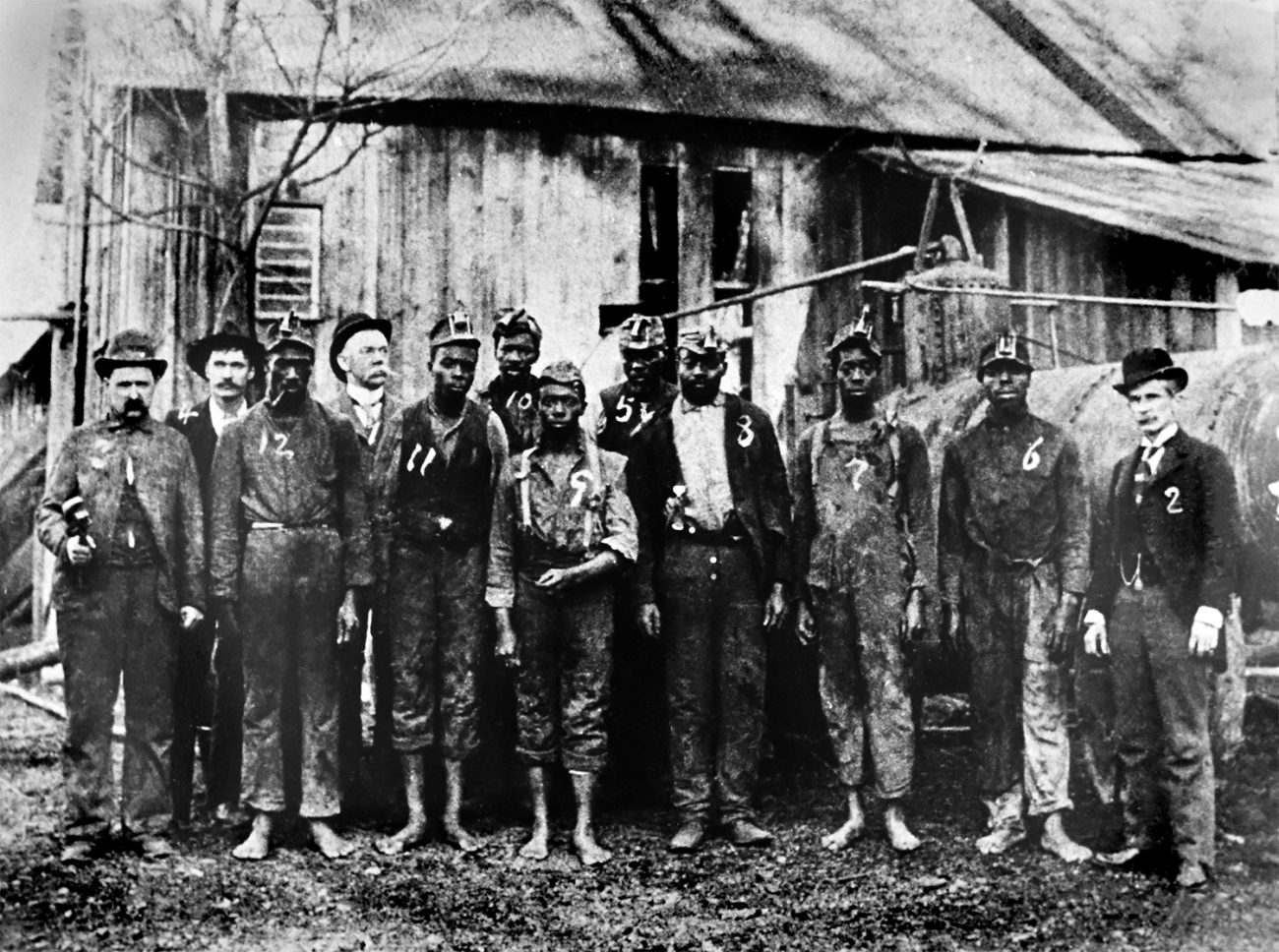
At the beginning of the twentieth century, all of the miners employed by the hospital were Black. They were among the more than 9,000 Black miners and quarrymen working in Alabama at that time, who constituted more than half the workforce in these industries. There is no evidence to suggest that the hospital ever leased convict miners, or that hospital patients worked in the mines.
On February 20, 1901, while 24 men were at work underground, a wall of the Hospital Mine ruptured and stagnant water from one of the hospital’s abandoned mines rushed in. The mine’s rooms and galleries were inundated, and the water level quickly rose to a depth of ten feet in the shaft. Eleven of the miners managed to escape, but 13 remained in the flooded mine. Contemporary accounts differ as to how the men fared after the flooding. The survivors’ ensuing legal complaint states that the men stood in very cold water for part of the time, whereas a newspaper article claims that they were above the water.
The mine pump was overwhelmed by the volume of water that had poured in. That afternoon, hospital authorities ordered an additional steam pump from Birmingham, Jefferson County, which arrived the following day and was quickly employed to pump the water out. Finally, after two-and-a-half days of pumping water, 10 of the 13 men who had been trapped in the flooded mine appeared at the bottom of the shaft. Seven of them climbed the 80-foot ladder to reach the surface and the other three were brought up in a lift. They had reached the ladder by wading through water that was still neck deep. Three co-workers, Pompey Stokes, Dock Foster, and Jeff Hamner, had drowned on the first day of the disaster. Their bodies were found near the ladder at the bottom of the shaft.
The widows of the men who died sued the hospital’s parent organization, the Alabama Insane Hospitals, for damages. Their cases did not go to trial, but under consent orders they received modest sums, ranging from $300 to $600. Four of the survivors of the disaster also sued in Tuscaloosa County Court, each seeking $5,000 in compensation for the suffering that they had endured in the flooded mine and for hampering their ability to earn a livelihood. Judge James Mayfield ruled that the Alabama Insane Hospitals, as a charitable state institution, was not subject to lawsuits. The case was appealed to the Alabama Supreme Court, which affirmed the lower court’s ruling, shielding the hospital from future personal injury suits.
Following the 1901 disaster, mining came to a halt on the hospital property. Mining did not resume until the end of World War I, when high coal prices prompted hospital trustees to look again at self-supply. In 1918, the hospital reopened the 1901 mine, but not without further tragedy. On May 15, William Franklin, a hospital employee, died of asphyxiation while descending the mine’s 80-foot ladder. He left behind a wife and three children.
By the end of 1918, coal was once again being raised from the Hospital Mine, and a new shaft was opened in 1920. However, coal output during this second mining phase reached that of the early years only once, in 1919. Sometime in 1921, the hospital permanently shut down its mines. A historic marker was placed nearby by the Alabama Historical Association in September 2025 to commemorate the tragedy.
Additional Resources
- Adair, George. “The Bryce Hospital Coal Mine Tragedy.” Alabama Heritage 155 (Winter 2025): 14-23.