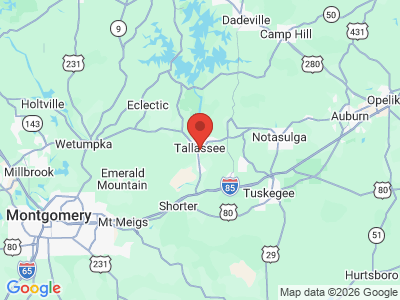
Tallassee Mills

Once the longest continuously operating textile mill built for cotton cloth production in the United States, the Tallassee Mills, built by the Tallassee Falls Manufacturing Company in 1844, remained in operation until 2005. This pre-Civil War-era textile mill began operation years before the major boom in mill construction throughout the South and was preceded in Alabama only by Huntsville’s 1832 Bell Factory. The mill is also notable for its role in the production of cloth products and weapons for the Confederacy during the Civil War.
Throughout the first half of the nineteenth century, there was minimal industrial development in much of Alabama and the rest of the South. Plantation agriculture supported by African enslavement had long been the driver of the region’s economy, but an abundance of cheap land and natural resources eventually drew the interest of wealthy entrepreneurs and businessmen for other types of endeavors. In Tallassee, Elmore/Tallapoosa Counties, the impressive falls of the Tallapoosa River and their potential to supply both water and power caught the attention of Georgia native Thomas Meriwether Barnett sometime during the 1820s. The land surrounding the falls on all sides was owned by French trader Barent DuBois. Barnett and DuBois agreed to build a textile factory on the land, and on December 31, 1841, the Alabama State Legislature chartered the Tallassee Falls Manufacturing Company. Also involved in these early business plans were Hickerson Burnham and William M. Marks, although their individual roles are not fully known.
Construction of the mill began just a few years later. The majority of the mill’s two stories were built out of stone from the surrounding area. Included in its design were imposing stone arches crafted by Italian stonemasons. In January 1844, a dam (site of present-day Thurlow Dam) was constructed above the falls by enslaved labor to harness the water and control the direction of the falls for the mill. In 1844, the Tallassee Mills officially and slowly began production, processing an estimated 1,000 pounds of cotton each day. Full production began sometime in 1845. The mill, known as the Barnett and Marks factory at the time, is believed to have been outfitted with machinery from Daniel Pratt’s ironworks in Prattville, Autauga/Elmore Counties. The cotton cloth produced by the mill was used for a variety of clothing, including garments for enslaved people. The quality of the cloth improved over time and quickly earned a reputation for its high quality; the mill received orders from across the region and from cities such as New Orleans, Louisiana, and Mobile, Mobile County.
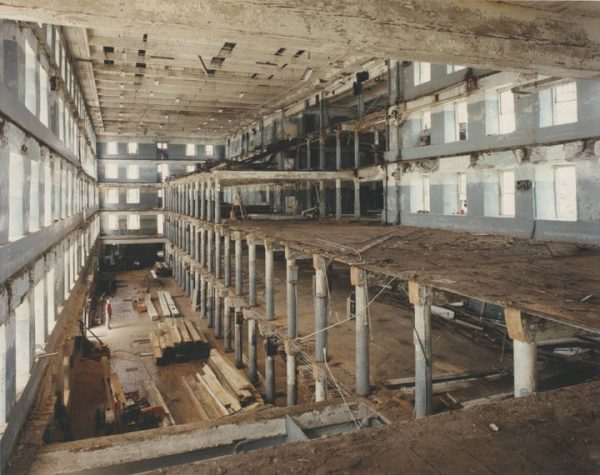
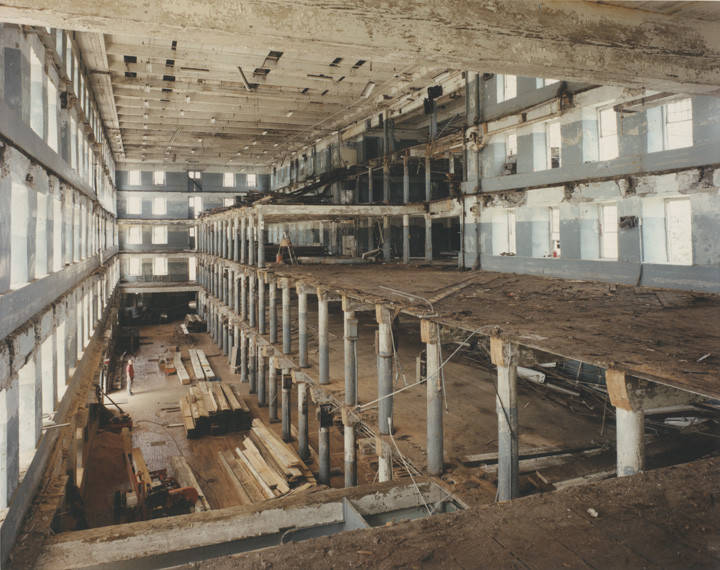
The facility expanded swiftly. Barnett and Marks purchased additional land from the DuBois family in 1847, enabling the construction of new buildings that transformed the simple mill into a growing textile complex. Between 1852 and 1854, a much larger mill building was constructed nearby. The T-shaped, four-story building, known as No. 1 Mill or the Duck Mill, increased production potential. The new buildings also allowed the company to expand the types of cloth produced to include woolen cloth and cotton duck fabric, a durable canvas-type cloth that was used for tents.
Leadership of the Tallassee Mills was often in flux, particularly in its first decade of operation. By 1861, the mill was known as Barnett, MiCou, and Company after the resignation of Marks around 1851, the buyout by Nicholas Barnett and Benjamin MiCou in 1854, and the death of Thomas Barnett in 1857.
During the Civil War, the U.S. military often targeted warehouses and factories supplying the Confederacy in southern cities. To counter these efforts, Confederate officials moved production to other facilities farther away from the fighting. In 1863, the Tallassee Mills became a temporary location for manufacturing Confederate short-barreled rifles, known as carbines. The original 1844 mill was outfitted for this work, producing hundreds of carbines before the end of the war. Despite an attempt by U.S. major general Lovell H. Rousseau to destroy the facility in 1865, the mill was one of the few Confederate armories to remain in operation until the end of the war. During this time, Duck Mill supplied cloth for Confederate cots, tents, and uniforms.
Operations at the Tallassee Mills returned to normal following the war. In 1868, the mill enhanced production with the construction of a weave shed and picker house and expanded even further with the addition of a fifth story to the Duck Mill (1880), and an even larger facility, No. 2 Mill, on the east side of the river (1898).
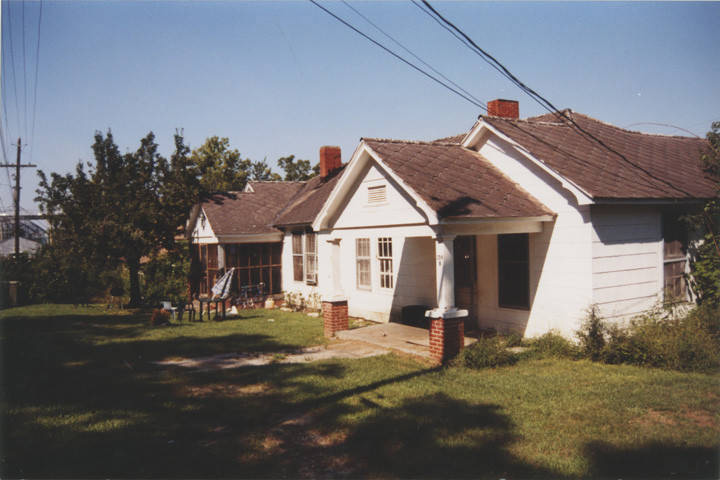
In 1900, ownership of the Tallassee Mills transferred to the Vernon Mills conglomerate, with mills originating in Baltimore, Maryland. The company name was changed to the Mount Vernon-Woodberry Cotton Duck Company. This new company included the Columbia Duck Mills of South Carolina and Mount Vernon Company and Woodberry Manufacturing Company in Maryland, as well as the Tallassee Falls Manufacturing Company. Production remained continuous throughout this transitional period. The company built a significant portion of the city of Tallassee around the turn of the century to support and attract workers. This included mill villages on the east and west sides of Tallassee, as well as a hospital, a library, a school, and a church. During the late nineteenth and early twentieth centuries, textile mills across the region constructed mill villages to house workers and their families in rural areas, which often lacked existing infrastructure. Additionally, these mill villages served to help control the workers, whose access to company housing was tied directly to employment.
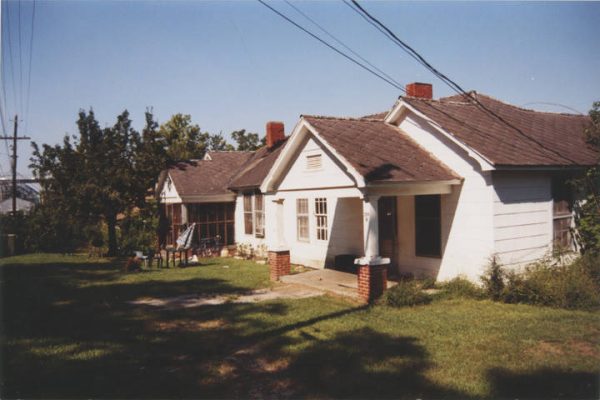
For many decades, operations at the Tallassee Mills appeared to continue smoothly through turbulent periods for the textile industry. At the mill’s peak in the 1940s, around 4,000 millhands were employed to fulfill orders for various heavy fabrics needed to produce military-grade cots and tents and uniforms during World War II, positioning the mill as a crucial asset to the town and its residents, but after the war, the changing labor market and broader market concerns tied to international trade created turmoil that management could not overcome. During the 1960s, all textile cloth production housed within the original mill building came to a permanent halt. Issues compounded throughout the next two decades. The cost of production in the United States continued to rise as workers earned better pay and benefits, and textile mills in the United States increasingly lost contracts and large orders to overseas factories. In the early 1980s, the Tallassee Mills lost the contract to produce the materials for Converse tennis shoes, and, in the face of a major economic recession, the company was unable to recover from the loss. In April 1982, owners of the textile conglomerate announced a nearly 50 percent layoff of the mill’s 1,100 employees, reasoning that the company had failed to turn a profit for more than ten years. By May, those who remained were transitioned to part-time work.
The loss of hundreds of jobs rippled across the Tallassee community, which was home to around 4,700 residents. These layoffs were only the most recent in a longer trend of decline in the domestic textile industry. In May 1982, an announcement that ownership would again change hands reached the public: R. B. Pamplin Corporation, from Portland, Oregon, would soon take over the Tallassee Mills. Despite this change in leadership, the mill continued its steady economic decline as the import market continued to increase. In 1991, some of the oldest buildings on the property, including the original stone mill, were sold to speculators based in Montgomery. Soon after, the Duck Mill, or No. 1 Mill, was stripped down and all machinery removed.
Around 2000, with a significant portion of the mill complex long closed, local people began formulating plans to preserve the significant history of Tallassee Mill and to restore and conserve its architectural character. Plans ranged from repurposing the mill into apartments, a museum, or office space, but all focused on preserving the building. This effort, led by the Talisi Historical Preservation Society (THPS), also stemmed from the belief that preserving Tallassee’s textile history would help stimulate economic growth.
By June 2005, when plans for its closure were announced after 161 years in operation, only 311 workers remained at Tallassee Mills. The announcement was met with frustration from many of those who had been with the company their whole lives, following in the footsteps of their parents and grandparents. Many recalled taking pay cuts in the 1980s to help keep the mill open. The meager severance package did little to alleviate their concerns. Despite the public outcry, the mill closed in October 2005. It was purchased in 2006 by a firm, Process Knowledge, that intended to repurpose and sell some of the old-growth pine wood used in its construction. It was later purchased by Mount Vernon Pine LLC, which also intended to market the salvaged wood.
Preservation of the mill’s history and Tallassee as a whole came to fruition in 2013. The THPS opened the Tallassee Falls Museum near the old mill site, focusing on a wide range of topics from the mill itself to the local Civil War legacy, the Tallapoosa River, World Wars I and II, and Black heritage in the region. Following general deterioration and damage from possible arson in 2016, the property is now maintained by the city of Tallassee. Remaining parts of the mill complex still feature the impressive architecture and industrial significance of the old Tallassee Falls Mill.
The Tallassee Mill was documented by the Historic American Buildings Survey in 1993. It was placed on the National Register of Historic Places in 2010. The Mill and the Confederate Arsenal, also known as the Elliott House, were listed on the Alabama Register of Landmarks and Heritage in 1978 and 1977, respectively.
Additional Resources
- Betz, Melanie A. and Susan Enzweiler. "Tallassee Falls Manufacturing Company." National Register of Historic Places Nomination Form. Washington, D.C.: U.S. Department of the Interior, National Park Service, 2010.
- Golden, Virginia Noble. A History of Tallassee for Tallasseeans. Tallassee, Ala.: Tallassee Mills of Mount Vernon-Woodberry Mills, Incorporated, 1949.