Alabama Register of Landmarks and Heritage

The Alabama Register of Landmarks and Heritage is a program of the Alabama Historical Commission, the official historic preservation agency of the state of Alabama. The Register recognizes a wide variety of properties of historic, architectural, archaeological, and cultural importance across the state. Being listed in the Register does not place any restrictions on the property or the property owner, but it does spotlight a property’s importance and encourage awareness and preservation efforts of Alabama’s past.
The Register was established in 1966 by the Alabama Legislature in association with the federal National Historic Preservation Act. The first property listed was the Hall-Westmoreland-Coburn House in Florence, Lauderdale County, on October 12, 1971. Many more were listed in 1975 and 1976 in recognition of the U.S. Bicentennial. The Alabama Register now contains some 1,700 listings, with approximately 370 also listed on the National Register of Historic Places. If a property was listed on the National Register first, the Alabama Register doesn’t list it as well. The densest concentrations of sites are, as expected, located in the state’s most populous areas, including Huntsville, Madison County, Birmingham, and Montgomery. The five counties with the highest number of listings are Jefferson, Montgomery, Dallas, Elmore, and Cullman.

Categories for significance include architecture and engineering; association with a notable family or person; early exploration and settlement of the state; religion and funerary art; transportation; and agricultural, military, and social history. Although most of the listings are buildings and other historical structures, there are a few that are unique, including the General Richard Montgomery Riverboat in Montgomery, the Alabama Theatre Pipe Organ in Birmingham, the Coca Cola Bottling Company’s Neon Signs in Florence, Lauderdale County, the Viola Liuzzo Memorial in Lowndesboro, Lowndes County, and the electric streetcar behind Montgomery’s Union Station. The oldest listing is Cherokee Plantation (Ross-Godfrey-Kershaw-Brewer House) in Fort Payne, DeKalb County, which was first built in 1790.
Individuals, communities, and organizations can nominate potential listings, and permission of the property owner is encouraged but not required. If an owner objects, the AHC carefully reviews the nomination on a case-by-case basis. Each nomination is evaluated by AHC staff against established criteria and requires significant fact-finding and research by applicants. The AHC provides forms and a guide to conducting historic property research on its website. The process, however, is not as in-depth as the submissions for adding a property to the National Register of Historic Places. Additionally, the Alabama Register has broader criteria for what can be listed. Properties must be at least 40 years old and should be representative of the time and place in which they were created. Applicants must provide documentation supporting the authenticity of the property’s location and construction. Unlike the National Register, the Alabama Register makes allowances for historic structures that have been relocated. Listings that have since been lost, such as to fire or demolition, are not removed from the list, but sites of historic structures that no longer exist are not eligible for listing. Applicants can instead pursue a historical marker.
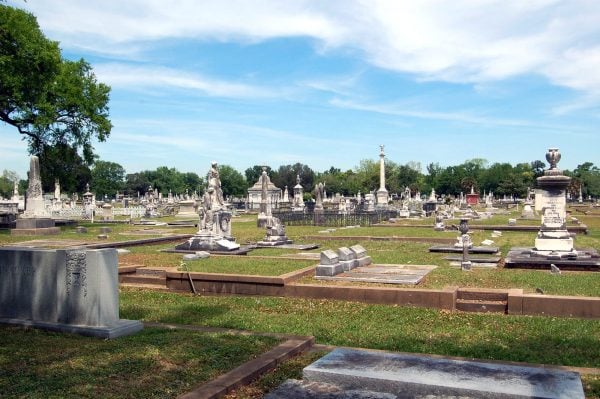
In addition to the Register, the AHC also maintains the Alabama Historic Cemetery Register with approximately 1,200 cemeteries listed. They range from large properties such as Magnolia Cemetery in Mobile to small family cemeteries. The oldest burials, dating to 1700, are found in Mt. Zion Baptist Cemetery in Haleburg, Henry County, and Mary Williams Cemetery in Verbena, Chilton County.


