Professional Football in Alabama
Although best known for its college football teams, Alabama has also been home to several professional football teams. During the 1960s, the Southern Football League (SFL) established semi-professional teams in Huntsville, Madison County; Tuscaloosa, Tuscaloosa County; Gadsden, Etowah County; and Mobile, Mobile County. Throughout the 1970s and 1980s, Alabama was home to several short-lived professional teams, including the Birmingham Stallions of the United States Football League (USFL). In the 2000s and 2010s, a few teams emerged from indoor and semi-professional leagues. The second iteration of the Birmingham Stallions, established in 2022, became Alabama’s most successful professional team to date, winning three consecutive championships before the United Football League (UFL) disbanded the team in July 2026.
The SFL’s Four Semi-professional Alabama Teams
The SFL was established in 1963 to serve as a minor league for the National Football League (NFL). The Huntsville Rockets, Tuscaloosa Warriors, and Gadsden Raiders were three of the eight original teams in the SFL’s inaugural season; the Rockets were the only team to have a winning record. For the 1964 season, the Warriors moved to Columbus, Mississippi, because of poor attendance in Tuscaloosa. That season, the Mobile Buccaneers replaced Tuscaloosa as Alabama’s third representative in the SFL, but the Buccaneers also had little success. In the 1965 season, the SFL’s last, all three remaining Alabama teams left the league for various reasons.
The First Iteration of the Birmingham Stallions
Twenty years after the formation of the unsuccessful SFL, businessman David Dixon, a key figure in establishing the New Orleans Saints, formed the USFL in 1983 as an attempt to compete with the NFL. The Birmingham Stallions were one of the USFL’s original 12 teams and Alabama’s first professional football team. Despite an unimpressive opening season in which the Stallions had a 9-9 record and one of the worst passing games in the league, the Stallions developed into one of the most consistently competitive, popular, and well-run teams in the league’s short three-year history, 1983 through 1985.
For their second season in 1984, the Stallions signed former Pittsburgh Steelers backup quarterback Cliff Stoudt and Alabama native Joe Cribbs, who was a star running back for the Auburn University Tigers and the Buffalo Bills. Stoudt became one of the league’s most efficient passers with 26 touchdowns and only 7 interceptions, and Cribbs led the league in rushing with 1,467 yards. Jim Smith, another former player for the Pittsburgh Steelers, was the Stallions’ top receiver during their three-year history and led the league in receiving that year with 1,481 yards. With this upgraded offensive regime, the Stallions improved to 14-4 during the 1984 season, tying for the second-best record in the USFL. The Stallions then won the South Division and their first playoff game, against the Tampa Bay Bandits 36-17. However, the Stallions lost in the second round of the playoffs 20-10 to the Philadelphia Stars, the eventual champions.
After Stallions’ owner Marvin Warner gave up control of the team in the middle of the 1985 season following a financial scandal, a $1 million investment from the city of Birmingham allowed the team to finish the season. Stoudt threw 34 touchdowns (second in the USFL only to the eventual NFL Pro Football Hall of Famer Jim Kelly), Cribbs ran for 1,047 yards, and Smith led the league with 20 touchdown receptions. The team won 13 games, earning the second-best record in the USFL for two consecutive seasons. The team prevailed in the first round of the playoffs with a 22-20 win over the Houston Gamblers. The Stallions’ season ended in the second round with a 28-14 loss to the Baltimore Stars. The USFL folded after the 1985 season, however, and the Stallions were forced to suspend operations.
Indoor and Semi-professional Teams in Alabama
After the dissolution of the Birmingham Stallions, Alabama saw many unsuccessful attempts to restore professional football’s presence in Birmingham. The Birmingham Fire of the World League of American Football, or WLAF (later known as NFL Europe/Europa), played for two moderately successful seasons before the WLAF disbanded. Although the WLAF eventually rebranded and resumed operations, the Fire never returned to the field. Later, the Birmingham Thunderbolts were established in 2001 as one of eight teams in the short-lived XFL. The Thunderbolts finished as the worst team in the league with a 2-8 record during the league’s only season in 2001.
Following these unsuccessful efforts, professional football in Alabama existed primarily within indoor and semi-professional leagues from the mid-2000s to the late 2010s. Playing at Huntsville’s Von Braun Center from 2000 to 2009, the Tennessee Valley Vipers were a mainstay in Arena Football 2 (af2), a developmental league for the professional Arena Football League (AFL). With 63 wins and one championship appearance during their first five seasons, the Vipers were one of the best teams in the af2. After a brief rebrand as the Tennessee Valley Raptors and a move to United Indoor Football (UIF) in 2005, the team reclaimed the Vipers name and returned to the af2 in 2006. While no longer as dominant, the Vipers won the af2 Arena Cup championship in 2008. After the AFL suspended operations in 2009, the af2 continued to operate, and the Vipers played through the 2009 season. In 2010, the af2 officially disbanded, and the AFL resumed operations. The team then joined the restructured AFL as the Alabama Vipers; however, after one season, the team folded.
The Birmingham Steeldogs (later known as the Alabama Steeldogs) accompanied the Vipers in the af2 from 2000 to 2007 and had similar levels of success within the league. The Steeldogs made the playoffs four times and appeared in one National Conference Championship Game, but the team folded in 2007. The Montgomery Maulers (later known as the Montgomery Bears) also saw some success in the National Indoor Football League (NIFL) and the American Indoor Football Association (AIFA) for two seasons before folding in 2007.
Brief Return of the Birmingham Stallions
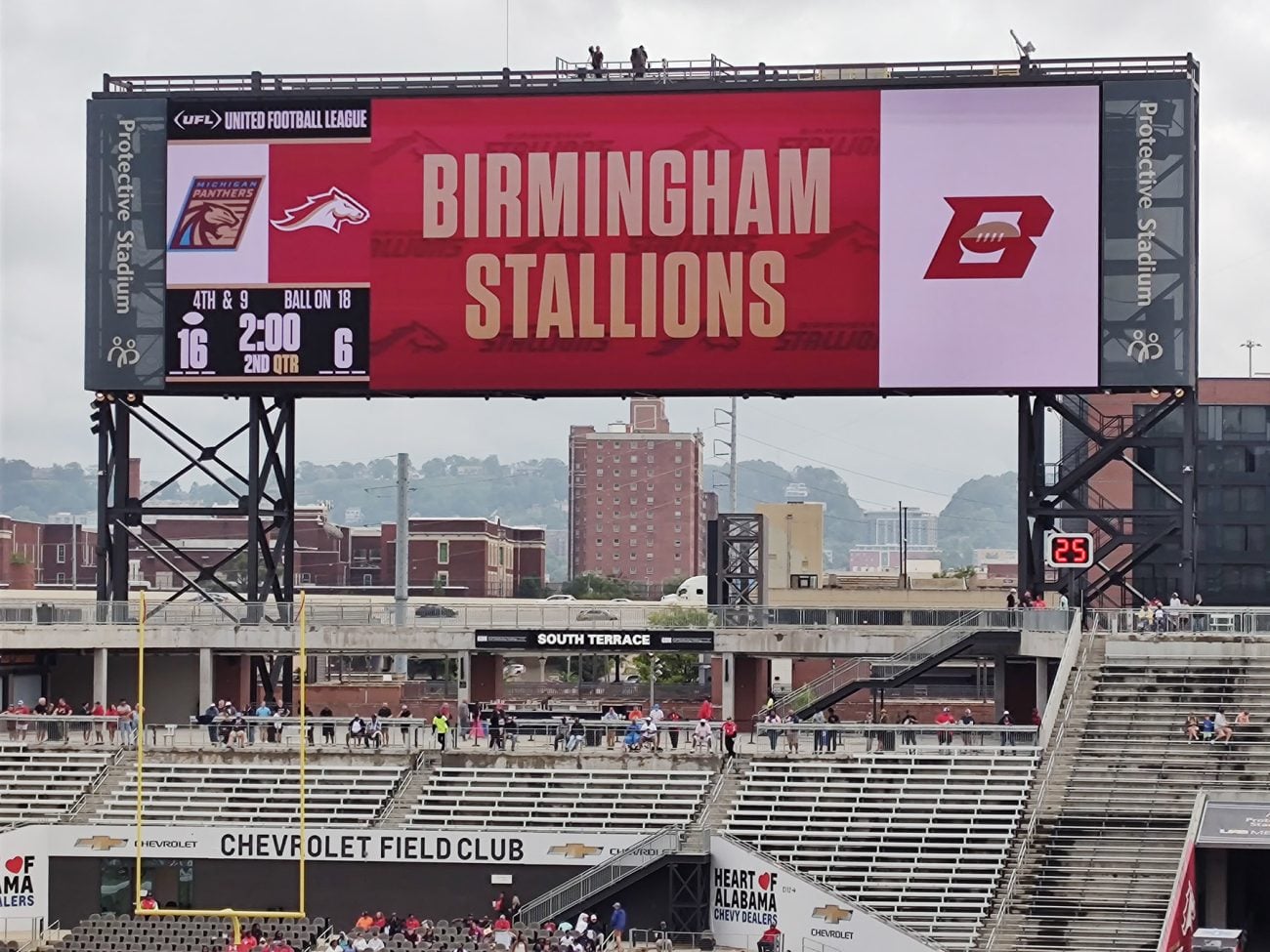
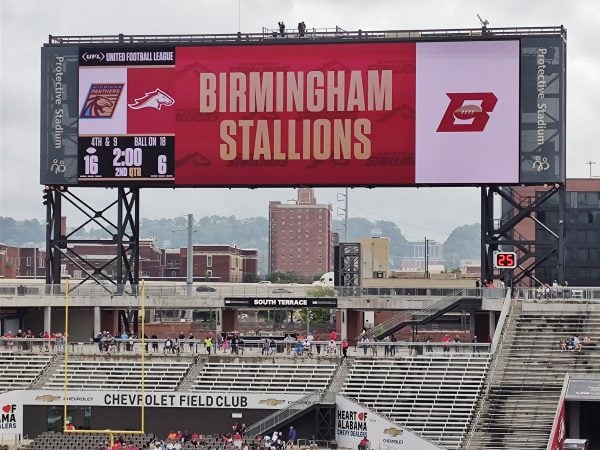
A revival of the USFL was announced in November of 2021, and a second iteration of the Birmingham Stallions was named as one of the eight teams for the league’s inaugural 2022 season. The league also announced that Protective Stadium and Legion Field in Birmingham would host every USFL game during the 2022 regular season. (Protective Stadium opened in 2021 and serves as the home stadium for the University of Alabama at Birmingham Blazers football team and Birmingham Legion FC of the USL Championship professional soccer team.)
Before the Stallions’ first season, Gene Chizik, former championship-winning coach for the Auburn Tigers, was rumored to become the Stallions’ first head coach. However, after declining to confirm the rumors, Chizik was instead hired as the assistant head coach and defensive coordinator for the North Carolina Tar Heels. Two weeks later, the Stallions hired Skip Holtz as the team’s first head coach and general manager. The son of coaching great Lou Holtz, he had held similar coaching positions at several universities.
Led by Holtz, quarterbacks J’Mar Smith and Alex McGough, Alabama native and former University of Alabama Crimson Tide running back Bo Scarbrough, and wide receiver Victor Bolden Jr., the Stallions finished the season with a 9-1 record and won the USFL’s first championship over the Philadelphia Stars 33-30. The Stallions posted the league’s best record (8-2) in 2023 as well, with McGough taking over for an injured Smith for the majority of the season. The Stallions won their second consecutive USFL championship game as McGough’s four touchdowns led the team to a decisive 28-12 victory against the Pittsburgh Maulers. McGough was named the league’s Most Valuable Player (MVP) and Holtz Coach of the Year that season.
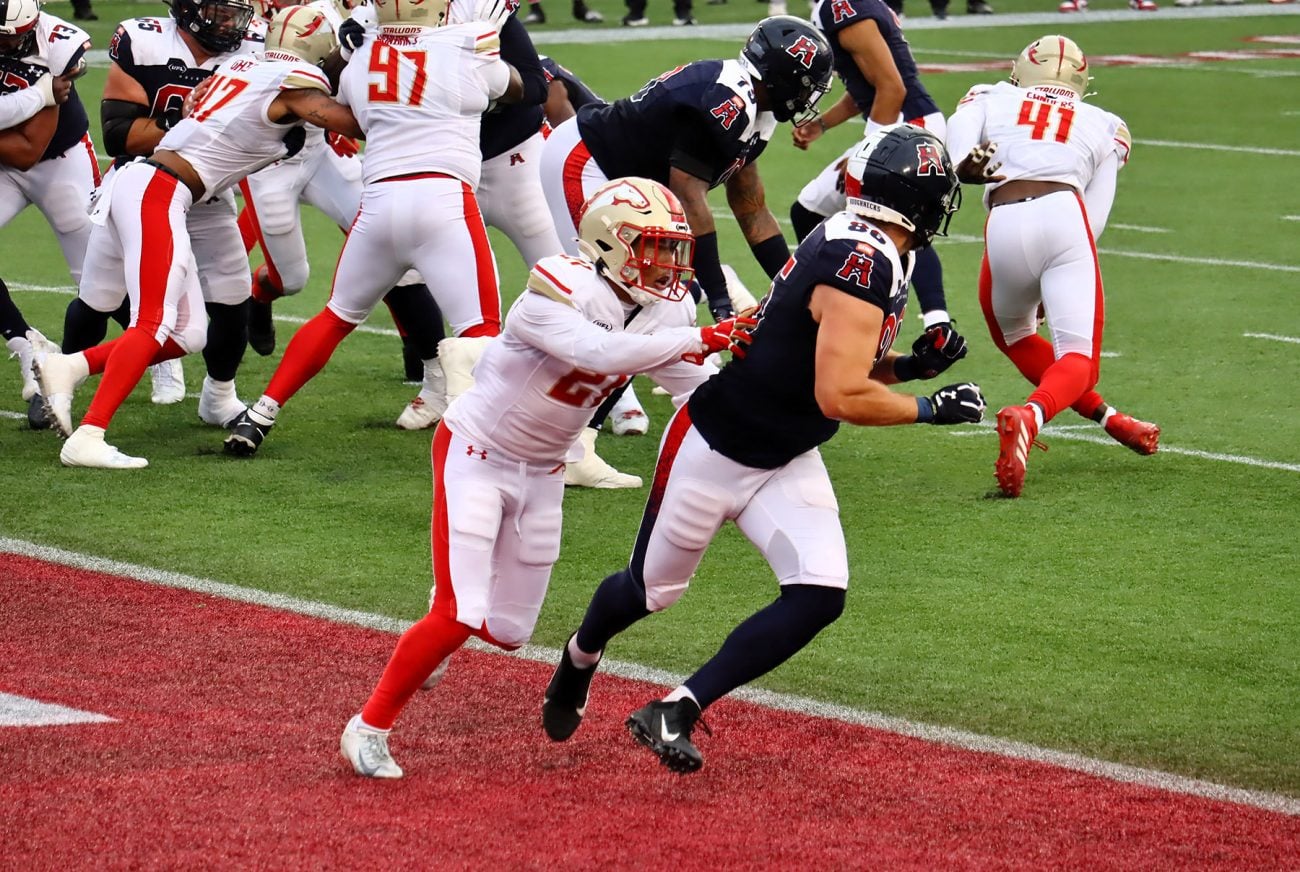
In 2024, the USFL merged with the second iteration of the XFL to form the UFL. Due largely to its dominant two-season run in the USFL, the Stallions survived the merger, joined the UFL, and maintained their place as the premier spring football team. Quarterback Adrian Martinez won the first UFL MVP award and led the Stallions to win the first UFL championship by rushing for two touchdowns and passing for a third in a blowout 25-0 win over the San Antonio Brahmas. As a result, the Stallions became the first professional football team to win three consecutive championships in the twenty-first century.
After this successful run, the Stallions team and brand began to dwindle the following season. While the Stallions made it to the UFL conference championship in 2025 (losing 44-29 to the Michigan Panthers), a severe decline in game attendance led to major changes for the team. Eventually, many of the Stallions’ core players left the team, and Holtz stepped down as head coach. In 2026, Alabama native and Crimson Tide star quarterback A.J. McCarron was hired to replace Holtz, but the Stallions managed only a 4-6 record, the second worst in the league. Following the Stallions’ disappointing 2026 season and disagreements between the team and the city of Birmingham about the size of Protective Stadium, the UFL announced that the Stallions would cease operations in Birmingham, leaving Alabama once again without a major professional football team.