Malaria
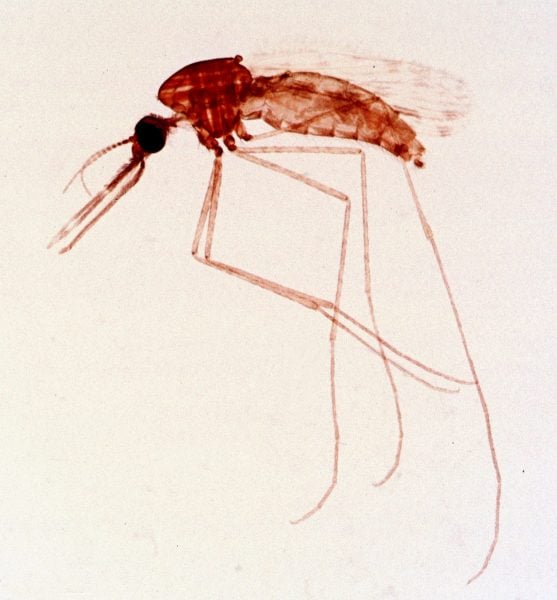
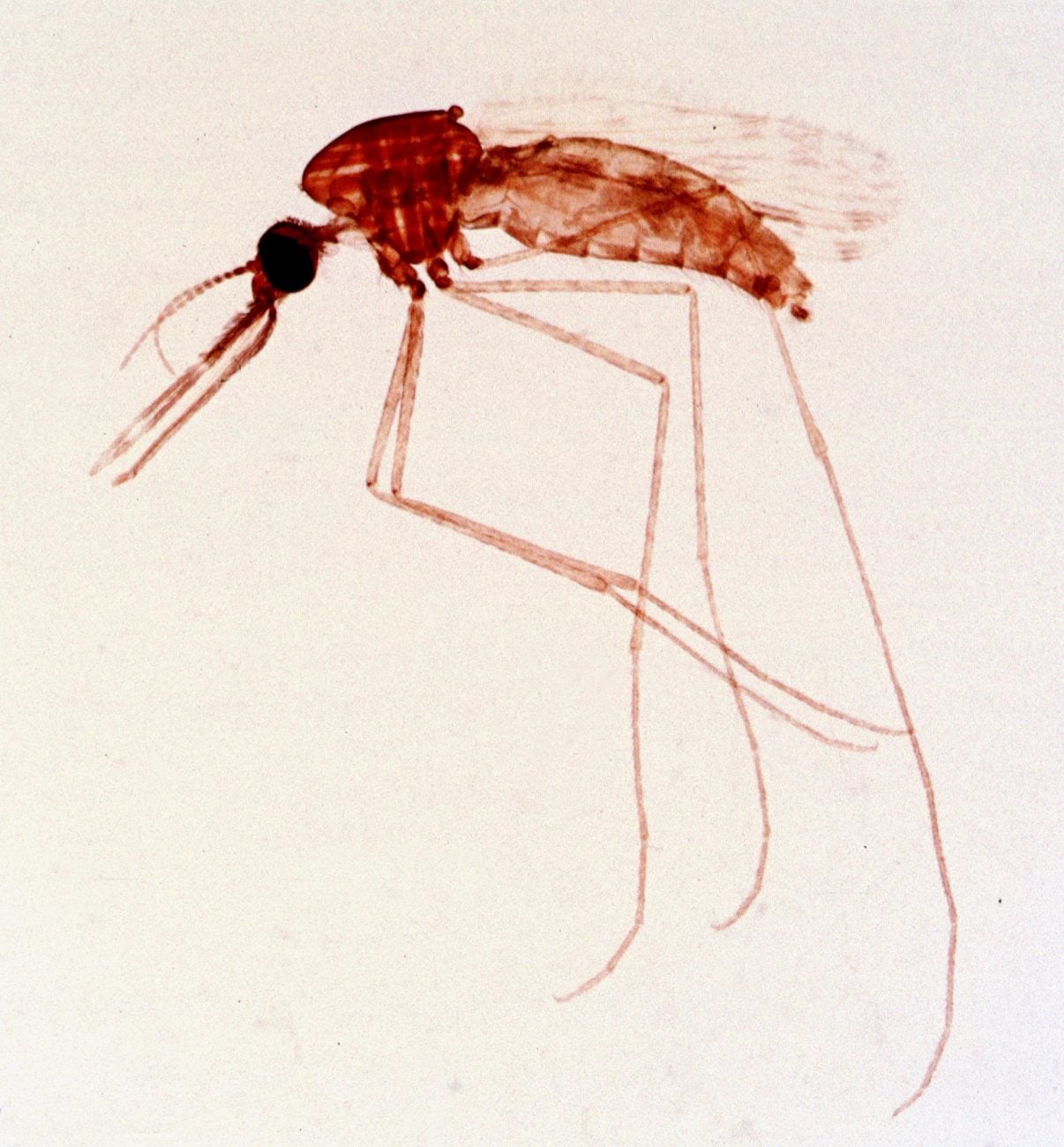
Malaria is one of the deadliest diseases in the world and was endemic in Alabama and the South until the 1930s, when New Deal programs targeted the disease by eradicating mosquito breeding grounds. Found in tropical and subtropical areas, malaria can be caused by any of several parasites in the Plasmodium genus. Transmission occurs when a female Anopheles mosquito bites a human infected with the parasite and then bites another human, becoming a carrier, or “vector,” for the disease. The result is a parasitic infection called malaria. The name of the disease originates from the Italian mal aria, or bad air.
In humans infected with malaria, the parasite travels in the bloodstream to the liver, where it matures and reproduces, before destroying the host’s red blood cells. Malaria parasites may live in the liver from several weeks to a year, essentially lying dormant. Symptoms are flu-like and include chills, head and body aches, fever, and gastrointestinal upset. More severe cases may include seizures and kidney failure and are generally fatal without treatment.
European explorers brought myriad diseases to the Americas, including the malaria parasite, which originated in Africa. Native Americans lacked immunity to many European contagions; consequently, millions succumbed to malaria and other diseases. Until it was identified, physicians routinely termed the disease “swamp effluvia,” “ague,” or “intermittent fever.” In the seventeenth century, Jesuit missionaries in South America recognized locals’ use of a certain tree bark to alleviate fever symptoms. By the next century, several physicians had claimed credit as the first to treat malaria with quinine, a compound from the cinchona tree, including Thomas Fearn of Huntsville, Madison County, and John S. Sappington of Missouri. In the late 1800s, the French physician Alphonse Laveran discovered parasites in the blood of malaria patients, and, shortly thereafter, the British physician Sir Ronald Ross detected how mosquitoes spread the disease. Laveran and Ross each received Nobel Prizes for their research.
Scientists in the twentieth century explored the relationship between malaria and sickle cell disease, an inherited blood disorder. They found that malaria was endemic to Africa and spread through the Atlantic slave trade. Prior to the Civil War, it was widely believed that enslaved people of African descent were immune to malaria. At the time, their rationale was racially motivated rather than scientific. Many people of African descent carry an inherited sickle cell trait, which does not make them immune, but rather reduces the worst effects of malaria. In parts of the South, such as swamp-filled areas of rice production, some enslaved people enjoyed at least a little autonomy from their White overseers who were wary of these mosquito-filled areas and avoided them.
Alabama’s subtropical climate and large concentration of shallow-water habitats, such as swamps and marshes, provided abundant breeding grounds for the Anopheles mosquitoes that most frequently carried malaria-causing parasites. Lifestyle factors further exacerbated the issue. Homes, especially in rural areas, generally lacked adequate construction or the screening necessary to shield residents from mosquitoes. Additionally, most infections and deaths occurred during warmer months when people opened windows for circulation and spent more time outdoors for recreation and social events.
In December 1912, the U.S. Public Health Service began a statewide study to determine how many cases of malaria were presently in Alabama. The Alabama Department of Public Health mailed postal cards to physicians with the expectation they would be returned along with their physical location and the number of malaria cases they had seen in the previous month. Even given the small rate of response (less than ten percent), thousands of cases were reported. The study continued in subsequent years with a 1914 year-end malaria case count at 9,865 from the cards received. The information from the physicians indicated that the largest number of deaths occurred in August, September, and October. Contributing factors may have been climate and inadequate outdoor attire. The report also demonstrated that nearly half of the deaths occurred in individuals younger than 30 years of age. Additionally, due to lack of medical care, medical access, and education, Black Americans were more likely to die of malaria. In 1915 and 1916, slightly more cards were returned (around 12 percent), and reports again revealed a jump in cases during the warmer months, from June to September. The reported number of cases in the study for 1915 and 1916 were 9,444 and 11,008, respectively.
Sickness and death due to malaria continued in Alabama and much of the South in the first quarter of the twentieth century. Perhaps the greatest temporary assistance came by way of a severe drought in the early 1930s covering most of the South, possibly lessening the malaria death toll by 100,000.
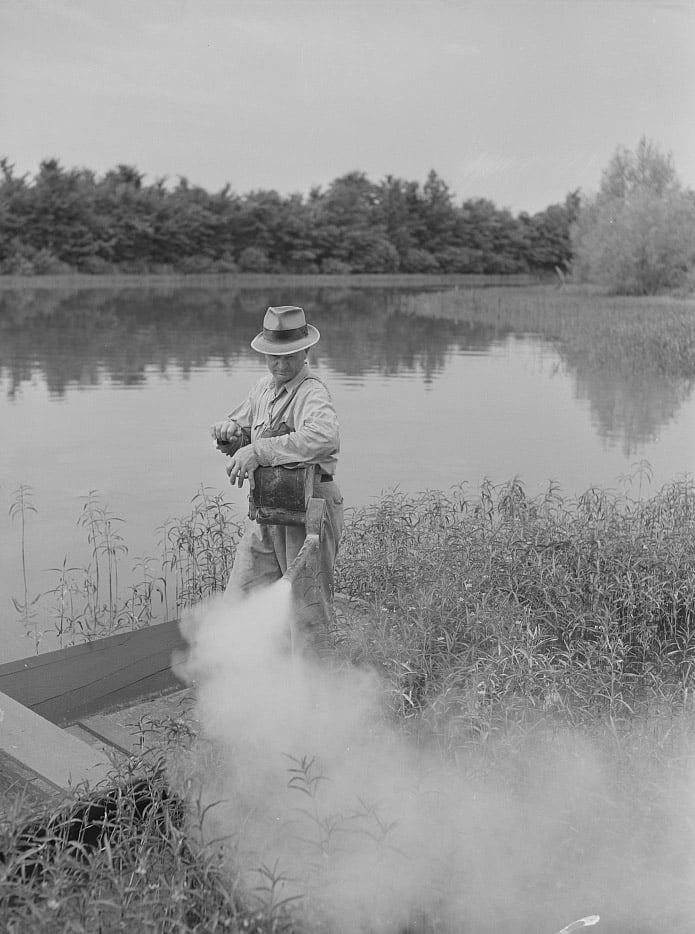
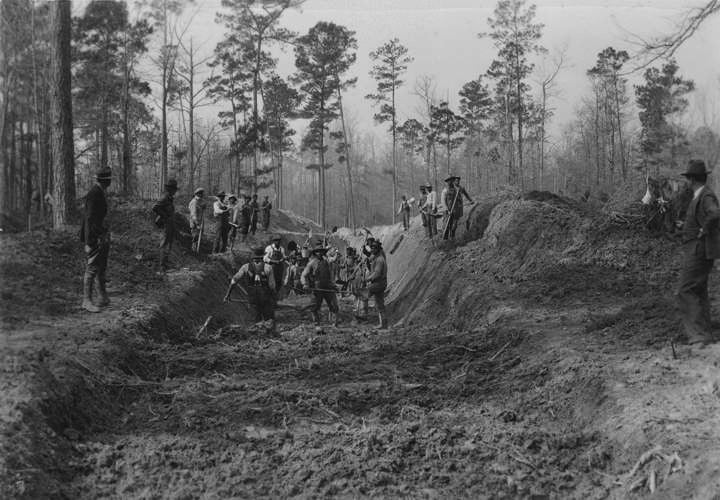
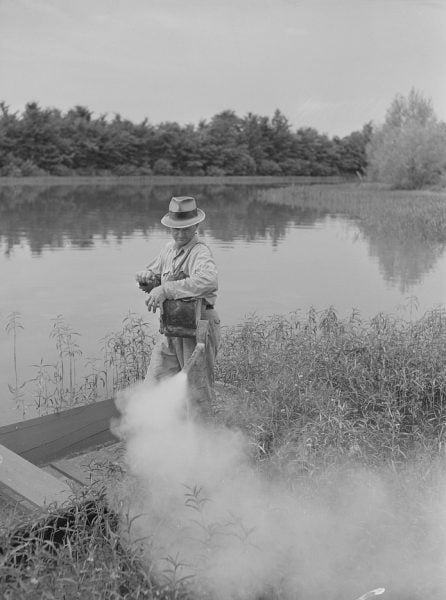
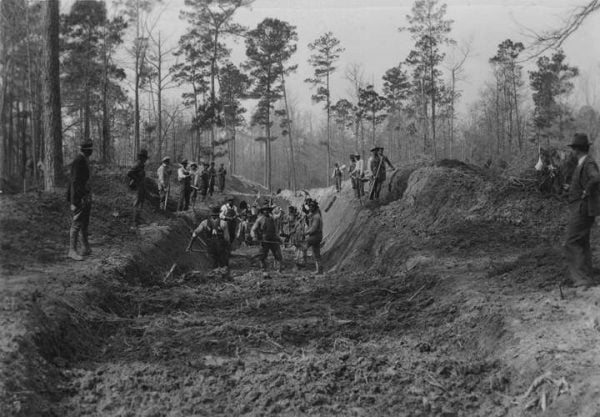
In the early 1900s, Alabamian William C. Gorgas, a U.S. Army physician and future Army surgeon general from Alabama, was studying mosquito breeding grounds as he researched a similar disease, yellow fever, in Texas, Cuba, and areas surrounding the building of the Panama Canal. Among his most important efforts were to eliminate areas of standing water through the building of drainage systems and structures such as dams and providing fumigation techniques to kill adult mosquitoes. By the 1930s, New Deal programs sought to improve the wellbeing of Alabamians by employing Gorgas’s methods. To reduce breeding grounds for malaria-carrying mosquitoes, the Civil Works Administration (CWA) and Works Progress Administration (WPA) employed out-of-work men in drainage projects, and the Tennessee Valley Authority (TVA) employed many others in the construction of dams. The passing of the Social Security Act in 1935 authorized millions of dollars for state and local public health infrastructure and training. The law’s Public Health Work Appropriation (Title VI) required states to provide training and increase public health. As a result, the federal government appropriated money for the Alabama State Board of Health. The Rockefeller Foundation also contributed funds for the training of public health workers, sanitary engineering, and laboratory techniques. Estimates of the combined New Deal efforts in the South show that more than 500,000 acres of mosquito breeding sites were drained and approximately 34,000 miles of ditches were dug.
Despite these programs, malaria was still an issue as military troops trained for World War II in southern states. Working with state and local health departments, the Malaria Control in War Areas (MCWA) project began in 1942 as many of the bases were located where mosquitoes were likely to carry malaria. MCWA became the Communicable Disease Center (the present-day Centers for Disease Control and Prevention, or CDC). The following year, the Tennessee Valley Authority (TVA) conducted the first-ever aerial application (crop dusting) of DDT (dichlorodiphenyltrichloroethane) at Wilson Dam.
Malaria was officially eliminated in Alabama and the rest of the country by the 1950s. Factors contributing to this include research, public health education, and training with the creation of the CDC; various agencies in New Deal programs for groundworks and construction; and the availability of widespread chemical insecticides. Today, malaria is not considered endemic in the United States; however, there are typically around 2,000 cases per year. Most of these involve people who have traveled to areas where there are active cases of malaria and returned to the United States. Even though 40 percent of the world’s population lives in areas conducive to malarial transmission, most cases of malaria today occur in the African continent.
Additional Resources
- Byerly, Carol R. Mosquito Warrior: Yellow Fever, Public Health and the Forgotten Career of General William Gorgas. Tuscaloosa, Ala.: The University of Alabama Press, 2024.