James Justus
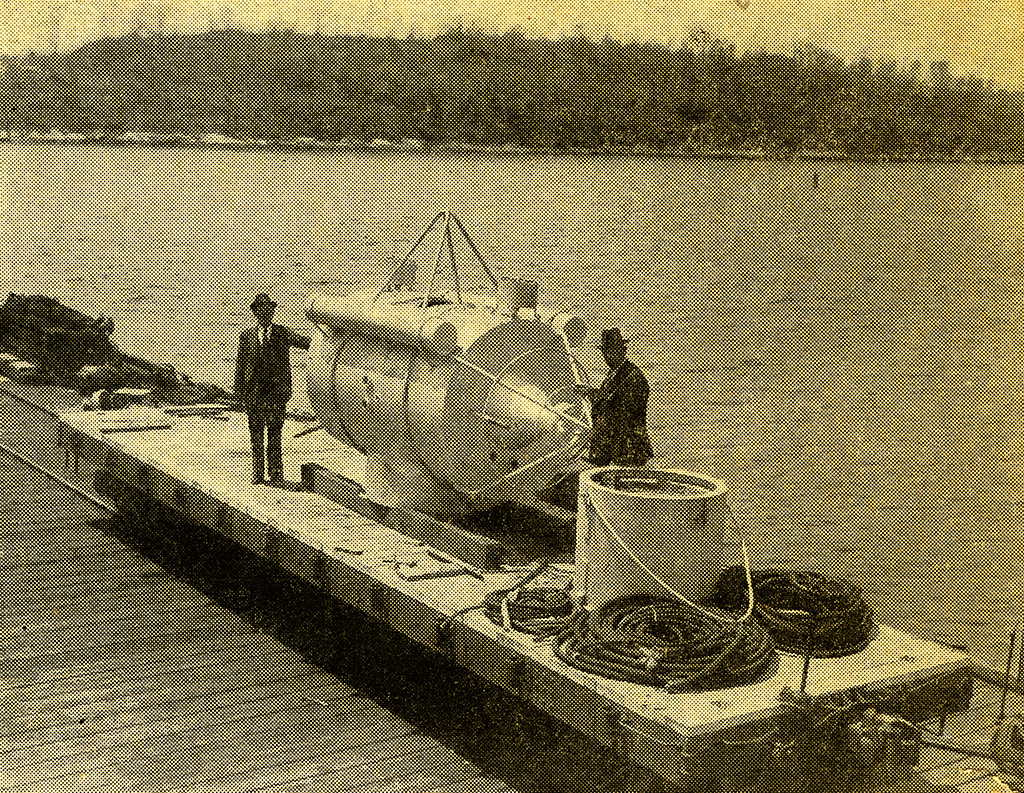
While residing in Birmingham, Jefferson County, in the 1930s, James William Justus (1887-1968) invented a new type of submarine salvage machine, or diving bell, designed to attach to stranded submarines. He later repurposed the bell into a device he called a “hydrocopter,” which could conceivably facilitate the salvage of sunken maritime vessels and treasure from the ocean floor.
Justus was born in Gaddistown, Georgia, on May 20, 1887, to James Davis Justus, a farmer, and Emaline Rhoda Pierce Justus. He was the second of eight children. He attended rural schools and received a limited education and worked as a farm laborer. Sometime before 1910, Justus moved across the country to Delta, California, where he worked as a motorman in the smelting industry. By 1915, Justus had moved back to Georgia, where he worked as a farm laborer again.
On March 25, 1915, Justus learned that the USS F-4 submarine and its 21-man crew had tragically sunk during training maneuvers near the entrance to Honolulu Harbor in the Territory of Hawaii. When the submarine did not return to port, rescue and salvage attempts were made, including one diver making multiple deep dives with only a diving helmet and breastplate. Upon finding the submarine on the ocean floor, Navy officials determined that the submarine's pressure hull had imploded and that all 21 men had died. At the time, the U.S. Navy had no vessels or equipment to rescue or salvage a sunken or damaged submarine.
The tragedy left a lasting impression on Justus, who became increasingly interested in building a vessel that could rescue people from sunken submarines. Driven by this desire, Justus began teaching himself welding, engineering, and all he could about submarines in his spare time. Meanwhile, during the next two decades, he continued to work various regular jobs around the country, including as a streetcar conductor in Fulton, Georgia. During this time, he also met Kate Bailey, and the two married on September 1, 1919, in Fulton, Georgia. The pair would have three children.
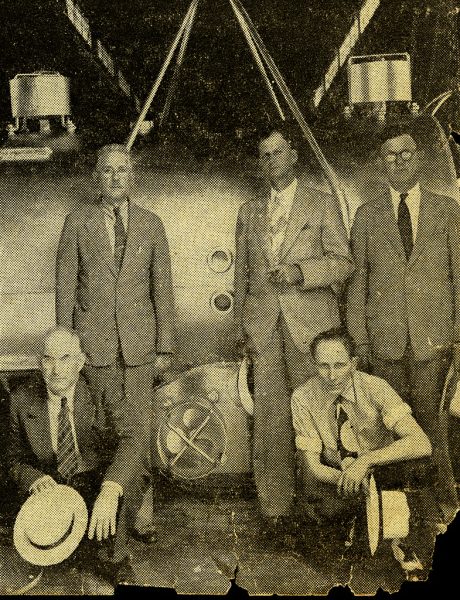
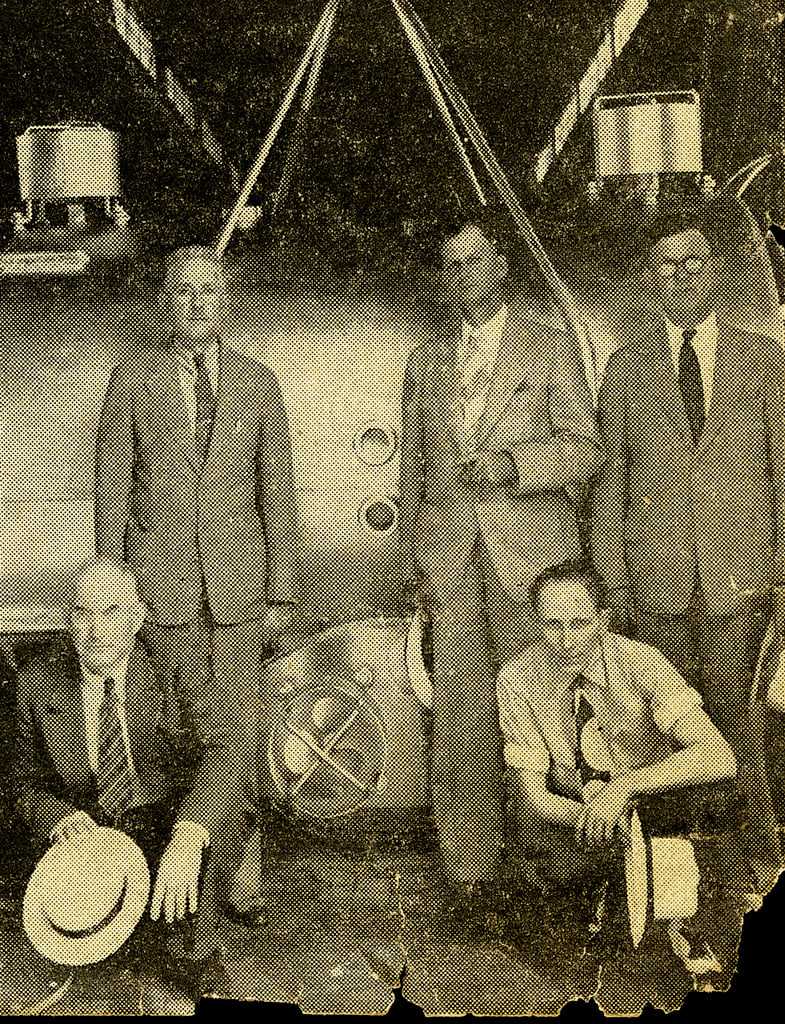
In 1937, Justus and his wife moved to Birmingham, drawn by the city’s booming steel industry as a source of materials for his conceptions. He held several jobs, using his weekly earnings to buy steel for the prototype of his invention, a new type of diving bell. By 1938, Justus had helped establish the Deep Sea Rescue and Salvage Corporation and, with Gordon Barber as manager, had developed the prototype and secured patents for his design.
His diving bell was constructed of welded steel cylinders able to withstand the pressure at 1,000 feet below the surface. Justus designed two ports for the cylinder, each equipped with grappling hooks that could grab the hatches of a sunken submarine. Powered by an electrical cable, several small external propellers would maneuver the device to align the hatches on the bell and the submarine, if so equipped. The bell would then form a watertight link between the rescue chamber and the sunken vessel and allow people to move between the diving bell and the vessel. An early version measured five by seven and a half feet and cost nearly $50,000 to build. It weighed nine to ten tons and was large enough to hold eight to ten rescued men. Justus was aided in his efforts by officials of the Tennessee Coal Iron & Railroad Company (TCI). The device was successfully tested at Ketona quarry, a limestone quarry consisting of two pits operated by TCI in Tarrant, Jefferson County, which had filled with groundwater. (It became known as Ketona Lakes and was popular with fishermen and swimmers. The property was later acquired by the Drummond Company and closed to the public.)
Justus used the last of his savings to ship the diving bell to a Navy submarine facility at New London, Connecticut, where he demonstrated his invention to U.S. Navy officials. After the U.S. Navy turned him down, he offered the diving bell to Britain’s Royal Navy, which also declined.
The outbreak of World War II delayed further efforts to promote his invention. After the war, Justus moved himself and his invention to Miami, Florida. There, he reconfigured his diving bell into what he called the “hydrocopter” (reportedly for its ability to hover like a helicopter) to serve as a treasure-hunting machine, with financial backing from Gordon Barber. The hydrocopter, which measured ten by six feet, weighed some eleven tons, worked similarly to the diving bell. The device would drop down to 1,000 feet, where powerful lights illuminated the ocean floor. This machine, with a crew of four, could then use clawed clamshell scoops to lift sunken ships possibly containing treasure to the surface.
The southern coast of Florida had consistently attracted treasure-hunting enthusiasts because it was a well-known site of colonial-era shipwrecks. The Spanish, in particular, lost numerous ships carrying gold from their colonies in the Americas through the hurricane-prone waters of the Caribbean Sea and western Atlantic Ocean toward Spain. According to multiple newspaper articles, Justus and Barber made several expeditions, including one in 1965 to a rumored sunken German submarine from World War II reportedly carrying gold. The success of these expeditions remains unclear, as the newspapers did not publish any follow-up stories. However, even into the late 1960s, Justus continued to promote his hydrocopter, suggesting that even if the expeditions did not find any treasure, the failure was not due to a fault in Justus’s design.
Justus died on January 13, 1968, and is buried at Mount Airy Cemetery in Suches, Georgia.