Wendell Wilkie Gunn
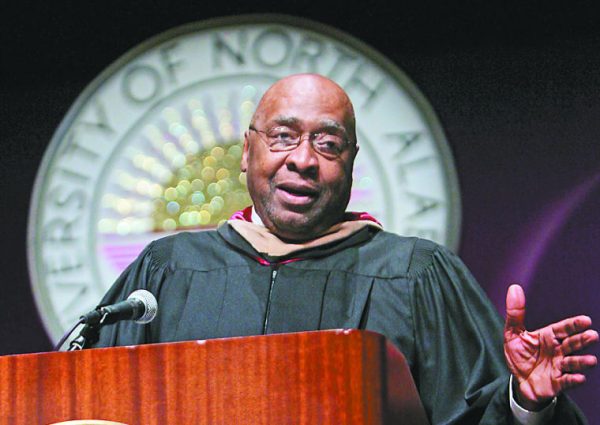
Wendell Wilkie Gunn (1942- ) is a pivotal figure in breaking racial barriers in higher education and public service and is best known for his role in integrating Florence State College (present-day University of North Alabama) in Florence, Lauderdale County. Gunn later served in the administrations of Pres. Ronald Reagan and Pres. George H. W. Bush and in executive leadership positions in Fortune 500 companies.
One of four children, Gunn was born on September 23, 1942, in Tuscumbia, Colbert County, to Marshall Gunn, a laborer at Reynolds Metal Company and an officer in the Black local chapter of the Aluminum Workers International Union, and Mattie Gunn, a talented cook who worked in restaurants throughout the Shoals region. Gunn’s parents named him after Wendell Willkie, the 1940 Republican candidate for U.S. president whose civil rights views they admired. He attended the segregated Trenholm High School in Tuscumbia before finishing his high school education at Nashville Christian Institute. After graduating in 1960, he attended Tennessee Agricultural and Industrial State College (present-day Tennessee State University), a historically Black university (HBCU) in Nashville, and studied Romance languages, math, and chemistry. During this time, Gunn has said he did not participate in demonstrations or other activities related to the civil rights movement.
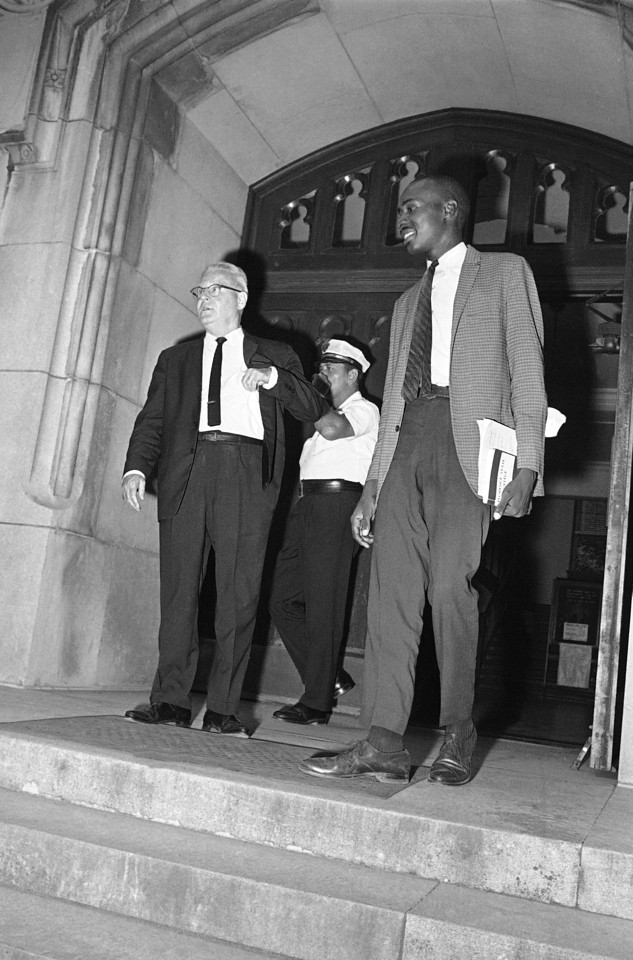
In the summer of 1963, out of a desire to be closer to his home, as well as for financial reasons, Gunn attempted to transfer to Florence State College. He was initially denied admission, but privately, the president supported integration. During a meeting with Pres. Ethelbert Brinkley “E. B.” Norton and Dean of Students Allen Turner, Norton told Gunn that, were he to sue the college in federal court, the institution would be forced to admit him. Gunn then called on Montgomery Improvement Association attorney Fred Gray, who was friends with his mother, to file the suit to order Florence State College to admit him. Gray later described the case as among the easiest of his long career.
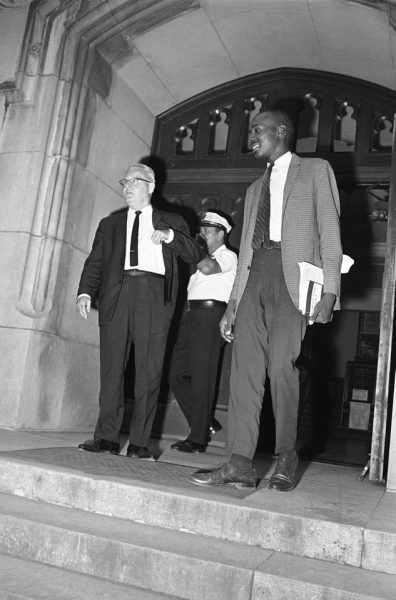
Gunn’s first day on campus as a student was September 11, 1963. Unlike the integration stories from other college campuses in the South, Gunn’s story is considered uneventful. He has said there were no threats of violence during his time on campus nor protests of any kind. According to school records, Gunn received a standing ovation at Honors Day in 1964 for earning the top grade-point average among physics majors. In 1965, he graduated with a bachelor’s degree in chemistry and mathematics. His time at Florence State College permanently integrated the institution, and two more Black students enrolled in 1966. In 1967, Gunn married Linda Jones Gunn; the couple would later have three children.
After leaving Florence State, Gunn enrolled in the University of Chicago, where he received his master’s degree in business administration in 1971. With his education behind him, Gunn would go on to a series of leadership roles in finance and academia. Throughout most of the 1970s, he worked for Chase Manhattan Bank, where he served as vice president of corporate banking (1971-74) and vice president of commercial lending (1974-79). From 1972 to 1973, he also served as an assistant professor of finance at Texas Southern University. From 1979 to 1982, he served as the assistant treasurer and director of investor relations at PepsiCo.
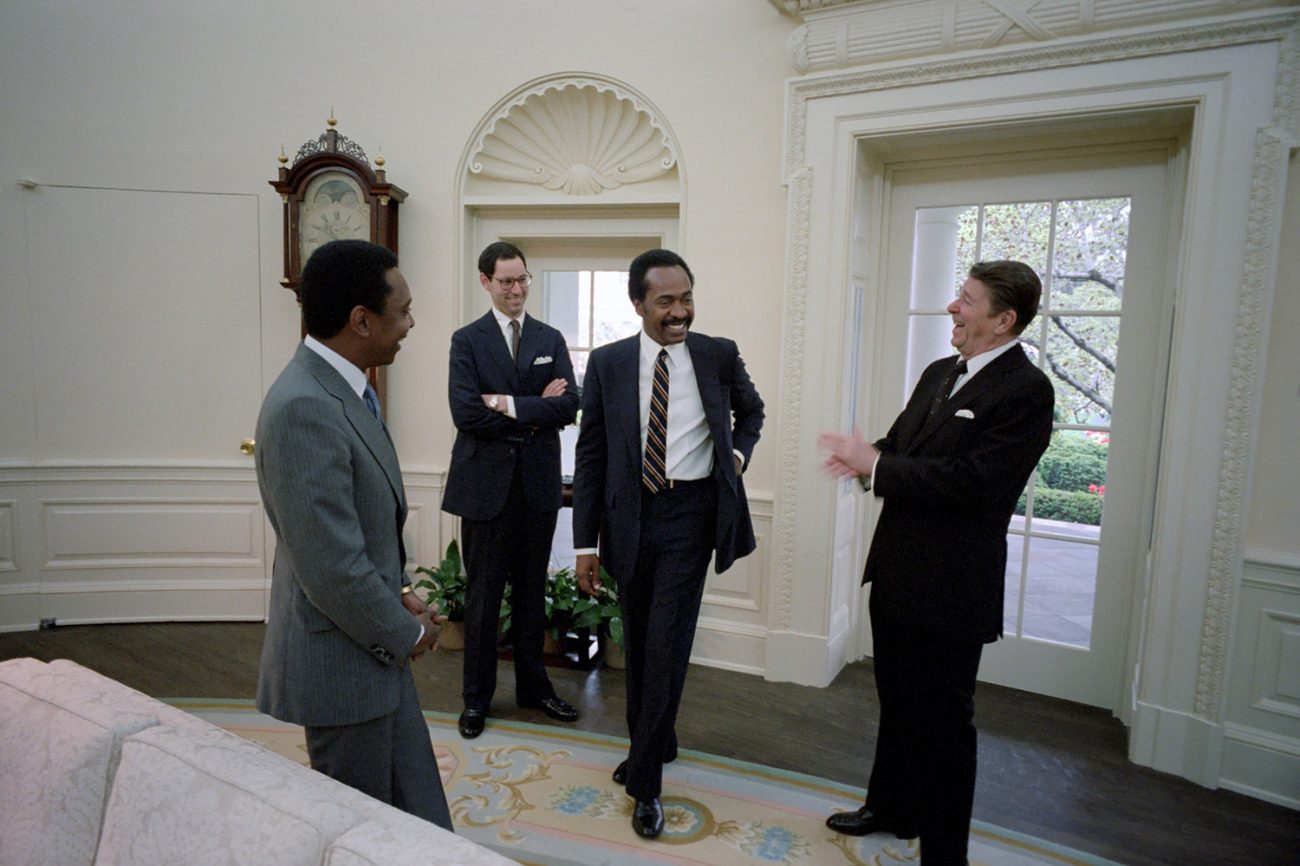
In 1976, while Gunn was living in New Jersey and working for Chase Manhattan Bank, he wrote a letter to his local paper, the New Jersey Star-Ledger, critical of former California governor Ronald Reagan’s electoral strategies with minorities as he was seeking the Republican nomination for president. Gunn’s critique of Reagan paved the way for an invitation to the 1976 Republican National Convention in Kansas City, where he appeared before a subcommittee on economic policy. It was during his presentation that Gunn mentioned the Kemp-McClure Jobs Creation Act, which was under consideration in Congress at the time. This caught the attention of Jack Kemp, a U.S. Representative for New York from 1971 to 1989. In 1982, Gunn was persuaded to join Pres. Reagan’s administration as a special assistant to the president for policy development. He also served as assistant director for commerce and trade within the Office of Policy Development and executive secretary of the Cabinet Council on Commerce and Trade. In his various White House roles, Gunn was one of several advisors who evaluated key issues in commerce and trade policy and made recommendations to the president.
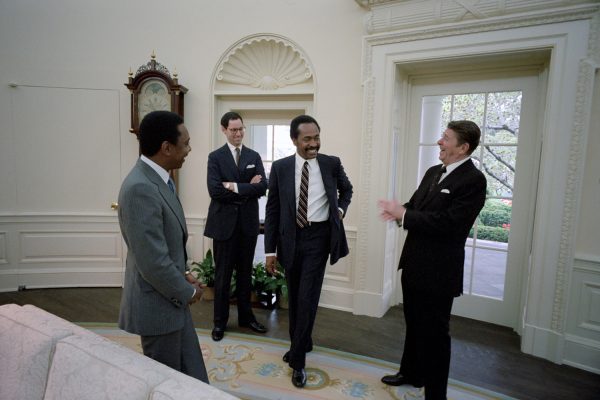
Gunn’s tenure in the White House lasted until 1984, when he became an economic consultant and was also considered for appointment to the Federal Reserve Board in 1985. He served as chief of staff for Kemp, then-U.S. secretary of Housing and Urban Development, from 1989 to 1993 under Pres. George H.W. Bush. Gunn then served as vice president at MetLife Pension and Investments until 1996. Gunn later founded and served as managing director of Gunn Solutions, a technology consulting firm, based in Stamford, Connecticut.
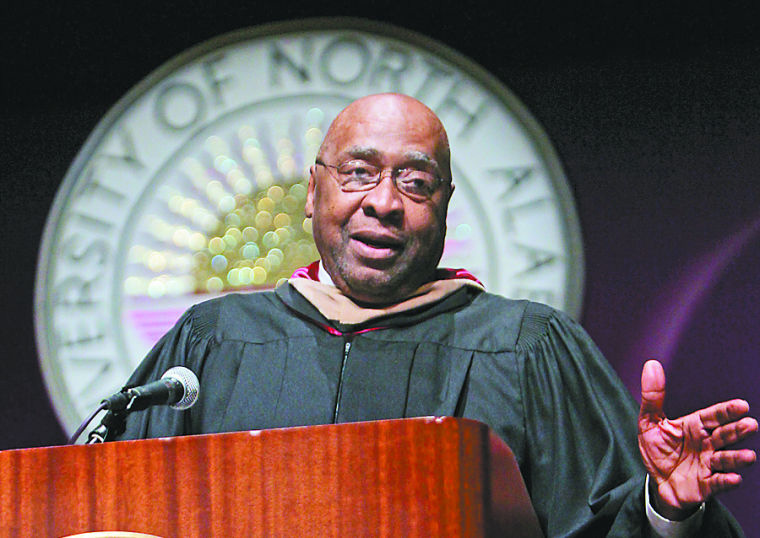
In his retirement, Gunn became a strong advocate for civil rights and the role he and E. B. Norton played in the integration of UNA. Alabama governor Kay Ivey appointed Gunn to UNA’s board of trustees, making him the first individual who integrated his institution to then serve on its highest governing body. In 2017, Gunn provided the spring commencement address at UNA. He also received an Honorary Doctorate of Humane Letters in recognition of his lifetime achievements.
At a ceremony on March 14, 2018, UNA officials renamed the Student Commons Building the Wendell W. Gunn University Commons. Gunn lives in Stamford, Connecticut, with his wife.