University of North Alabama

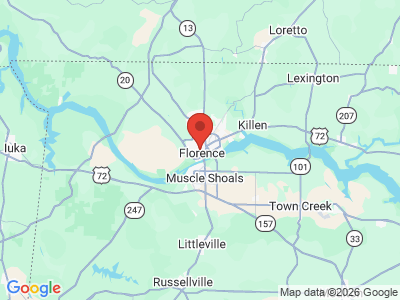
The University of North Alabama (UNA) is located in Florence, Lauderdale County. Founded as LaGrange College near Leighton, in 1830, it was the first state-chartered college in Alabama. Originally established by the Methodist Church, the school became a state-run institution in 1870. The school has been located in Florence since 1855 and has been known as the University of North Alabama since 1974. UNA currently offers more than 100 undergraduate majors, dozens of graduate programs, and three doctoral programs in four colleges: the College of Arts and Sciences, the Sanders College of Business and Technology, the Spencer College of Education and Human Sciences, and the Anderson College of Nursing and Health Professions. The university has earned top-tier rankings in U.S. News and World Report's list of America's best colleges since 2008, has been named among the Great Colleges to Work For, and has been named to the highest tier of Opportunity Colleges and Universities by the Carnegie Foundation and the American Council on Education. Notable alumni include Pulitzer Prize-winning author T. S. Stribling, Pulitzer-Prize winning political cartoonist Clay Bennett, two-time Pulitzer Prize-winning journalist Ashley Remkus, several band members in the Drive-By Truckers and the Muscle Shoals Rhythm Section, actor George Lindsey, and Grammy-winning singer-songwriter John Paul White.

LaGrange College was established on January 11, 1830, in Leighton, Lauderdale County, by the Tennessee and Mississippi Conferences of the Methodist Church. Although the founders were deeply religious, they determined that the college curriculum would be nondenominational and focus on literary and scientific, rather than theological, instruction. The college opened with 70 male students and three faculty members under the supervision of minister Robert Paine as its first president. In 1846, LaGrange College's second president, Edward Wadsworth, began his term and oversaw the initiation of a scholarship fundraising program; by 1849, enrollment had exceeded 100 students. James W. Hardy became president in 1852 and served until his sudden death in 1853; he was succeeded by Richard Henderson Rivers in 1854. Not long after Rivers's promotion to the presidency, the Session of Alabama and Memphis Annual Conference voted to move LaGrange College to Florence for financial and logistic reasons. The move took place in January 1855, and although the new location was only about 15 miles away, it took three days to complete the move by way of a caravan. The new site consisted of several large tents until the completion of Wesleyan Hall, which is still in use today. Both the original and new school sites operated under the name LaGrange College for nearly a year, but by 1856, the Florence campus had been renamed Florence Wesleyan University. During its 25-year existence, LaGrange College graduated several future governors of Alabama, a future governor of Texas, as well as military figures who would go on to become generals on both sides of the Civil War.
In 1862, Robert A. Young became president of Florence Wesleyan and struggled to keep the school operating during the Civil War years. He resigned in 1866, and the campus fell largely into disuse. During this time, the university's buildings were used for various community events and meeting places. The university reopened in 1868 with William Henry Anderson as president. Two years later, facing declining enrollment, the North Alabama Methodist Conference offered the property to the state of Alabama on the condition that it be converted to a training school for teachers, known as a normal school. The state accepted the proposal, and in 1872, the school was renamed the State Normal School at Florence, with Septimus Primus Rice as president. The school was the first state-supported teachers’ college south of the Ohio River and opened in 1874 with the addition of 31 women students, making it also one of the first coeducational teacher-training institutions in the nation. When the first class graduated in 1877, three of the four graduates were women. Women were hired as faculty for the first time in 1879.
In 1911, the college came under control of the Alabama State Board of Education. President James Knox Powers, who had also served as president from 1887 to 1897, oversaw the introduction of the university’s first librarian, first college orchestra, and first women's dormitory. Henry J. Willingham became president in 1913 and oversaw completion of the original women’s dormitory, O'Neal Hall, which was named for Alabama governor and alumna Edward O'Neal. This building was later replaced by the Guillot University Center. The faculty had expanded to 20 members, and the student body had reached more than 500. The school expanded steadily between 1914 and 1922. In 1916, the school held its first summer session, and enrollment was so high that male students lived in tents and the number of summer graduates exceeded the number for fall or spring. Two new dormitories were built in 1918 to accommodate the increasing demand for student housing. By 1922, university faculty members were offering extension courses to teachers in surrounding areas, and the new laboratory elementary school, Kilby Training School, was teaching more than 300 students annually.

In 1929, the school was renamed Florence State Teachers College and contracted with the renowned Olmsted Brothers architectural firm to design the planned campus expansion on 130 acres. The Olmsteds were known for their parklike, pastoral designs that incorporated classical elements in the architecture. The campus subsequently added two new halls (Bibb Graves and Rogers Hall), the Memorial Amphitheater, a library, a gymnasium, two dormitories, and married student housing. The school awarded its first bachelor of science degrees in 1931 and received accreditation by the Southern Association of Colleges and Schools in 1934. In 1949, the Rogers family sold their home, Courtview, to the school; it had formerly been the home of Alabama governor Emmet O'Neal and prior to that, the prominent Foster family. The school's name was shortened in 1957 to Florence State College. The years 1957-68 saw an expansion in course offerings and the beginning of a massive building overhaul on the school's campus. New structures included Floyd Science Building, four new halls (Lafayette, LaGrange, Rice, and Rivers), the Student Union Building, an addition to Collier Library, Towers Cafeteria, the Planetarium-Observatory, a new Kilby School building, and a greenhouse.
In 1963, Florence State admitted its first Black student, Wendell Wilkie Gunn. Unlike desegregation processes at other universities of the time, the admission went relatively smoothly, and Gunn went on to graduate from the college in 1965. He had a successful career in the corporate sector before moving to Washington, D.C., to serve as a trade advisor to Pres. Ronald Reagan. In 2019, Governor Kay Ivey appointed Gunn to serve on the UNA Board of Trustees, thus marking the only time in the history of American higher education when the student who desegregated an institution would later return to serve on its governing board.

In 1968, Florence State College changed its name to Florence State University. During this period, the school opened the Lurleen Burns Wallace Fine Arts Center and the Bennett Infirmary. A Greek system was established on campus in 1972, along with the opening of Flowers Hall gymnasium. Robert Miller Guillot became president in 1972 and oversaw the establishment of the School of Nursing the following year. In 1974, the college was renamed the University of North Alabama and rapidly expanded its facilities and instructional capacity. That year, Wesleyan and Rogers Halls were added to the National Register of Historic Places, and Mary Ella Potts became president pro tempore of the UNA Board of Trustees, the first woman in Alabama to serve in this capacity.

Robert L. Potts took the helm as president in 1990 during a period of economic stress and a decline in funding for public education. Despite these struggles, several buildings were renovated during this time, including Coby Hall, Powers Hall, and Braly Municipal Stadium. Potts resigned in 2004 to take a position as chancellor of the North Dakota University System, and William G. Cale Jr. became president. In 2005, Kenneth D. Kitts was named UNA’s 15th president, and since his tenure began, the university's enrollment surpassed 10,000 and the Delores and Weldon Cole Honors College was established, accounting for 10 percent of the school's overall enrollment. Doctoral programs have been established in three of UNA’s four academic colleges. UNA currently has students from more than 50 countries as part of its international programs. It is one of the only schools in Alabama to offer a degree in commercial music and one of five schools in the nation to have an accredited occupational health science program. The Kilby Laboratory School remains the only laboratory elementary school in the state and offers instruction for students in grades PreK-6 as well as providing observational and instructional opportunities for UNA faculty and students; it is still located on the campus of UNA.
The university hosts many yearly events and activities, including Light the Fountain, a college-wide block party; Lucky Dip on the first day of classes during the fall semester; the George Lindsey Film Festival, in honor of former alumnus George Lindsey; and, most recently, Founders’ Day each January in honor of the university’s founding in 1830.

UNA has a long tradition in athletics. Football and baseball teams were first mentioned in the course catalogue in 1911, with the first football team losing 101-0 to the University of the South in 1912. The school nickname is the Lions, and two live lions, Una and Leo III, lived in the George H. Carroll lion habitat until their respective passings in 2020 and 2024. The school colors are gold and purple. UNA teams play in the NCAA Division I as part of the Atlantic Sun and United Athletic conferences. The university currently fields teams in men’s football and baseball; men's and women's basketball, cross country, track, tennis, and golf; and women's softball, soccer, volleyball, and flag football. In 1983, UNA won the Gulf South Conference Championships in football, basketball, and baseball. The football team won three consecutive Division II football championships from 1993 to 1995 and was selected the "Best Division II Team of the Quarter Century" in 1995; the team also became the first Division II football team in the nation to visit the White House. Additionally, the UNA volleyball team became the first Alabama team in history to win the NCAA Division II National Championship in 2003. The University also boasts of other national championships in men’s basketball in 1979 and 1991, and softball in 2016.
Additional Resources
- McDonald, William Lindsey. Beginnings of the University of North Alabama. Birmingham, Ala.: Birmingham Printing & Publishing, 1991.
- Smith, William E. Jr.. Leo's Tale: University of North Alabama Trivia. Florence, Ala.: Shoals Heritage, 2000.