Gilbreath House and Montgomery Gilbreath

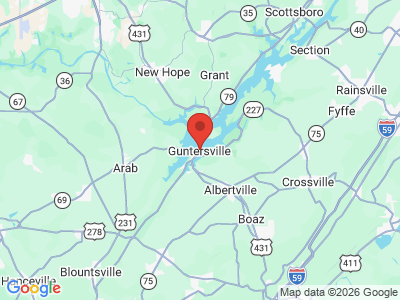
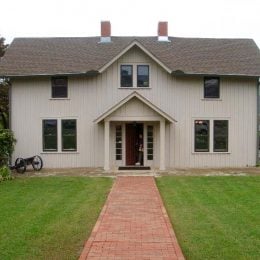
Montgomery Gilbreath (1814-1885) was a politician and a veteran of the American Civil War who later served as a delegate to the 1875 Constitutional Convention. He spent much of his life in Guntersville, Marshall County, where he built one of the two houses in the town that were untouched by the U.S. Army when it raided the town in 1865. Now known as the Col. Montgomery Gilbreath House, it currently serves as the headquarters of the Guntersville Historical Society (GHS).
Guntersville was significant for its strategic location on the Tennessee River. On January 15, 1865, during the Civil War, U.S. troops destroyed most of the town by fire, leaving only seven buildings standing. Of the surviving structures, two were residential houses, and both are still in use today. The one constructed by Gilbreath is considered the most historically significant because of its owner, Montgomery Gilbreath, and designer, Andrew Jackson Downing.
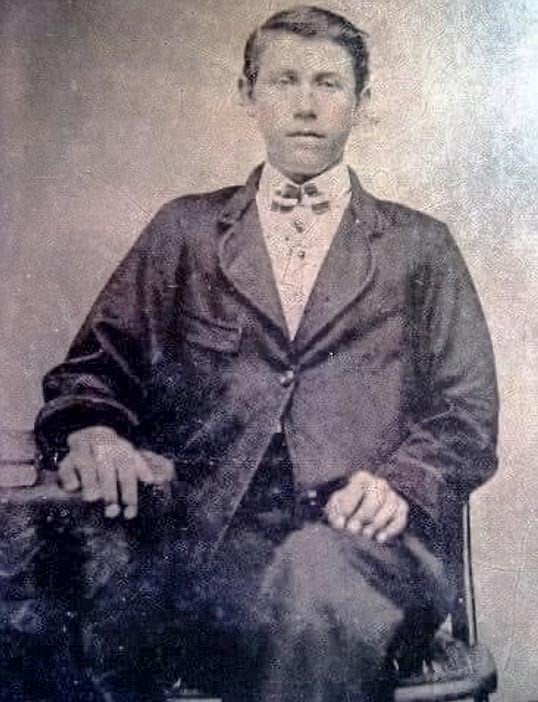
Montgomery Gilbreath was born January 23, 1814, in east Tennessee to John Gilbreath and Sallie Fields Gilbreath; he had several siblings. Sometime between 1815 and 1820, the family arrived in Blountsville, Blount County, and later settled in Gunter’s Landing, as Guntersville was then known. In the 1830s, he volunteered to fight in the Seminole Wars in present-day Florida. In Guntersville, he worked in a mercantile store, and served in politics, as county clerk. He married Temperence Jane Kilfoyle in 1844; the couple had ten children. In the early 1850s, Gilbreath was elected probate judge of Marshall County.
Around 1858, Gilbreath commissioned the construction of a two-story Gothic Revival house based on a design by Andrew Jackson Downing. At the time of the home’s construction, Downing was the most famous residential architect in the United States. A native of Newburgh, New York, Downing was also actively engaged in landscape design and was involved in the layout of what became known as Central Park in New York City. The Gilbreath House was constructed on a five-acre tract from a land grant given to Alva Finley in 1843 by the U.S. government. Louis Wyeth, one of the town’s leading citizens, had purchased some of the Finley land and then sold Montgomery Gilbreath the property on which he built his house.
A classic Gothic Revival design by Downing, the Montgomery Gilbreath House is a two-story board and batten structure of simple design with two formal drawing rooms and a dining room on the first floor. The home’s three bedrooms are located on the second floor. At the time of its construction, it featured a detached kitchen at the rear of the building, standard for the day. Six fireplaces provided heat for the house. The exterior of the house was originally painted red, which would come into play during the Civil War.
Although he was in his late 40s when the Civil War broke out, Gilbreath joined the Confederate States Army (CSA) and was elected a lieutenant colonel. Organized in Nashville, Tennessee, in February 1862, his unit was mustered into service as the 31st Alabama Infantry Regiment and was later redesignated as the 49th the following year. He and the 31st saw action in the bloody Battle of Shiloh (Tennessee) in April 1862 in the First Brigade under Gen. John Breckenridge, who complimented his unit for its gallantry. Because of his age and failing health, Gilbreath resigned from the CSA and returned to Guntersville.
On July 28, 1862, U.S. troops in the area shelled Guntersville from a hill north of town with two Parrott artillery guns; they were instructed to aim for the red house. One shell did penetrate the north wall, and the hole it left remained visible for many years until it was covered during remodeling. To commemorate the shelling, a local artist painted a rendering of what the damage looked like.
In January 1865, when U.S. troops were setting fire to the town, Gilbreath was credited with saving several buildings, including his own house. Gilbreath personally intervened with the U.S. captain in charge of the troops. Both Gilbreath and the captain were members of the Freemasons, and Gilbreath convinced the captain not to destroy a fellow Mason’s home. After the war, Gilbreath re-entered the mercantile business. He continued to be active in politics and was elected to serve as a member of the Alabama Constitutional Convention of 1875; the resulting document essentially ended Reconstruction in Alabama, returning power to White Democrats.
On October 8, 1885, Montgomery Gilbreath died and was buried in Guntersville City Cemetery.
In 2001, the Montgomery Gilbreath House was slated to become a parking lot for the new county jail but was purchased by the GHS. The group, established in 1974, raised funds in a variety of ways to pay for the building, including hosting historical tours to Charleston, South Carolina, and New Orleans, Louisiana. The house had been used as rental property in previous decades and was in poor condition when it was acquired by the historical society. GHS made extensive renovations, including installing a new roof, refinishing the original heart pine floors, replacing the windows, and bracing one of the chimneys with steel straps to prevent it from collapsing. False brick shingles covering the exterior were removed. Most of the house was rewired, and central heating and cooling were installed. Some of the upstairs rooms were renovated, and samples of wallpaper used over the years were saved. One bedroom was converted into a boardroom for GHS meetings. The bathroom was completely modernized. During renovations, two small secret compartments were discovered under the floor across from the bathroom. Such compartments were typically used to hide the occupants’ valuables.
As the headquarters for the GHS, the house holds exhibits of various artifacts associated with the city’s history, including several Civil War items, a permanent exhibit on the Cherokee Trail of Tears, and an extensive library. Hundreds of photographs of Guntersville and the surrounding area are also available for researchers. The Gilbreath House is located at 353 Blount Avenue, near downtown and two blocks from Guntersville’s City Harbor.