Browder v. Gayle

In Browder v. Gayle (1956), the U.S. Supreme Court upheld a district panel ruling that found racially segregated bus systems unconstitutional under the Equal Protection Clause of the 14th Amendment. The case helped to overturn the Supreme Court’s previous stance of “separate but equal” under Plessy v. Ferguson, brought an end to the Montgomery bus boycott, and represented a major legal victory in the civil rights movement.
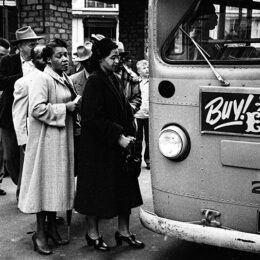
The case originated on March 2, 1955, when 15-year-old Claudette Colvin refused to give up her seat to a White patron on a Montgomery city bus. Her actions violated the city’s segregation law that required Black citizens seated in the front of the bus to give up their seats and move to the back when White citizens boarded the bus. The bus driver stopped the bus upon finding two Montgomery police officers. The officers ordered Colvin to move, a request she once again refused. Officers then struck her with a nightstick and arrested her for disorderly conduct and violating the city’s segregation laws.
Throughout the remainder of the year, five other Black women were arrested for similar actions. A month after Colvin’s arrest, Aurelia Browder was also arrested for sitting in the Whites-only section of a city bus. Later that year, Jeanetta Reese, Susie McDonald, Mary Louise Smith, and Rosa Parks were all arrested on various days for sitting in the Whites-only section of a bus and refusing to move.
Civil rights leaders had studied the issue of racial segregation on city buses for several years before these incidents. Almost a decade earlier, the U.S. Supreme Court had ruled segregated seating unconstitutional in Morgan v. Virginia, but that ruling only applied to interstate buses. The Women’s Political Council (WPC) of Montgomery, Montgomery County, under the direction of Jo Ann Robinson, had already appeared before the City Commission and bus company officials to argue against the policies, but to no avail.

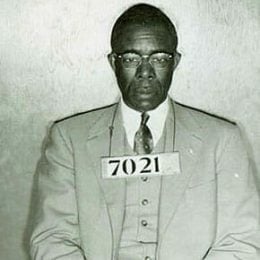
After Colvin’s arrest, her mother spoke with civil rights leaders Edgar Daniel “E.D.” Nixon and others about the possibility of bringing a lawsuit against the city. But Nixon believed that Colvin was too young to be the face of a bus boycott. Later, in December 1959, prominent civil rights leader Rosa Parks was arrested on similar charges. Nixon and other leaders believed she was the most appropriate person to serve as the public face of a bus boycott and earnestly began setting it in motion.
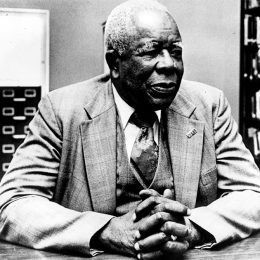
While the bus boycott was in full effect, leaders also began exploring potential legal strategies they could employ alongside the boycott. The need for that strategy became even more pressing after the boycott movement received violent backlash, including the bombing of Martin Luther King Jr.’s house by White supremacists on January 30, 1956. Two days later, attorneys Fred Gray and Charles D. Langford filed suit against William Armistead Gayle Jr., mayor of Montgomery, city commissioners Clyde Sellers and Frank Parks, and the chief of police Goodwyn Ruppenthal, claiming that the city’s segregation laws violated the 14th Amendment to the U.S. Constitution. Gray, who had recently graduated from law school, and Nixon approached the five other women previously arrested by the police. All five—Claudette Colvin, Aurelia Browder, Jeanetta Reese, Susie McDonald, and Mary Louise Smith—initially agreed to file the suit. But Reese later dropped out of the case after threats of violence against her and her family. Gray chose not to include Parks as one of the plaintiffs because her case was still progressing through the state court system. He and other leaders hoped to bypass state courts and did not want to create the impression that Parks aimed to evade her other charges.
With assistance from NAACP attorneys Thurgood Marshall and Robert L. Carter, Gray presented the case before a panel of three federal judges consisting of judges Richard Rives, Frank M. Johnson, and Seybourn Lynne. (The case required a three-judge panel because it involved the execution of a state statute on grounds of unconstitutionality.) On June 5, 1956, the panel deemed bus segregation unconstitutional under the Equal Protection Clause of the 14th Amendment in a 2-1 decision with Lynne dissenting. The court cited the 1954 U.S. Supreme Court’s Brown v. Board of Education public school desegregation case in its decision, extending that ruling to all aspects of public life and completely overruling the precedent set forth in the Supreme Court’s 1896 Plessy v. Ferguson, in which the Supreme Court upheld the constitutionality of racial segregation under their created “separate but equal” doctrine.
On November 13, 1956, the U.S. Supreme Court declined the city’s appeal and upheld the panel’s decision. Three days later, the court order from the U.S. Supreme Court to integrate buses arrived in Montgomery. In response, civil rights leaders called off the Montgomery bus boycott after 381 days.
Despite the importance of the case, the legacy of the Montgomery bus boycott has largely centered on the actions of Rosa Parks. Although Parks's name and story are well known throughout the United States, the stories of Claudette Colvin, Aurelia Browder, Susie McDonald, Mary Louise Smith, and Jeanetta Reese have faded into relative obscurity. In addition to their stories, the prevailing narrative has overlooked the impact and role of this case, the judges, the lawyers, and the legal strategy it embodied in the broader civil rights movement. In 2019, a statue of Rosa Parks was unveiled in Montgomery. Alongside the statue, four nearby granite markers were erected to honor Colvin, Browder, McDonald, and Smith.
Additional Resources
- Gray, Fred D. Bus Ride to Justice. Montgomery: Black Belt Press, 1994.
- Olson, Lynne. Freedom’s Daughters: The Unsung Heroines of the Civil Rights Movement From 1830 to 1970. New York: Scribner, 2001.
- Robinson, Jo Ann. The Montgomery Bus Boycott and the Women Who Started It. Knoxville, Tenn.: University of Tennessee Press, 1987.