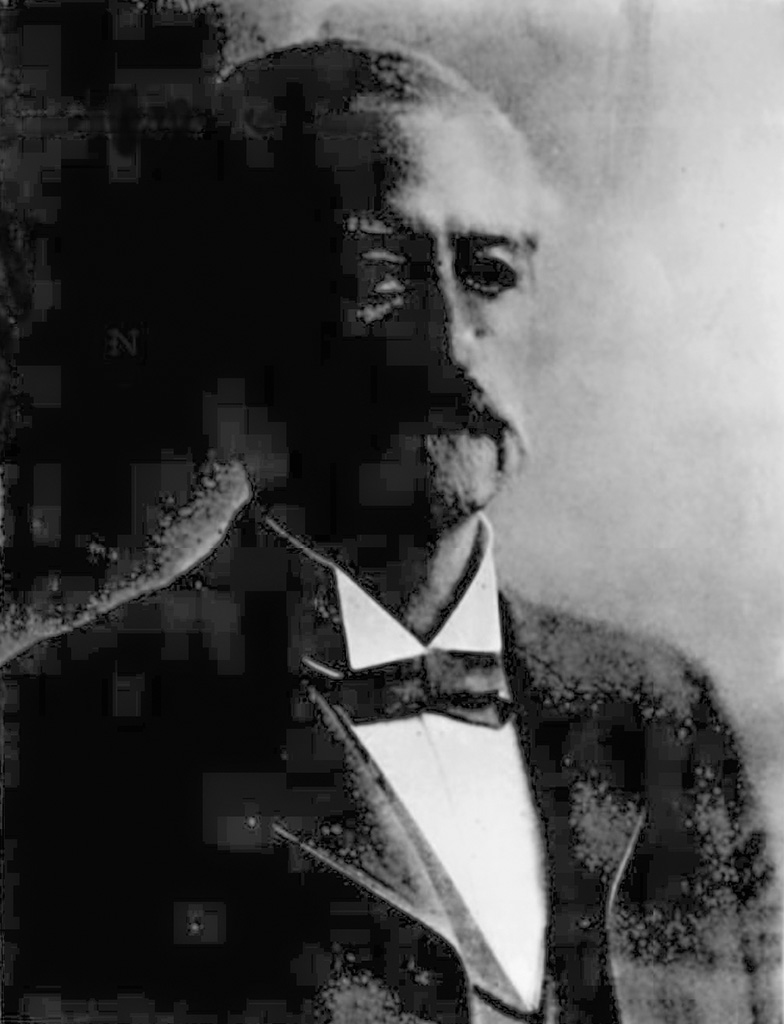
Newton Nash Clements
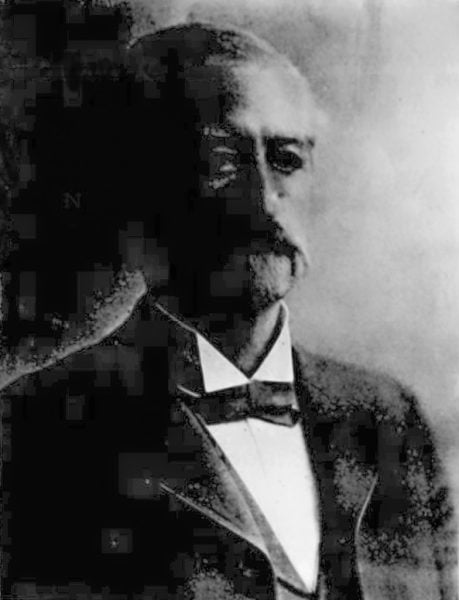
Newton Nash Clements (1834-1900) was a lawyer, a lieutenant colonel in the Confederate Army during the Civil War, and an Alabama state legislator. He served approximately four months in the 46th U.S. Congress representing Alabama’s Sixth Congressional District following the resignation of Burwell Boykin Lewis. In addition to his political life, Clements was a successful farmer before and after the Civil War.
Clements was born on December 23, 1834, to wealthy plantation owner and businessman Hardy Clements and Maria Pegues Clements of Tuscaloosa, Tuscaloosa County, and was one of eight known children born to the couple. A graduate of the University of Alabama, Clements studied law at Harvard University, was admitted to the Alabama State Bar, and worked as a farmer in Tuscaloosa. Sources are unclear as to whether he actually practiced law.
As of the 1860 Federal Slave Schedules, he is listed as claiming ownership of 71 enslaved individuals. At the onset of the American Civil War, Clements raised a regiment and joined the Confederate Army. A muster roll (a list of a military unit’s members) from 1861 described him as being 5 feet 9 inches tall with black hair and blue eyes. He began the war with the rank of captain in Company F of the Twenty-sixth Alabama Infantry Regiment, a group later designated as the Twenty-sixth-Fiftieth Alabama Infantry and eventually the Fiftieth Alabama Infantry. The Twenty-sixth-Fiftieth was organized at Corinth, Mississippi, in March 1862 and placed under the command of Gen. Adley H. Gladden. The regiment fought at the April 1862 Battle of Shiloh, Tennessee, in which Clements was lightly wounded in his foot during the second day of battle. His regiment saw further action at Murfreesboro (also known as Stones River), Missionary Ridge and Franklin in Tennessee, and at Chickamauga and the Atlanta Campaign in Georgia.
Clements married Laura Garnett McMichael in Mississippi in 1864; the union produced five children. His eldest son, Newton Nash Clements Jr., died from typhoid fever in 1886 while in college at the University of Alabama. By the end of the war, Clements had been promoted to the rank of lieutenant colonel. He had been informed that he had been promoted to the rank of colonel, but because of miscommunication and paperwork issues, he never officially served at this higher rank. Clements was paroled at Meridian, Mississippi, after Gen. Richard Taylor surrendered his men at the end of the war in May 1865.
By 1870, Clements owned 3,530 acres of land and was raising wheat, corn, and oats as well as cattle and sheep. A Democrat, Clements was elected to represent Tuscaloosa County in the Alabama House of Representatives for nine terms spanning the years 1870-72, 1874-77, and 1886-96. He served first as speaker pro tempore during his second term, and as speaker of the House of Representatives for three terms covering 1876-1877, 1890-1891, and 1896-1897. He was elected for another term in 1898 but declined the position because of poor health.
While in the state legislature, Clements supported better roads in his home county, served on the Railroad Committee that exposed fraud in the issuance of railroad bonds, supported a strong state education system, and worked to lower the state’s debt. He introduced bills to incorporate the town of North Port (present-day Northport), to limit the sale of alcohol in certain areas around Tuscaloosa and for the relief of various Alabama citizens in financial distress. He also introduced a bill to approve the construction of a bridge over the Black Warrior River within the city of Tuscaloosa. In 1875, his work included the successful passage of a bill for the relief of the University of Alabama’s debts.
Clements was chosen to fill the vacancy left by the resignation of Burwell Boykin Lewis from the U.S. House of Representatives during the 46th U.S. Congress. Boykin had assumed the presidency of the University of Alabama from acting president William Stokes Wyman. The Sixth Congressional District then consisted of Fayette, Greene, Jefferson, Lamar, Marion, Pickens, Sumter, Tuscaloosa, Walker, and Winston Counties. Clements served in this position from December 8, 1880, to March 3, 1881. He returned to Alabama following his unsuccessful bid for the seat in the next regular election, and was eventually elected to his former seat in the state legislature. (The nomination and congressional seat were won by Goldsmith Whitehouse Hewitt.) In 1898, the press hailed him as a strong potential candidate for the governor’s seat in the 1900 election, and he announced his candidacy the same year. His declining health led to a short-lived campaign and his early withdrawal from the race, however.
In addition to his legislative work, Clements was the president of the Grangers’ Life and Health Insurance Company branch in Montgomery, Montgomery County, in 1876. He served one term as president of the Cottondale Mills and continued to hold a large portion of stock following his service. In 1897, Clements was announced as the president of the Alabama City Land and Improvement Company, a short-lived venture to build a town on the Mobile and Ohio Railroad 16 miles east of Tuscaloosa. He was a charter member of the Tuscaloosa chapter of the Knights of Pythias.
Clements died after an extended illness on February 20, 1900, at the age of 65. He was interred at the Evergreen Cemetery in Tuscaloosa.