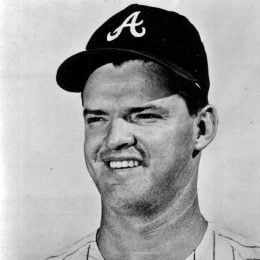
Clay Palmer Carroll
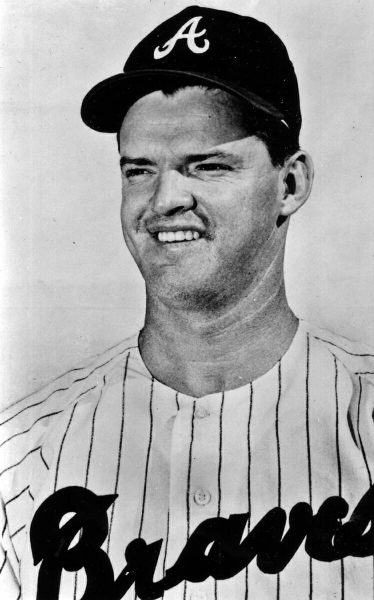
Clay Carroll (1941- ) was a steady and dependable Major League Baseball (MLB) relief pitcher for 15 seasons. He is known primarily for his durability and his excellent pitching for the Cincinnati Reds in the first half of the 1970s when they dominated their division and played in three World Series. Carroll was inducted into the Alabama Sports Hall of Fame in 1992.
Clay Palmer Carroll, called “Hawk” by his teammates because of his tall and thin build, was born on May 2, 1941, in Clanton, Chilton County, to Thomas and Grace Carroll, both of whom worked at the local cotton mill. Carroll was one of nine children. While in high school, he worked at Driver’s BBQ restaurant and at the local cotton mill with his parents, and he also loaded watermelons on trucks. Carroll was a star pitcher for Chilton County High School and even pitched a perfect game in his senior year. He graduated from Chilton County High School in 1961.
Carroll was signed out of high school as an amateur free agent for $1,000 by former MLB star Fred “Dixie” Walker, who was then working as a scout for the Milwaukee Braves. After signing with the Braves, Carroll pitched for several of the minor league teams in the team’s farm system. He was finally called up to the major leagues in September 1964, when he was 23 years old. Carroll won his first major league game on September 26, 1964. He pitched for the Braves from 1964-65 and continued with the team when they moved to Georgia and became the Atlanta Braves. When the 1967 season was over, he returned to Clanton, where he worked as a deputy sheriff. Carroll married Judy Haynes in September 1964, in the same month he entered the major leagues; the couple had three children before divorcing in 1981.
In June 1968, Carroll was traded to the Cincinnati Reds and pitched for them from 1968-75. His years with the Reds would mark the high point of his career. On May 30, 1969, he hit the only home run of his career against superstar pitcher Bob Gibson to beat the St. Louis Cardinals. Carroll made the National League All-Star Team twice, in 1971 and 1972. His best year was in 1972, when he was named the National League leader in saves, with 37. (A “save” is a statistic recognizing a pitcher who maintains a team’s lead at the end of a game while meeting specific criteria.) Carroll’s 37 saves established a major league record that stood until 1984, when Bruce Sutter surpassed it. Carroll’s record was impressive partly because he pitched in an era when saves were less common than today. Contemporary relievers often face one or two batters or pitch one inning for a save, but in Carroll’s era, relievers often pitched two or three innings to earn a save. Carroll was named the Sporting News Fireman of the Year for his excellent relief pitching. (The award was called “Fireman of the Year” because relief pitchers put out figurative “fires” when they stop rallies by the opposing team.)
Carroll pitched for the Reds in three World Series. In 1970, when they lost to the Baltimore Orioles (four games to one). Carroll performed extremely well in a losing cause, pitching nine scoreless innings in relief, striking out 11 batters, and winning game four. In 1972, the Reds lost to the Oakland Athletics, four games to three. Carroll pitched in five of the seven games, saving game three. In 1975, the Reds posted a franchise-best 108 wins. They then defeated the Boston Red Sox four games to three in a thrilling and memorable World Series, remembered best for Red Sox catcher Carlton Fisk’s reaction to his home run in extra innings to force a seventh game. Carroll was the winning pitcher in that decisive seventh game, however, holding Boston scoreless in the seventh and eighth innings in the 4-3 victory. In his three World Series, Carroll had an outstanding cumulative earned run average of 1.39, winning four games, and saving two games. Overall, Carroll pitched in 486 games for Cincinnati, the third most in the Reds’ history and in 14 World Series games, far more than most other pitchers.
Although Carroll’s skilled relief pitching proved integral to the success of the Cincinnati Reds in the 1970s, he was overshadowed by superstar teammates Pete Rose, Johnny Bench, Tony Perez, and Joe Morgan, leaders of the Cincinnati “Big Red Machine,” as the team came to be known in those years. Alabama native George Foster also would play a part in the team’s success. In recognition of his contributions, he was inducted into the Cincinnati Reds Hall of Fame in 1980.
After Carroll’s great success with the Reds, he was traded to the Chicago White Sox, for whom he pitched in 1976. The following year, Carroll pitched for the St. Louis Cardinals and returned to the White Sox before ending his playing career in 1978 with the Pittsburgh Pirates. Carroll’s career record in the major leagues was 96-73, with an excellent 2.94 ERA. He saved 143 games and struck out 681 batters.
After his playing career was over, Carroll moved to Chattanooga, Tennessee, to work in construction before moving to Bradenton, Florida. After his retirement, Carroll worked in both the construction business and for a concrete company. Carroll married Frances Nowitzke in 1983. She had three children from her previous marriage. In a widely reported tragedy, on November 16, 1985, in Bradenton, Frances’s son Frederick Nowitzke, who was subsequently diagnosed with paranoid schizophrenia, opened fire on members of the Carroll household, wounding Carroll and killing his mother Frances and Carroll’s 11-year-old son Brett. Carroll was hospitalized for weeks after being shot in the head, but he recovered. Despite his insanity plea, Frederick was sentenced to life in prison for the two murders and the attempted murder of Carroll.
In the ensuing decades, Carroll has remained connected to his baseball roots. He returns to Cincinnati annually when new members are inducted into the Reds Hall of Fame, and he has participated in team fantasy camps, which offer adult baseball fans the opportunity to experience life as an MLB player.
Carroll was inducted into the Alabama Sports Hall of Fame in 1992. On February 16, 2023, the city of Clanton named the Clay Carroll Parkway in his honor; Carroll, then 81 years old, returned to Clanton for the naming ceremony. Carroll currently lives in Soddy-Daisy, Tennessee, which is adjacent to Chattanooga.