Alabama Farmers Federation

The Alabama Farmers Federation (known as the Alabama Farmers Bureau prior to 1987) was organized at the Alabama Polytechnic Institute (now Auburn University) in January 1921. The organization provides advocacy, policy, educational programming, and lobbying to promote and advance agricultural interests in the state. The Alabama Farmers Federation has more than 360,000 members and has expanded to include youth and women's groups and numerous commodity divisions. Its insurance business, Alfa Insurance, currently oversees more than a million policies and is one of the largest insurers in Alabama.
Alabama’s farm bureau grew out of a call from the U.S. Department of Agriculture (USDA) in the early twentieth century to strengthen the economic and political voice of farmers as they competed with business, manufacturing, railroads, and labor for political influence in the state government. Building on the Smith-Lever Act of 1914, which created cooperative extension offices, the American Farmers Bureau Federation (AFBF) was formed in 1919, and throughout the country grassroots efforts worked to establish state- and county-level bureaus. Luther Duncan, director for the Alabama Extension Service (present-day Alabama Cooperative Extension System) at Auburn University, called upon state and local businessmen, bankers, and farmers to form a state bureau. After the establishment of the state bureau, county bureaus began organizing. Montgomery County was the first to establish a county bureau in 1927, and within three years, all Alabama counties had them. During those early years, the Farmers Bureau also established commodity co-ops, which were member-owned, cooperatively run community stores where farmers could market and sell their products. Although Duncan was the chief organizer of the Alabama Farmers Bureau, he did not serve in an official capacity after it was established; instead, he continued to lead the Alabama Extension Service, which would work closely with the bureau in coming years. From 1921-23, Montgomery County's bureau president, Charles W. Rittenour, served as the first president of the state bureau. In 1923, Edward O'Neal III, grandson of former Alabama governor Edward A. O'Neal and nephew of former Alabama governor Emmet O'Neal, became the second bureau president. Under O'Neal’s leadership, the Farmers Bureau became so successful that he was named president of the AFBF in 1931.

Along with its success, the Alabama Farmers Bureau faced criticism in its formative years. Much of this criticism centered on Duncan and the relationship between the state farm bureau and the Alabama Extension Service. As the director of the Extension Service, Duncan had considerable influence, including the authority to use federal funds and resources to support Alabama farms. Although he had no official role with the county and state farm bureaus, he saw them as an effective cooperative marketing mechanism and a way to disseminate the latest agricultural research. Many of Duncan's critics contended that he favored the Farmers Bureau over other farmers' organizations, such as the Alabama Farmers Union (AFU). This populist organization was founded in 1905 as a state affiliate of the National Farmers Union and had organized every county by mid-1908. The head of the AFU, J. F. Scofield, launched a campaign to undermine the perceived alliance between the two organizations at the expense of his organization.
At times, these allegations held some validity, as in one incident in which the Extension Service issued a circular instructing extension agents to recruit Farmers Bureau members and collect their dues. After federal officials in Washington, D.C., became aware of the circular, Duncan retracted it. On another occasion, in 1923, the Mobile County Farmers Bureau placed an advertisement for its co-op in neighboring Baldwin County. The Baldwin County bureau issued a complaint in response to this perceived encroachment on their territory. Duncan called upon the agent to withdraw the complaint, and after he refused, Duncan withdrew federal extension funds from the county. Duncan's actions led to a split within the state bureau's leadership and caused some of that leadership to request that Auburn University investigate Duncan’s actions. The segment of the bureau leadership opposed to Duncan argued that he sought control over the Farmers Bureau and used extension staff to spread false rumors to discredit critics. Following an investigation into the affair, the Auburn Board of Trustees found no merit to the criticisms. But Auburn's involvement in the incident and Duncan's role as director of the Extension Service made the university an interested party in the ongoing relationship between the Extension Service and the state bureau, a relationship many viewed as problematic. (Duncan would later be appointed president of Auburn in 1935 and serve until 1947.)

In addition to protecting farmers’ co-ops, the organization used its influence and numbers to shape state politics from its early days in several ways. In 1923, the AFB urged the legislature to pass the Agricultural Code, which banned the sale of improperly branded inoculations, fertilizers, and feeds, and helped create the Alabama Milk Control Board to regulate the milk industry. The state bureau and the Extension Service later coordinated to protest a state bill, in 1931, that would have prevented extension agents from aiding co-ops that purchased goods from farmers in competition with private businesses. The state bureau and the Extension Service sought to maintain the co-ops’ ability to remain competitive by buying directly from farmers. The protest efforts culminated in a rally of around 10,000 farmers at the Cramton Bowl in Montgomery. (In 1963, under the direction of president James Deford Hayes, the organization founded its first political action committee. These various initiatives and the Cramton Bowl rally had demonstrated the political power of the Farmers Bureau, especially owing to its connection to the Extension Service.)
In its early years, the Farmers Bureau also confronted issues related to race. In 1931, the organization created a plan that allowed Black farmers to join but required them to organize in racially segregated units. After a 1937 meeting, however, it recommended that state membership be limited to White members and that each county could choose how to handle the membership of non-Whites. (During the 1960s, the organization officially integrated.)

Throughout the Great Depression, the Farmers Bureau, under the leadership of John Littleton Edwards, worked with the AFBF and its president Edward O'Neal III to pass federal legislation supporting farmers during that turbulent era. Into the New Deal era, the very influential and politically connected O’Neal served as a member of the President’s Committee to Direct Works Relief Expenditures and on the Secretary of Agriculture’s Advisory Council. He helped craft the Agricultural Adjustment Act that provided subsidies to farmers to plant fewer crops, such as corn and cotton, to keep prices high. The payments, however, went to landowners and not to sharecroppers and tenant farmers who then had no work and were displaced. The law was later overturned by the U.S. Supreme Court.
In the 1940s, the organization began offering fire insurance to its members. In 1946, under the leadership of Walter Leon Randolph, the Farmers Bureau expanded its insurance offerings by establishing Alfa Insurance (then known as Alabama Farmers Bureau Insurance). Since then, Alfa Insurance has continued to expand, now offering various forms of coverage, including home and property, life, auto, and many others. Randolph became the longest-serving president, leading the organization from 1940 to 1961.

During the latter half of the twentieth century, the organization continued to expand its membership and establish new policies and programs to support its members. In 1953, members worked with the legislature to pass sales tax exemptions on products used by farmers, including feed and insecticides. In 1956, it created the Young People's Program to support the next generation of farmers by offering training, statewide contests, community service, and networking. The organization also established the Women's Leadership Committee, in 1965, to provide an opportunity for women to actively participate in policymaking. In 1975, it began publishing its organizational magazine, Neighbors. In 1986, it initiated a scholarship program at Auburn University to help future farmers pay for their higher education. The following year, it collaborated with the USDA to establish the Boll Weevil Eradication Program, an effort that eliminated cotton crop losses resulting from the boll weevil within seven years. Throughout the ensuing decades, the organization expanded to include 17 commodity divisions, which provide marketing, research, and policy advocacy for Alabama farmers producing beef, catfish, cotton, fruit, vegetables, peanuts, and other goods. In 2015, the Federation spearheaded efforts to pass a bill requiring restaurants to label the country of origin for the catfish it sold to protect the industry in the state.
In recent decades, the Alabama Farmers Federation has often advocated for lower property taxes. Officials have argued that the state government has relied too heavily on property taxes to the detriment of the state's farmers. In 1982, it successfully advocated for the Current Use Law, which mandated that property be taxed for its use, not speculative value. Citing the potential for increased taxes, the organization has also spoken out against efforts at reforming Alabama’s 1901 Constitution. This position on tax increases and reform led some members of Auburn University faculty, such as Wayne Flynt, to criticize it over its role in opposing property tax increases that would benefit schools. In turn, the Federation's president, Goodwyn L. Myrick, threatened future donations to the university.
Over the years, the organization has found itself embroiled in a number of controversies. For example, in 1981, it split from the AFBF over an insurance sales dispute. Rather than cease its out-of-state business, the state bureau disassociated itself from the national organization. As a result of the split and a court settlement, the organization decided to drop the use of "bureau" from its title, changing its name to the Alabama Farmers Federation in 1987. In 2005, the organization rejoined the AFBF but kept its most recent name. In the 1990s, the organization’s ties to Auburn University led to some notable controversies. In 1994, Alfa Insurance and the Farmers Federation faced criticism over a sizeable donation to the gubernatorial campaign of candidate Forrest "Fob" James. Critics alleged that the organizations used their influence with the new governor to oust Bobby Lowder from the Auburn University Board of Trustees and appoint Phil Richardson, chairman of Alfa at the time, in his stead. Lowder had earlier been forced out of his position at Alfa. The controversy would eventually reach the Alabama Supreme Court, which ruled against Richardson’s appointment and reinstated Lowder.
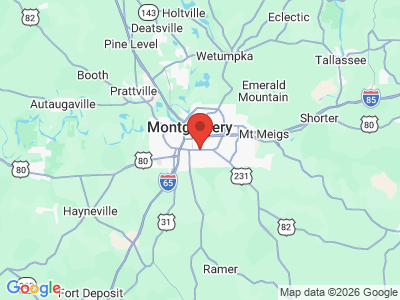
Into the twenty-first century, the Alabama Farmers Federation has continued to grow, boasting a membership of more than 360,000 individuals. Under the leadership of Jerry A. Newby (1998-2021) and Jimmy Parnell (2021-present), it has expanded by adding new commodity departments, creating the Alabama Farmers Agriculture Foundation to fund agriculture scholarships, launching the Farmers Bureau Bank, and establishing Alabama “Ag Tags” (specialty license plates to raise funds for agricultural education and other projects). The organization has aided farmers in recovering from natural disasters, including Hurricanes Ivan and Katrina, as well as the state-wide tornado outbreak in 2011. It continues to collaborate closely with the Alabama Cooperative Extension System by providing financial support for educational initiatives. Today, Alabama Farmers Federation is the state's largest farm organization and continues to promote the economic and political interests of farmers in Alabama. The organization is located at 2108 East South Boulevard in Montgomery.