Alabama Democratic Conference

The Alabama Democratic Conference (ADC) was founded in 1960 by a group of Black civic and political leaders to channel Black support to the 1960 Democratic presidential candidate John F. Kennedy. The ADC’s founders, Quinton D. Adams, Orzell Billingsley, Isom Clemon, Charles T. Gomillion, Beulah Johnson, Rufus Lewis, and Arthur Shores, leveraged a network of local Black voter leagues that had been built since the 1930s. In 1962, the ADC was officially incorporated with the vision of extending Black voter registration and political influence beyond the 1960 election.
Though the ADC’s support of Kennedy and the national Democratic Party stemmed from the national party’s increasing association with the push for civil rights and integration, the Alabama Democratic Party and its leaders remained steadfast supporters of Jim Crow and segregation. In response, the ADC promised to transform the Alabama Democratic Party by eradicating its allegiance to segregation and white supremacy. By 1963, ADC vice presidents in each of Alabama’s nine Congressional districts oversaw county and local ADC affiliates with an expanded mission. Now, the conference aimed to thoroughly integrate Black citizens into the national Democratic Party, confront racism in the state Democratic Party, increase the number of Black voters, and challenge voter discrimination in court.

When ADC leaders met in April 1964, they discussed advocating for removal of the state Democratic Party’s white supremacy emblem, which was a crowing white rooster with the slogan “White Supremacy for the Right.” They also debated a request that Gov. George Wallace guarantee voting rights across all of Alabama’s 67 counties and a public relations campaign to counter the Wallace presidential campaign’s anti-Black states-rights rhetoric that he was spreading across the nation at campaign stops.
Passage of the Voting Rights Act (VRA) in 1965 reignited a debate among voting rights activists in Alabama, including the leaders of the ADC, as to what strategy and coalition would best further Black political power. The key questions were whether Blacks should work within the national or state Democratic Party, whether they should work with Whites, and whether they should work primarily at the county or state level. For the ADC, working within the Alabama Democratic Party and seeking white allies across the state remained the ideal strategy.

The debate over the removal of the Alabama Democratic Party’s white supremacist slogan later that year and into 1966 illustrated the divided political environment. Lowndes County Freedom Organization (LCFO) co-founder Stokely Carmichael argued that there was no place for Blacks in the Alabama Democratic Party. In contrast, ADC leader Rufus Lewis countered that a third party would split the potential Black voting bloc of almost 200,000 and deprive Black Alabamians of their emerging power. Some White Democrats favored keeping the slogan, and others wanted to remove the slogan as a way to court groups like the ADC, which was perceived as more moderate than the LCFO. The committee member who introduced the resolution to alter the slogan bluntly stated that the Alabama Democratic Party could not afford to lose 150 – 170,000 prospective Black voters. In January 1966, the Alabama Democratic Party voted 39-32 to strike “White Supremacy” from the party’s slogan that had accompanied the rooster since 1904. The revamped emblem stated, “Democrats for the Right.”
As the ADC continued to build Black political strength, the organization also sought to integrate the state’s delegation to the Democratic National Convention. In 1968, ADC chairman Rufus Lewis and Arthur Shores were incorporated into the delegate selection committee for the Alabama Independent Democratic Party (AIDP), an effort led by White Birmingham attorney David Vann to send a delegation loyal to the national Democratic Party to the 1968 national convention. That same year, Lewis and Vann were appointed vice chairs of the Citizens for Humphrey-Muskie organization, the most prominent organization connected to the national Democratic Party and its presidential campaign in Alabama. Despite their loyalty and national party ties, the AIDP was not able to formally unseat the regular Alabama Democratic Party’s delegation at the 1968 convention. But the convention required a party loyalty oath for seated delegates that resulted in 20 regular ADP delegates who refused to take the oath being replaced by alternates or AIDP delegates. Two prominent ADC founders, Rufus Lewis and Isom Clemon, were among those seated as replacements. Yet, it would not be until 1972 that ADC members were seated as part of Alabama’s full original delegation to the Democratic National Convention rather than as replacement delegates.

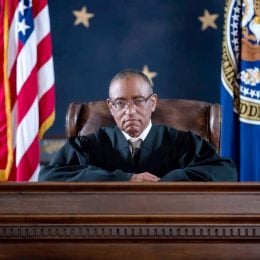
In the 1970s, the ADC employed a two-pronged strategy that focused on building Black political strength in Alabama while negotiating with national Democratic Party leaders. The ADC aided Black candidates through voter registration, education, and mobilization, along with fundraising efforts. The primary opportunity for national Democratic Party patronage came with the emergence of Georgia governor Jimmy Carter as the Democratic presidential nominee in 1976. Although Carter was initially viewed with suspicion by the ADC because of his previous comments on neighborhood segregation, pragmatism prevailed. Carter won the ADC’s support by promising to appoint more Black lawyers to judgeships during his administration. The strategy bore fruit when Black lawyer Myron Thompson of Tuskegee, Macon County, was appointed as a federal judge for the U.S. District Court for the Middle District of Alabama in 1980. Thompson would go on to hear several significant voting rights cases, including Harris v. Graddick (1984) and Dillard v. Crenshaw (1986), as well as the long-running Wyatt v Stickney case and the 2002 Ten Commandments case during his time on the bench.
Throughout the 1980s, the ADC organized to expand the recent political gains made by Black Alabamians. In 1981, the ADC helped ensure an amendment to and reauthorization of the Voting Rights Act in 1982 by lobbying federal lawmakers, providing congressional testimony, and marching to the state capitol with civil rights leaders Jesse Jackson, Coretta Scott King, and Joseph Lowery. ADC leaders also recognized that active engagement with federal courts ensured that the act’s provisions were followed. In 1984, ADC leaders litigated the 1984 Harris v. Graddick case that aimed to remedy the underrepresentation of Black Alabamians as poll officials. The Middle District Court ruled that county officials had to appoint Black poll officials proportionate to the Black share of the county population and that the number of Black poll officials at each polling station had to be proportionate to the share of Black voters assigned to that polling location, with certain minimum representation requirements as well. A second notable victory came in the 1986 Dillard v. Crenshaw case, which aimed to dismantle at-large electoral districts, a scheme that had long prevented Black voters from electing their preferred candidates in the state. The suit became a class action involving nine counties, many of which negotiated settlements that created single-member districts more friendly to the election of Black candidates. Repassage of the VRA and these legal victories put the ADC and Black Alabamians closer to channeling voting potential into political strength in the 1990s and beyond.
The first two decades of the twenty-first century saw continued growth and potential for the ADC. In August 2000, ADC chairman Joe Reed Sr. led the Alabama Democratic Party delegation at the Democratic National Convention. By 2003, the ADC’s initiatives had expanded to include projects on oral histories of Alabama grassroots leaders, redistricting, voting rights for ex-felons, a directory of Black elected officials, a Young Democrats Leadership Retreat to develop future Black leaders, a Black history month dinner, and a plan to increase Black female representation in Alabama politics. In the 2010s, the ADC litigated Alabama Democratic Conference v. Alabama (2015) before the U.S. Supreme Court. The ADC successfully challenged the legitimacy of Alabama’s racially gerrymandered state electoral maps following the 2010 Census under the Equal Protection Clause of the Fourteenth Amendment, resulting in the redrawing of 12 electoral districts for the Alabama State Legislature. In 2017, the ADC endorsed Democrat Doug Jones, a White candidate who had been a U.S. Attorney in Alabama during the administration of Pres. William “Bill” Clinton and was best known for prosecuting Ku Klux Klan members involved in the 1963 bombing of Birmingham’s Sixteenth Street Baptist Church that killed four young Black girls. Today, the ADC continues to bring Black voters into the Democratic Party and ensure that Black citizens continue to have a voice in Alabama and national politics, a nod to the progress and unfinished legacy of Black politics in Alabama.
Additional Resources
- Ashmore, Susan Youngblood. Carry It On: The War on Poverty and the Civil Rights Movement in Alabama, 1964-1972. Athens, GA: University of Georgia Press, 2008.
- Frye, Hardy T. Black Parties and Political Power: A Case Study. Boston, MA: G. K. Hall & Co., 1980.
- Jeffries, Hasan Kwame. Bloody Lowndes: Civil Rights and Black Power in Alabama’s Black Belt. New York, NY: NYU Press, 2009.
- Walton Jr., Hanes. Black Political Parties; An Historical and Political Analysis. New York, NY: Free Press, 1972.