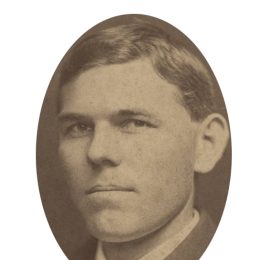
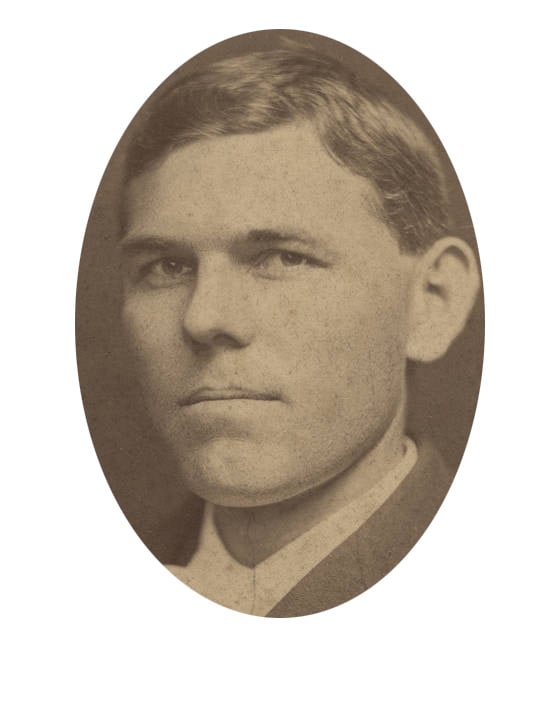
William Oscar Mulkey
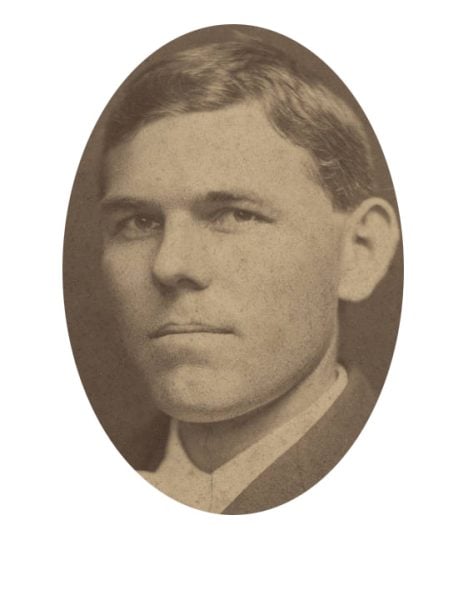
Lawyer and politician William Oscar Mulkey (1871-1943) briefly represented Alabama’s Third Congressional District in the U.S. House of Representatives from June 1914 to March 1915. He was elected in a special election following the resignation of Henry D. Clayton Jr.
Mulkey was born on July 27, 1871, in Brundidge, Pike County, to William Greene Mulkey and Elvira Tisdah Shanks. He was the second eldest of three children. His father served in the Confederate Army in several Georgia units, enlisting at the age of 16; he was captured and paroled at the end of the war. After the war, he and his brother John Jefferson “Sim” Mulkey, who also served in the Confederate Army, moved to Pike County, where their parents had relocated.
The family briefly moved to Texas in 1872 before returning to Alabama and purchasing the Shanks family property in Banks, Pike County. Mulkey was educated in the local schools and then studied law at State Normal College (present-day Troy University), graduating in 1892. Admitted to the bar in 1893, Mulkey established a successful law practice in Geneva, Geneva County, the following year. In 1896, he married Anna Roberta Burghard; the couple would have two sons. Around the turn of the century, Mulkey entered a law practice with Charles Daniel Carmichael, in which the pair specialized in commercial law. Carmichael also served as mayor of Geneva, from 1889 to 1901.
In 1900, Mulkey ran as a Republican for the Third District seat against the Democratic incumbent, Henry D. Clayton Jr., but lost badly. He was elected as a delegate to the 1901 Alabama State Constitutional Convention and served on the Committee of Municipal Corporations. Notably, the convention produced a new state constitution specifically designed to disenfranchise African Americans and poor Whites through strict voting restrictions using poll taxes, literacy tests, and property requirements. In 1910, Mulkey was elected to the Alabama House of Representatives, where he supported prohibition and woman suffrage.
Mulkey served in the legislature until June 1914, when he won a special election, this time running as a Democrat to represent Alabama’s Third Congressional District in the 63rd Congress. The election was held to replace Henry Clayton following his May 1914 resignation and appointment by Pres. Woodrow Wilson as a federal judge for the Middle and Northern Districts. The congressional district then consisted of Barbour, Bullock, Coffee, Dale, Geneva, Henry, Houston, Lee, and Russell Counties. Meanwhile, attorney Henry B. Steagall won what was referred to in local papers as the “long term election” to formally take the Third District seat in March 1915. Mulkey resumed practicing law and remained active in local politics. He served as president of the Alabama Bar Association in 1922.
Mulkey died on June 30, 1943, in Geneva. He was interred in Geneva City Cemetery next to his wife Anna who died nearly two years before. Both of his sons became lawyers and contributed to their local communities. Mulkey Elementary School in the Geneva city school system is named after son James A. Mulkey.