Slender Campeloma
The slender campeloma (Campeloma decampi) is an endangered species of freshwater snail found only in northern Alabama. It was originally described by American malacologist (mollusk specialist) William G. Binney in 1865 based on a specimen collected that same year in Decatur, Morgan County, by William H. DeCamp. DeCamp was a surgeon with the First Regiment Michigan Engineers assigned to northwest Alabama by U.S. Army general William Tecumseh Sherman during the Civil War to construct fortifications and bridges. The genus name comes from the Greek word kampylos, meaning bent or curved, and loma, meaning edge or border, and the species name honors DeCamp.
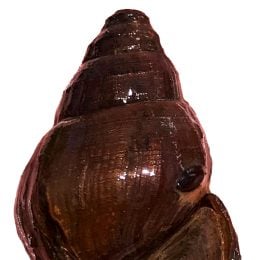
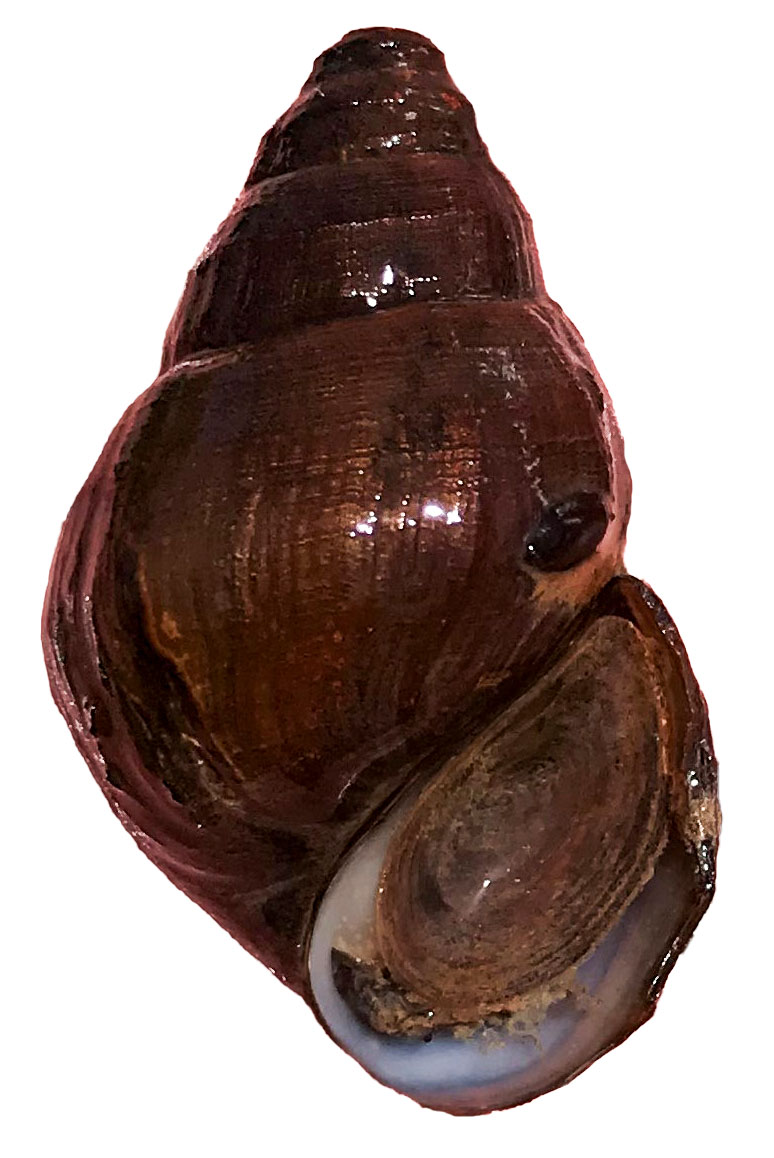
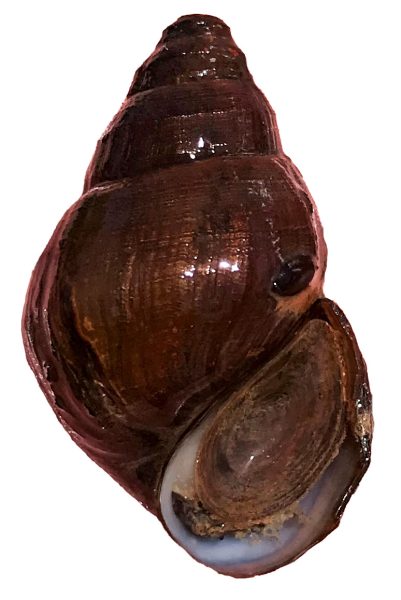
Slender campelomas are light brown snails with spiral shells that grow up to 1.4 inches (35 millimeters) in length. The slender campeloma can be distinguished from other closely related species by its taller, usually narrower shell spire and often fine (almost microscopic) striations across the shell surface. Juvenile slender campeloma are easily identifiable by the angular whorls of their shells. Slender campeloma belong to the family of snails called Viviparidae, which are live-bearing species. Eggs hatch inside the females, which then give birth to free-living juveniles that are miniature versions of the adults.
Historically reported from north-central and northeast Alabama in Jackson, Madison, and Morgan Counties, the slender campeloma is currently known to inhabit only two creek systems in Limestone County: the greater Limestone Creek system, including Limestone, Piney, and Beaverdam Creeks, and Round Island Creek. Another population in the Cypress Creek system of Lauderdale County was recently discovered and stretches the known range of the slender campeloma west approximately 37 miles (60 kilometers). Although the species once also occupied water systems in Jackson County, the slender campeloma has not been reported there in recent times.
The slender campeloma requires specific habitat conditions, preferring shallow, low-flow habitats, usually along stream margins, with at least some silt and clay substrate on the bottom. In the 1920s and 1930s, the construction of Wheeler, Wilson, and Pickwick Dams on the Tennessee River created unsuitable habitats in the lower reaches of the streams where the slender campeloma made its home, effectively isolating the populations in the different streams where the species resides. As the snails cannot survive in the lake-like impoundments behind the dams, they’re no longer able to travel freely through the streams that they occupied in the past. Physical habitat changes that may affect the slender campeloma include stream channelization (straightening the channel and leveling the bottom for faster and uninterrupted flow), increasing the turbulence in stream bottoms, and introduction of excess sediment. Even though the slender campeloma prefers some silt in the substrate, too much sediment may overwhelm populations and smother them with mud.
In addition to the threats posed by physical habitat change, the slender campeloma also faces threats from pollution. The most significant pollutants are fertilizer, animal waste, and pesticides from nearby agriculture, which can negatively affect these snails by decreasing dissolved oxygen levels, increasing the likelihood of toxic blue-green algae blooms, or introducing compounds to the streams that are toxic to the snails.
In 2000, the United States Fish and Wildlife Service (USFWS) listed the slender campeloma as endangered under the federal Endangered Species Act. The agency noted that the choice to classify the snail as endangered resulted from increasing multiple threats to its habitat. Alabama also includes the slender campeloma on its list of species of concern. Any projects that include federal funding that might affect the slender campeloma are required to go through an extensive process to limit harm to the snails and other such protected species. Though these restrictions rarely prevent such projects from proceeding, they do benefit snail populations by ensuring best management practices to protect the habitat. Such efforts contribute greatly to help preserve Alabama's biodiversity, which is measured by the number of species in an area. Alabama is currently the fourth most biodiverse state in the United States. Much of that diversity owes its existence to Alabama's abundant freshwater resources.