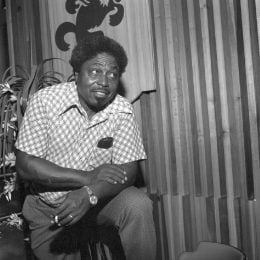
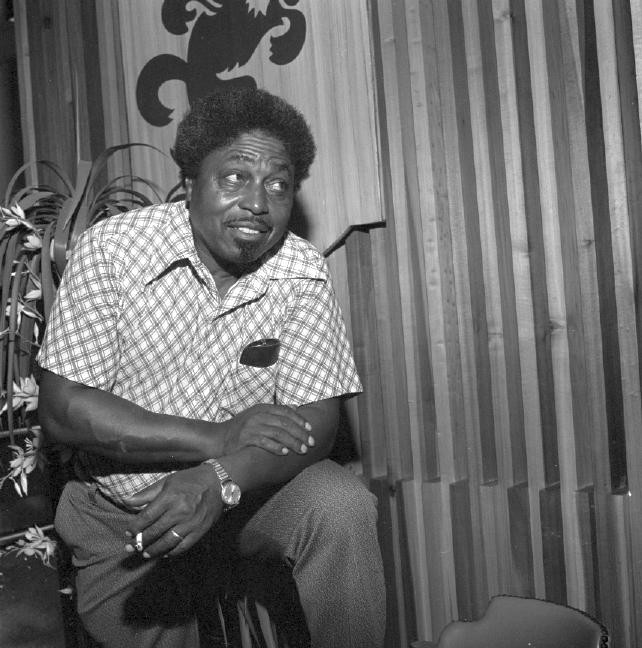
Johnny Shines
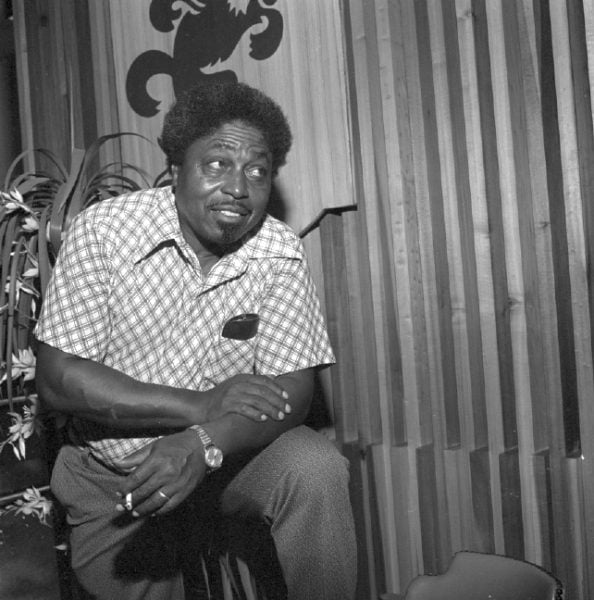
Johnny Nedlee (or Ned Lee) Shines Jr. (1915–1992) was a pioneering blues musician whose work bridged the Delta blues tradition and the emerging urban, electric blues sound. He performed alongside such luminaries as Robert L. Johnson, Howlin’ Wolf, Otis Spann, and Walter “Big Walter” Horton. Despite limited commercial success during his lifetime and a series of frustrating business relationships with recording studios, Shines’s gritty authenticity and emotional intensity earned him posthumous critical acclaim and lasting international influence. Shines spent his final two decades in Holt, Tuscaloosa County, just outside the city of Tuscaloosa, where his career was revitalized through local performances, mentoring younger musicians, and leaving a living legacy through his daughter, Carroline Shines. He was inducted posthumously into the Blues Hall of Fame in Memphis, Tennessee, in 1992 and the Alabama Blues Hall of Fame in 2014.
Shines was born on April 25, 1915, in Frayser, Tennessee, just outside of Memphis, to farmers John Granderson Shines and Vernitha (sometimes listed as Verneta) Frazer Shines. He was one of at least four children. As a teenager, he learned to play guitar from his mother, who nurtured his early musical interests. In 1932, at age 17, Shines moved across the Mississippi River to Hughes, Arkansas, to work as a farmhand. There, he met Chester Arthur Burnett, later known as Howlin’ Wolf, who became a defining influence on Shines’s emerging sound. Shines often described Wolf as having exchanged his soul with Lucifer for musical power, reflecting the mystical aura surrounding Delta blues musicians. Shines performed along Beale Street in Memphis, where he was nicknamed “Little Wolf,” and his playing reflected Wolf’s raw energy while developing a distinctive, resonant style of his own.
Shines’s early musical influences included the phonograph recordings of Blind Lemon Jefferson, Scrapper Blackwell, and Charley Patton. He also learned from local pianists, one of whom later introduced him to blues icon Robert L. Johnson.
In 1935, Shines began touring with Johnson, traveling throughout the United States and Canada until 1937. At first, Johnson was aloof, but the two quickly developed a deep musical partnership, performing at house parties, juke joints, fish fries, chitlin’ suppers, and levee camps. The tours were occasionally disrupted by personal conflicts between Shines and a relative who joined them on tour, prompting Shines and Johnson to temporarily move north, performing in Detroit and on the Elder Moten Hour radio show, based in Windsor, Ontario, in Canada.
Shines married Mabel Taylor on November 23, 1938, in Arkansas. Sources vary regarding the number of children from this marriage. (He would wed two more times, first to Hattie Shines, and then to musician Candy Shines, his widow at the time of his death in 1992.)
By 1941, Shines had moved to Chicago, working construction jobs during the day and performing in local venues whenever possible. He recorded for Columbia Records and Chess Records, but these sessions were either delayed or unreleased. In 1952, Shines recorded for J.O.B. Records with harmonica player Big Walter Horton, producing highly regarded but commercially underappreciated recordings. Frustrated by conflicts with producers, Shines sold his equipment and left the music industry, returning to construction work.
In 1966, Shines’s career was revived when Vanguard Records recorded tracks by him and the Johnny Shines Band for Chicago/The Blues/Today! Vol. 3 and on Masters of Modern Blues Vol. 1. He toured with Willie Dixon’s Chicago All Stars and performed alongside Lee Jackson and Big Walter Horton. Critics consistently lauded his artistry, noting that his contributions to Chicago blues deserved recognition alongside contemporaries such as Muddy Waters and Howlin’ Wolf. Contemporary critics also recognized the depth and authenticity of his recordings, even as his commercial success remained limited.
In the late 1960s, following the death of his daughter from a previous marriage, Shines and his then-wife Hattie moved to Holt, where they raised ten grandchildren in addition to their own children. Shines also pursued formal education, attending C. A. Fredd State Technical College (present-day Shelton State Community College) in Tuscaloosa, demonstrating his lifelong dedication to self-improvement.
Shines continued performing locally and internationally. He collaborated with Otis Spann and Big Walter on Last Night’s Dream and toured with Robert Lockwood Jr. He was nominated for a Grammy in 1980 for Hangin’ On, a collaboration with Lockwood. A stroke that year nearly ended his career, but he retained sufficient vocal power to tour with Kent DuChaine from 1989 to 1992, performing more than 200 shows and receiving the W. C. Handy Award from the Blues Foundation. Shines was an inspiration to contemporary musicians, including Debbie Bond, who was instrumental in founding the Tuscaloosa-based Alabama Blues Project education program for youth in 1995. His legacy also continues in online archives and streaming platforms.
Shines died on April 20, 1992, six days short of his 77th birthday. His funeral was front-page news, reflecting the impact of his life and music. Music critic and writer Peter Guralnick honored him as one of the great creators and interpreters of the blues alongside Muddy Waters, Howlin’ Wolf, Robert Johnson, and Elmore James. Shines’s death was also reported in the New York Times, which noted both his musical talent and historical significance in Delta and Chicago blues. He is buried at Cedar Oak Memorial Park in Tuscaloosa.
In 2010, Shines’s daughter Carroline established the Johnny Shines Blues Festival in Holt to honor her father’s life and music. The festival features regional and local artists, youth blues performers, gospel, rap, and blues sessions, and has become a central community event. Scholarship initiatives such as the Johnny Shines Blues Foundation further preserve his musical and social legacy. A detailed listing of Shines’s recordings, including sessions with J.O.B. Records and unreleased tracks with Columbia and Chess, is maintained online.