Shenandoah
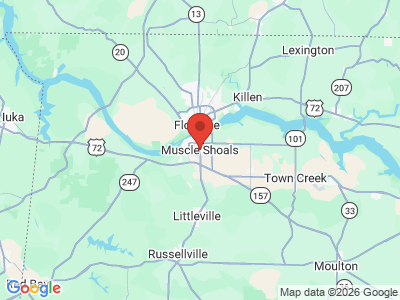
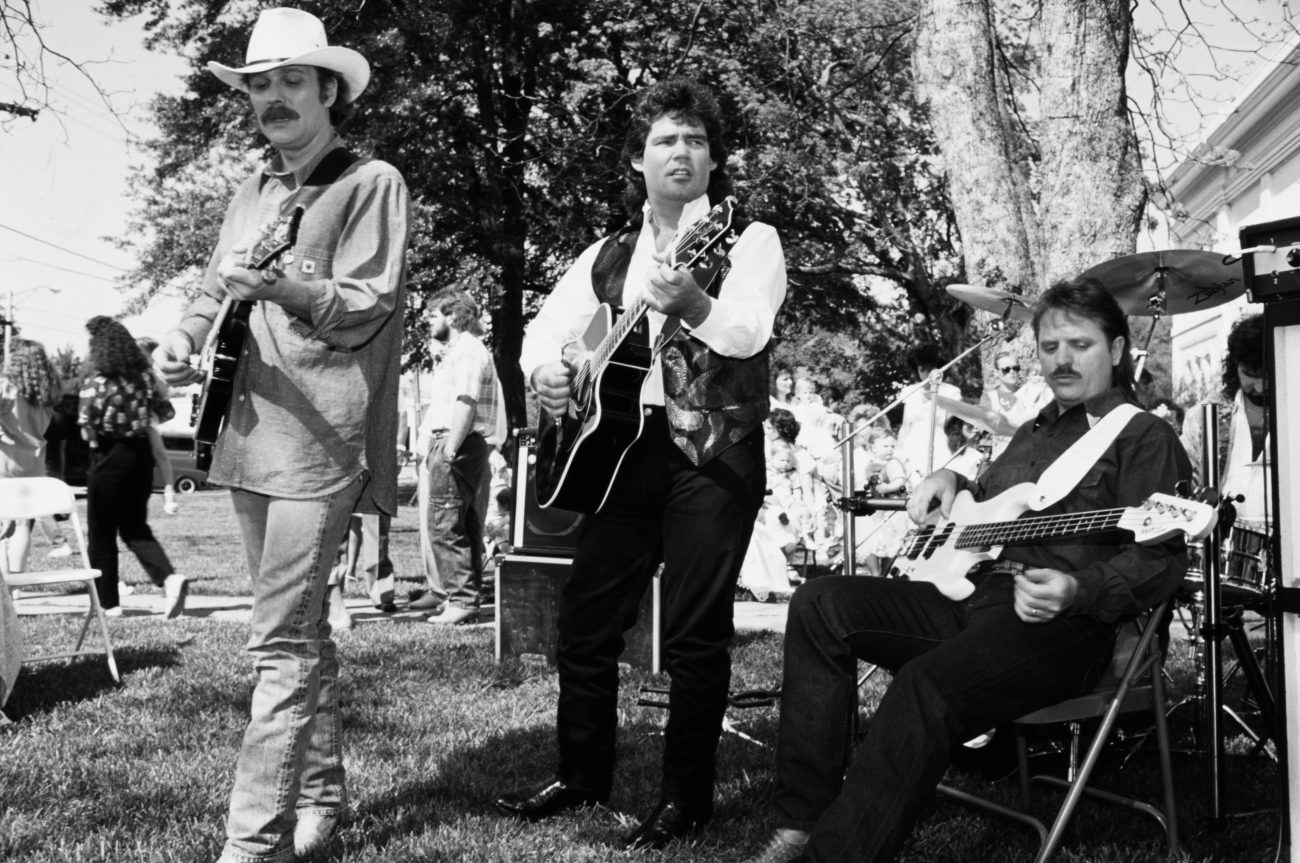
Shenandoah is a Grammy-winning country music group formed in Muscle Shoals, Colbert County, in 1984. The group garnered several number 1 hits on the Billboard Hot Country Songs charts in the 1980s and 1990s and is best known for such songs as “Two Dozen Roses,” “Next to You, Next to Me,” and “Church on Cumberland Road.” Shenandoah’s songs derive from a combination of country, gospel, and bluegrass musical influences.
Shenandoah was formed by guitarist and lead vocalist Marty Raybon, drummer Mike McGuire, lead guitarist Jim Seales, keyboard player Stan Thorn, and guitarist Ralph Ezell. The group has seen many changes in membership throughout the decades; of the original members, only Rayon and McGuire currently perform with the group. Stan Munsey was also a long-standing and integral contributor to Shenandoah, playing keyboard from 1995 to 1997 and 2000 to 2018.
Prior to Shenandoah, McGuire and Seales played together in a house band that appeared regularly at the MGM Club in Muscle Shoals, while Seales, Ezell, Thorn, and McGuire played together during recording sessions. Raybon, who had been performing in his father’s bluegrass band, the American Bluegrass Express, joined them in 1984 to create the group that would become Shenandoah.
After listening to one of the group’s early performances, executives at CBS Records asked the band to record some songs. Singer-songwriter Robert Byrne recorded a demo of their music, and CBS Records, a unit within the Columbia Records umbrella, signed the band to a contract. Alongside Rick Hall, Byrne would go on to serve as Shenandoah’s producer. A well-known songwriter, Byrne wrote numerous hit country songs in the 1980s and 1990s, including several of Shenandoah’s hits, as well as hits from performers Ronnie Milsap, Earl Thomas Conley, T. G. Sheppard (the stage name of William Neal Browder), and others.
The founding group members wished to call themselves “The MGM Band” but were not allowed to do so because the name was already taken. CBS Records then recommended two names to the musicians: Shenandoah and Rhythm Rangers. Disliking the name “Rhythm Rangers,” Raybon selected the former. He later lamented that CBS Records never conducted a trademark search, which led to future legal problems.
Shenandoah recorded their first two albums at FAME Recording Studios in Muscle Shoals, releasing their first three singles in 1987. Their first single, a nostalgic song about the 1950s entitled “They Don’t Make Love Like We Used To,” reached number 54 on the country singles charts. The band disliked the song, but producer Rick Hall had pressured them to cut the record. Shenandoah’s second single, “Stop the Rain,” hit number 28 on the country singles charts, and their third single, “She Doesn’t Cry Anymore,” rose to number 9, making the band and CBS Records feel optimistic. Shenandoah’s first album, eponymously named Shenandoah, came out in 1987.
Shenandoah’s second studio album, The Road Not Taken (1989), featured three number 1 hits: “The Church on Cumberland Road,” “Sunday in the South,” and “Two Dozen Roses.” The album’s third single, “Two Dozen Roses,” concerns a man who hurts his girlfriend’s feelings and conjectures what it would take to win her back, such as buying her “two dozen roses” rather than merely one dozen. The song was co-written by Shenandoah producer Robert Byrne and Lyman Corbitt (Mac) McAnally, Jr., of Red Bay, Franklin County. After Byrne’s death in 2005, McAnally recounted that Byrne had dreamt the first verse and the chorus of “Two Dozen Roses.” Shenandoah’s third studio album Extra Mile (1990) included their fourth number 1 hit, the upbeat love song “Next to You, Next to Me,” which remained on the charts for three weeks, the longest of any of their songs.
In 1990, just after the release of their album entitled Extra Mile, the band came under legal scrutiny for calling itself “Shenandoah” after a Kentucky music group threatened legal action, claiming that it possessed the rights to the name. Shenandoah made a monetary settlement to the Kentucky band to avoid the lawsuit, but then two other musical groups also sued, claiming they had rights to the name. After spending more than $2 million to settle the lawsuits, Shenandoah filed for Chapter 11 bankruptcy in 1991. The group lost their contract with Columbia the following year but were allowed to maintain their name. They recouped their losses by touring extensively.
In 1991, Shenandoah won the Academy of Country Music Award for Top Vocal Group of the Year. In 1993, Shenandoah released their fifth studio album, Under the Kudzu, which included their fifth and last number 1 hit, “If Bubba Can Dance (I Can Too),” written by Raybon and McGuire with songwriter Bob McDill. Shenandoah’s sixth studio album, In the Vicinity of the Heart (1994), featured the single “Somewhere in the Vicinity of the Heart,” a collaboration with country/bluegrass/folk singer Alison Krauss. The song rose to number 7 on Billboard’s Hot Country charts and won the 1995 Vocal Event of the Year Award from the Country Music Association and the 1996 Grammy Award for Best Country Collaboration with Vocals. Shenandoah disbanded in 1997 when Raybon left to form a duo with his brother Tim but reassembled in 2000 without him. Brent Lamb replaced Raybon, with Curtis Wright replacing Lamb, and then Jimmy Yeary, in turn, replacing Wright. Raybon returned to Shenandoah in 2014.
In 2019, Shenandoah collaborated with acclaimed country music star Charlie Daniels for the song “Freebird in the Wind,” a tribute to the rock music group Lynyrd Skynyrd, written in memory of the 1977 plane crash that killed several of the band’s members. Shenandoah recorded the song at Muscle Shoals Sound Studio in Sheffield, Colbert County, the same studio where Lynyrd Skynyrd recorded often from 1971 to 1972.
The band’s early hits continue to be their most popular songs. In recent years, they have rereleased some of their hits from that era in collaboration with other artists, including a 2023 rerelease of the “Two Dozen Roses” featuring Luke Combs, a 2024 rerelease of “Sunday in the South” featuring Jason Aldean and Luke Bryan, and a 2025 rerelease of the song “The Church on Cumberland Road” featuring the band Nickelback.
As of 2026, Shenandoah has recorded 13 studio albums. Throughout the past four decades, Shenandoah has continued to perform, with more than 20 band members contributing over the years.