Regional Vocational and Trade Schools Act of 1947

The 1947 Regional Vocational and Trade Schools Act created the first set of public trade schools in Alabama. Authored by freshman state representative George C. Wallace and signed into law by Gov. James “Big Jim” Folsom, the act created regional post-secondary schools in response to the demand for workforce training and easier access to higher education following World War II. By authorizing the Alabama Board of Education (BoE) to establish and maintain regional trade schools across Alabama, the act centralized vocational education at the state level. The institutions created under the 1947 Trade Schools Act provided the groundwork for the legislation that created the Alabama Community College System in 1963.
Owing to the lack of community support for increased spending on education and the local nature of two-year institutions, few two-year colleges existed in Alabama prior to 1947. Because the state provided little support to public education for Black Americans prior to the federal demand for desegregation in the 1950s, a majority of the first two-year institutions in the state were private and historically Black. Selma University in Dallas County opened during Reconstruction in 1878 as a private two-year institution to provide a church-affiliated education to recently freed people, and Lomax-Hannon Junior College in Greenville, Butler County, and Concordia College in Selma opened in 1893 and 1922, respectively.
Rise of Vocational Education

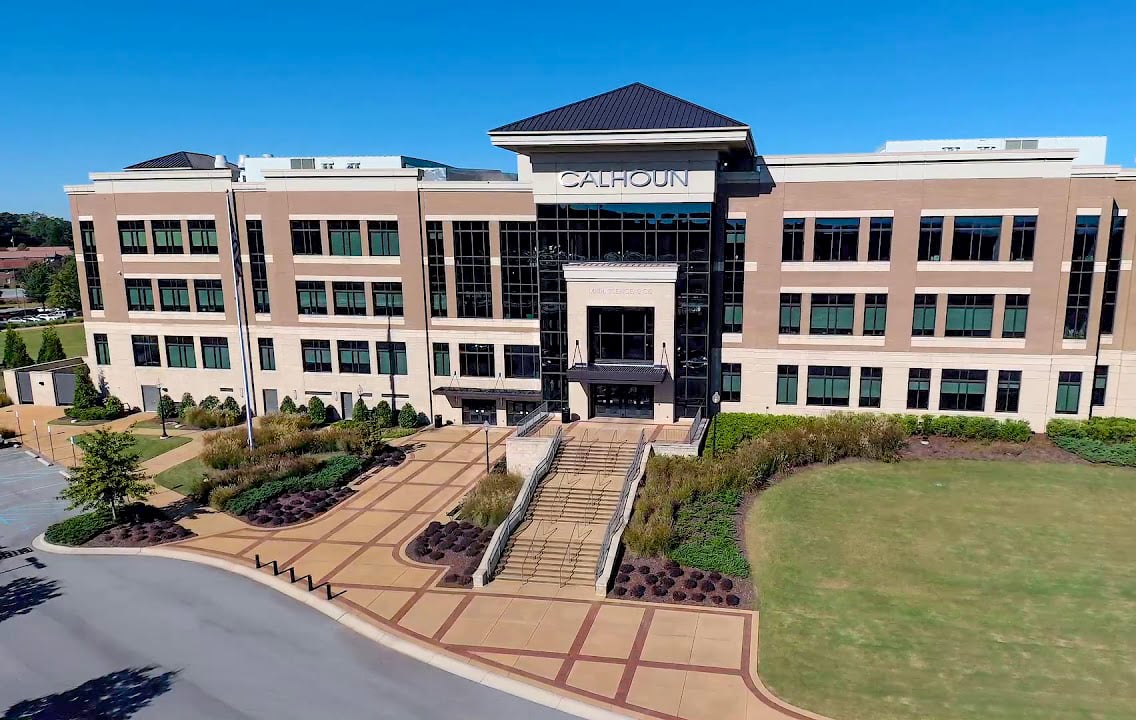
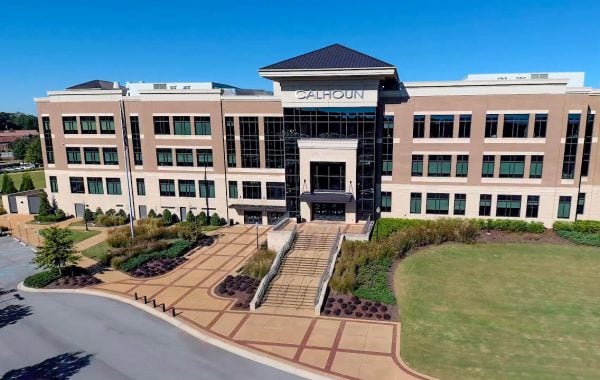
In the early twentieth century, the Progressive movement led to the rising popularity of vocational education, primarily for White students, which led to the establishment of the Alabama School of Trades and the Decatur Trade School. The Alabama School of Trades, located in Gadsden, Etowah County, opened in 1925. The school’s mission focused on vocational training and workforce development, offering courses in printing, electrical repair, bricklaying, and cabinetmaking. Established in 1938, the Decatur Trade School initially operated as a high school vocational program. The program director for the Decatur Trade School, now Calhoun Community College (1973), was paid through a combination of state and federal funds under the provision of the 1936 George-Deen Act, which expanded federal funding for vocational training. Although the Great Depression threatened to close both schools, enrollments increased after World War II as veterans returned home looking to continue their education.
Indeed, World War II would have a profound effect on adult education in Alabama. Nearly 321,000 Alabamians volunteered or were drafted for service in the war. The exodus of workers and the demand for war-related industrial products led to a renewed focus on industrial training. Following World War II, Pres. Harry Truman called for public two-year “community colleges” in his “Higher Education for American Democracy” report, more widely known as the "1947 Truman Commission Report." The postwar economic boom and the creation of federal aid programs such as the G.I. Bill provided an opportunity for returning veterans to advance their education. To make post-secondary education more accessible and to prevent overcrowding at existing universities, Truman pushed for communities to establish two-year public colleges with a focus on vocational education. The two-year trade schools largely served as a transition for high school students to a four-year institution, or from high school to the workforce, offering courses such as electronics and radio repair, automotive repair, welding, and machine shop operations.
Trade Schools Law Enacted
By 1947, ten public universities and colleges and two public trade schools existed in Alabama. On October 9, 1947, the legislature passed the Regional Vocational and Trade Schools Act. Then-representative George C. Wallace introduced the legislation for the act, inspired by his wartime experience in which he saw a disparity in the number of skilled workers from the South and from the East, where vocational education was more widespread.
The act incorporated the existing schools in Decatur and Gadsden into the state system. In addition, it provided an annual appropriation of $750,000 from the Alabama Special Education Trust Fund Surplus Account to construct four regional trade schools modeled after the Alabama School of Trades in Gadsden, meaning they would provide housing opportunities as well as opportunities for on-campus work to help students fund their tuition. In addition, the act reserved $75,000 annually to operate and maintain each school. The act also appropriated funds for the existing Decatur Trade School; once the school’s existing federal funds expired, the state would appropriate $75,000 annually for the school’s operations. To ensure that every part of the state would be within a reasonable distance from a trade school, the act stipulated that no more than one school be in a single congressional district, intending to spread the schools out geographically. Under the supervision of the state superintendent of education, the BoE managed and controlled the trade schools in collaboration with an advisory council for each school that consisted of four members appointed by the governor.
New Schools Constructed

State superintendent Austin Meadows recommended that the first trade school funded through this act be established in Dothan, Houston County, and the BoE unanimously approved his recommendation. In 1949, the George Corley Wallace Technical Trade School (present-day Wallace Community College), opened in the home district of state representative George Wallace and was named after his father, George Corley Wallace Sr. Originally located at Napier Field, the school later expanded to include a campus in Eufaula, Barbour County.
By 1948, the BoE determined that it was necessary to create a trade school for Black residents, largely to avoid federal intervention. This followed the state’s equalization campaign, which sought to increase funding for Black schools to preserve racial segregation in Alabama’s school systems. To this end, the Wenonah Trade School opened in Birmingham, Jefferson County, in 1950, becoming the second of the four new schools created under this act. More than 300 students enrolled for the 1951-52 academic year, making it the second largest trade school in the state behind the Alabama School of Trades. In 1965, the Wenonah Trade School opened an academic division to become the Wenonah State Junior College. After it was accredited by the Commission on Colleges of the Southern Association of Colleges and Schools, the school’s name changed to Lawson State Junior College, in 1969.

Because three trade schools already existed in north Alabama, Meadows recommended Montgomery and Mobile for the remaining two school sites. By centralizing control of the schools in Montgomery, through the BoE and the governor’s advisors, the Trade Schools Act added to the politicized nature of public education in Alabama. At the persuasion of board member Rankin Fite, who heavily favored his own district and constituents, the BoE rejected the proposed trade school in Montgomery, eventually approving a trade school in Tuscaloosa instead. Tuscaloosa Trade School, later Shelton State Community College, would open in 1951, and Southwest State Trade School in Mobile, now Bishop State Community College, would open in 1952. Montgomery would not open its first two-year trade school until 1961, when Patterson State Trade School (named for Gov. John Patterson) opened, with funding from legislation passed in 1955. (Under this act, the state established three additional trade schools for Blacks. Gadsden Trade School opened in 1960 and Huntsville State Technical College and Carver State Technical Institute in Mobile opened in 1962. It was later merged with Bishop State Community College, in 1991.)
Impact and Legacy
The 1953 academic year saw all six schools associated with the act in operation, with approximately 3,500 students enrolled. Although the two-year system was primarily designed to provide educational opportunities to veterans and poor White men, the system benefited minority groups as well. Of those enrolled at the six schools, women represented 15 percent of the student body. Women fared better at Wenonah Trade School, the one school established through this law that served Black students; by 1956, women accounted for half of the school’s enrollment.
After the reelection of Gov. Folsom in 1954, the legislature authorized the creation of five additional trade schools to provide sufficient access to vocational education for students of both races. The 1947 act had laid the institutional groundwork for Alabama’s public technical education system by authorizing regional trade schools under state control. Rather than replacing this system, the legislature built upon it, consolidating and expanding these institutions into a unified network of junior colleges and trade schools through the 1963 Junior College and Trade School Act. It was signed into law by George Wallace during his first term as governor. As of the 2020s, there are 24 colleges and 130 locations in what is now known as the Alabama Community College System, with more than 170,000 students enrolled.
Additional Resources
- Smith, Dustin P. "A Century of Change: The History of Two-Year Education in the State of Alabama, 1866–1963," PhD diss., (University of Alabama, 2012).
- Katsinas, Stephen G. “George C. Wallace and the Founding of Alabama’s Public Two-Year Colleges.” Journal of Higher Education 65 (July/August 1994): 447–72.