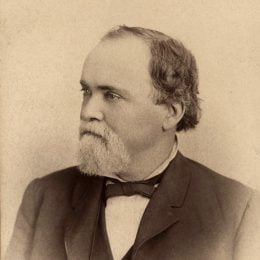
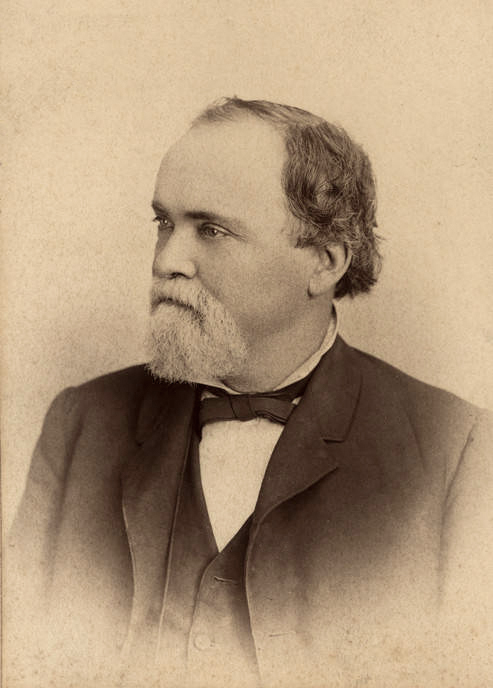
John Turner Milner
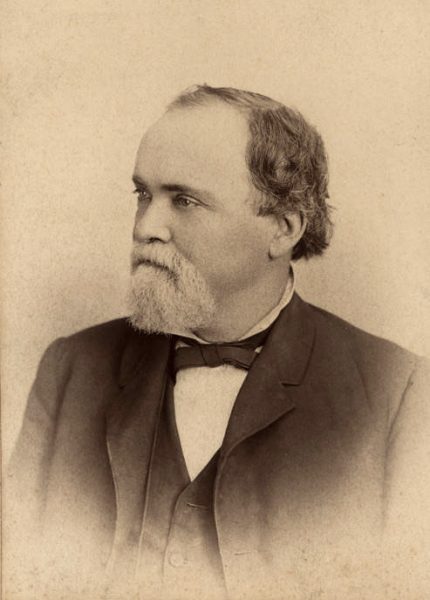
John Turner Milner (1826-1898) was an engineer, industrialist, businessman, and state senator. He surveyed railroads and established mines and mining companies, iron furnaces, and other businesses, and is credited for choosing the location of Birmingham through his selection of railroad routes. Milner was a strong advocate for White supremacy who supported the use of enslaved labor before the Civil War and advocated for the state’s convict-leasing system after the war.
Milner was born on September 29, 1826, in Pike County, Georgia, to wealthy engineer, railroad contractor, and mine owner Willis Jay Milner and Mary Ann Turner Milner. He was the eldest of six children. One brother, Willis Julian Milner, was an officer with the Confederate States Army and later also had a notable career as a civil engineer and businessman in the Birmingham area. His son, Henry Key Milner, was important in the Good Roads Movement. John Milner’s early education was limited, but he reportedly began working in his father’s mine in Lumpkin County, Georgia, at the age of ten and worked on railways with his father from the ages of 12 to 15. At age 17, he was working in the gold mines near Dahlonega, Georgia. He attended the University of Georgia for three years until poor health forced him to leave. After recovering, Milner worked under the guidance of civil engineer George H. Hazelhurst on the construction of the Macon and Western Railroad. Within two years Milner began serving as principal assistant engineer in building the Muscogee railway that later was absorbed into the Columbus and Macon Railroad. Rail lines created by smaller companies were routinely consolidated and connected to larger lines, such as what would become the Louisville and Nashville Railroad.
The discovery of gold in California drew Milner out West around 1849. In addition to mining there, he ran a freight business and was appointed by the provisional governor of the California territory to serve as the city surveyor of San Jose. After much success in mining, Milner briefly returned to Georgia, and then moved to Alabama to join his father in working on the Montgomery and West Point Railroad. Milner married Flora J. Caldwell (daughter of John C. Caldwell) in 1855; the pair would have four children.
After Milner completed survey work for the Alabama and Florida Railroad, Gov. Andrew B. Moore appointed him in 1858 to survey the South and North Alabama Railroad, which was intended to connect the Alabama River with the Tennessee River. Milner’s choice of location for the rail line greatly dictated where the new town of Birmingham would be located. Also known as the Central of Alabama Railroad, the South and North line was later sold to the Louisville and Nashville Railroad. He was chief engineer of the South and North from November 1858 to October 1872 and was thus exempt from compulsory military service during the Civil War. Despite not serving in the military, he is often referred to honorifically as “Col. Milner” in writings and news articles of the time period.
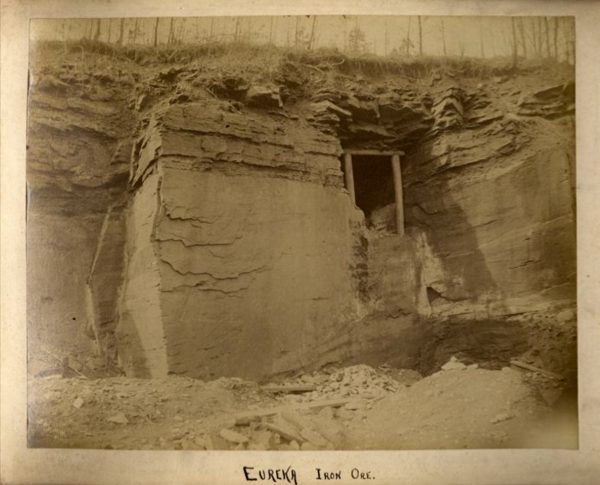
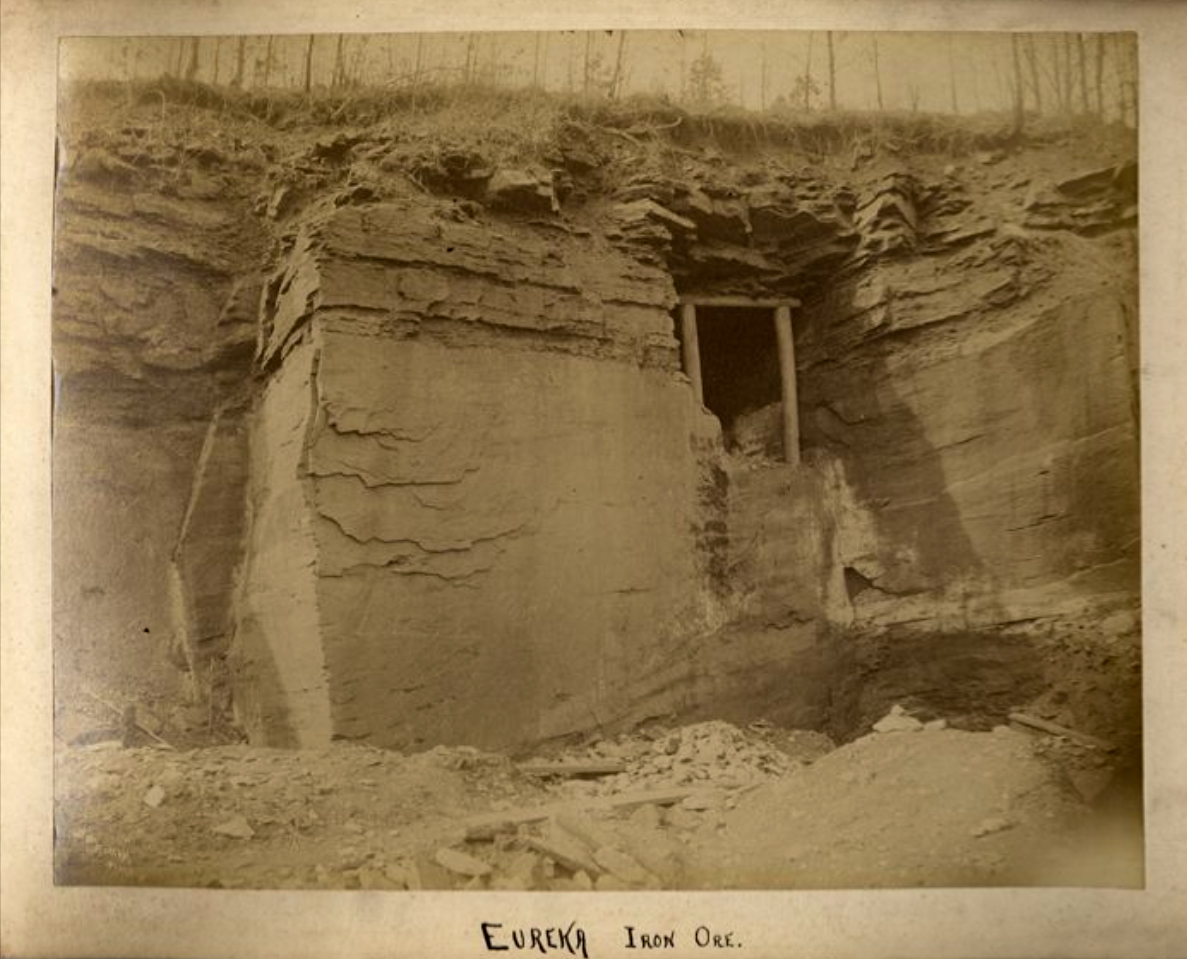
In 1862, Milner and business partner Frank Gilmer persuaded the Confederate government to fund the establishment of a blast furnace on Red Mountain near Birmingham, Jefferson County, to manufacture iron for military use. The plant opened in 1863 and was mostly built and worked by enslaved labor. The same year, Milner and his associates would open the Eureka Mine at Red Mountain. Milner and Gilmer also opened other mines south of Birmingham near Helena, Shelby County. The 1860 Slave Schedules note that Milner claimed personal ownership of 26 enslaved individuals at that time. Milner also founded sawmills at Bolling, Butler County, utilizing enslaved labor prior to the war’s end.
Milner successfully applied for amnesty and a pardon after the war, stating that he had not favored secession and claiming that he supported a speedy end to the war as long as “material interests” were protected. He further asserted that a Confederate hospital established on his property in Greenville, Butler County, was there without his consent or support and that he had refused compensation for its use. His efforts to prove his loyalty saved him from the loss of his mills, which the U. S. government had considered seizing.
Following the war, businessman William Hampton Flowers joined Milner and his father-in-law in the business and the Bolling operation became Milner, Caldwell, & Flowers Lumber Co. Milner developed the Coalburg property near Birmingham and started the New Castle Coal Company east of the city. The venture was later named the Milner Coal and Railroad Company; he would serve as president. Milner sold a portion of his Coalburg holdings to the Georgia Pacific Railroad in 1883.
Milner authored several pamphlets and papers that extolled the mineral assets of Alabama as well as the state’s vast potential for railroad expansion and industrial growth. His book, Alabama: As It Was, as It Is, and as It Will Be was published in Montgomery in 1876. It included information comparing Alabama to other states in terms of population, the valuation of farms and livestock, and the harvested amounts of wheat, rye, corn, and other agricultural products in the state. Additionally, the work included a section titled “The Negro in Alabama,” in which he detailed his emphatic White supremacist views and denigrated the intelligence, character, and work ethic of Black citizens. Milner predicted that without slavery, the “negro” race would fail without the direction enslavement had provided. He further proposed that former slaves should not be allowed to live in groups but should be interspersed throughout the White population in small numbers to make them easier to influence. A later pamphlet of his, White Men of Alabama Stand Together, 1860 and 1890, was arguably the most overt in its agenda against African American freedoms. Published in 1890, the message was clear: White men must unite to keep the formerly enslaved in subjugation or Alabama would be ruined.
In addition to his support of White supremacy, Milner promoted the use of convict labor in mines and industrial settings in which prisoners, overwhelmingly African American men, were subjected to harsh and dangerous conditions. Ten years after the war, Milner’s Helena mines were worked entirely by convict laborers, the same labor force he would use in other ventures, such as the Eureka Coal Mines on Red Mountain. In an 1882 pamphlet entitled, A Review of the Convict Situation in Alabama, he refuted assertions made by the president of the Medical Association of the State of Alabama, John Brown Gaston, that reform was needed and that the mortality rate of prisoners in Alabama was 500 to 600 percent higher than that of convict laborers in other states. Milner’s self-serving pamphlet denied all negative accusations and promoted the lie that convicts were well-treated. Gaston, as well as later historians, could rely on inspection reports, witness accounts, and testimony from convicts themselves to show the atrocious conditions they faced. Such documents detail the long work hours, dangers, starvation, inadequate and filthy clothing, bondage, beatings, and high mortality rates prisoners endured while laboring at industries run by Milner and others.
In addition to his mining and business interests, Milner was elected to the Alabama State Senate to represent Jefferson County for four consecutive terms between 1888 and 1895. He served on the Committee for Internal Improvements and the Committee for Immigration, Industrial Resources, and Public Buildings. Milner opposed Bessemer separating from Jefferson County to become its own county, arguing that future profits from shipping on the Warrior River would potentially be lost. Milner introduced legislation to establish proper ventilation and operational standards for coal mines, including the creation of a board of examiners and a mine inspector. He also introduced a bill to manage oversight of locomotives on lines operated on suburban or street railways. He further supported the incorporation of the Montgomery and Sylacauga Railroad Company and hastening construction on the Mobile and West Alabama Railroad.
Milner died at his home in New Castle, Jefferson County, on August 18, 1898, at the age of 72. His funeral was held at the First Presbyterian Church in Birmingham, followed by his burial in Oak Hill Cemetery.
Additional Resources
- Armes, Ethel. The Story of Coal and Iron in Alabama. 1910. Reprint, Birmingham, Ala.: Book-Keepers Press, 1972.
- Blackmon, Douglas. Slavery By Another Name: The Re-enslavement of Black Americans from the Civil War to World War II. New York: Doubleday, 2008.
- Cline, Wayne. Alabama Railroads. Tuscaloosa: University of Alabama Press, 1997.
- Lewis, W. David. Iron and Steel in America. Greenville, Del.: The Hagley Museum, 1986.