Miller Reese Hutchison
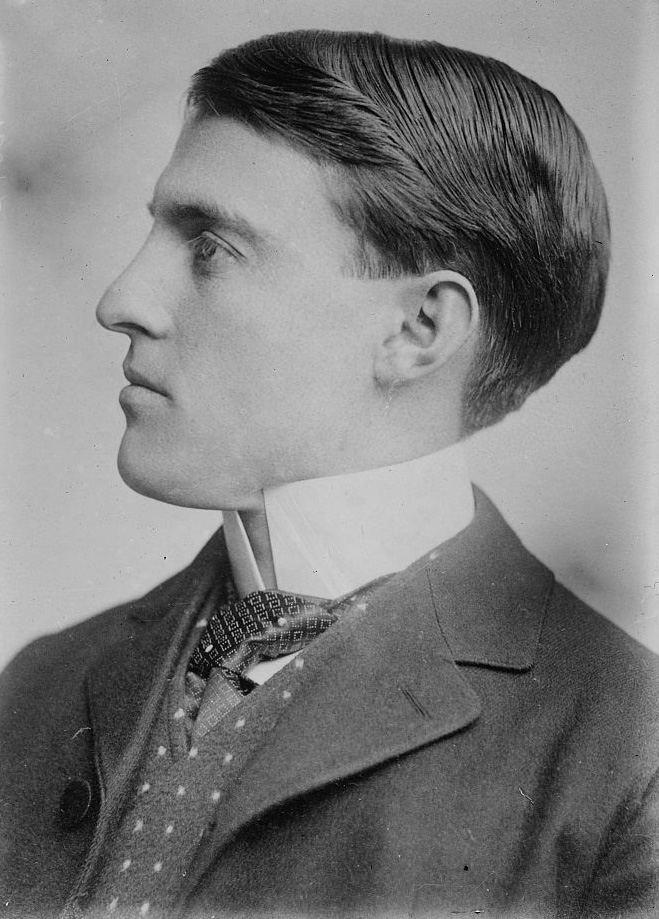
Alabama native Miller Reese Hutchison (1876-1944) was an electrical acoustical engineer who is credited with inventing the electrical hearing aid and the Klaxon horn, which became widely used in automobiles during the early twentieth century. A prolific inventor and gifted engineer, Hutchison held more than 1,000 patents. He is also remembered as inventor Thomas Edison’s chief assistant at the Edison Laboratory in West Orange, New Jersey, before operating his own firm, Miller Reese Hutchison Inc.
Hutchinson was born on August 6, 1876, in Montrose, Baldwin County, to William Peter and Tracie Magruder Hutchison of Mobile, Mobile County. He showed an early interest in mechanics and electronics while attending Mobile public schools. After secondary school, Hutchison attended Marion Military Institute in 1891 and Spring Hill College in 1892 before exploring the relatively new curriculum of electrical engineering, first at the University Military Institute (present-day UMS-Wright Preparatory School) in Mobile in 1895 and the Agricultural and Mechanical College of Alabama (present-day Auburn University) two years later. He left school before completing any degree. While attending college, Hutchison invented and patented a lightning arrester that prevented lightning from burning out telegraph wires. It became Hutchison’s first patent, in 1895. In 1913, Auburn presented him with an honorary bachelor’s and Spring Hill College awarded him an honorary doctorate the following year in recognition of his professional work.
While a student at Auburn, Hutchison developed the electrical hearing aid in an effort to help a deaf and mute childhood friend. Hutchison studied ear anatomy at Alabama Medical College to better understand deafness before developing the device that improved his friend’s hearing; in 1895, he patented the device, naming it the “Akouphone.” Prior to Hutchison’s invention, only funnel-shaped, non-electric ear trumpets, which amplified and channeled sound directly into the ear, were available.
Hutchison patented and distributed his improved device, the “Akouphone,” in 1898 through his Akouphone Company of Mobile, Alabama. It was the first company in the United States to design and produce electric hearing aids, at $400 each. Hutchison then developed a more portable version called the “Acousticon.” Patented in 1902, it gained worldwide attention, especially after Queen Alexandra, consort to King Edward VII of Great Britain, claimed the device restored 90 percent of her hearing. Shortly after debuting the second model of the Akouphone, Hutchison toured London and Paris to promote his hearing aids and word spread rapidly, especially among European royalty. Taking advantage of this opportunity, the British royal family invited Hutchison on to their personal yacht to personally fit Queen Alexandra with her hearing aid. As a demonstration of gratitude, Alexandra invited Hutchison to Edward VII’s 1902 coronation ceremony in London. He was presented with a royal coronation medal for “scientific investigation and invention,” a portrait of the Queen in a jewel encrusted frame, and a generous stipend. In 1904, the “Acousticon” was displayed at the World’s Fair in St. Louis, Missouri. Even Hutchinson’s future employer Thomas Edison wore an “Acousticon” at the insistence of his wife.
During the Spanish-American War, Hutchison served as an electrical engineer for the U.S. Light House Service, laying submarine cables and mines in the Gulf of Mexico in an effort to protect American harbors. After the war, he moved to New York City, where he opened Hutchison Office Specialties Company and an engineering laboratory in which he produced numerous innovative technologies. Invented in 1908, the Hutchison Electrical Tachometer was a device that measured the speeds of naval ships. The invention gained the attention of Admiral of the Navy George Dewey, Pres. Theodore Roosevelt, and Pres. William Howard Taft. While in New York, he married Martha Jackson Pomeroy of Minnesota in 1901; the couple had four children.
Hutchison was inspired to create a more authoritative-sounding car horn after nearly hitting a pedestrian while driving in the rain. He later noted that available car horns were too melodic and a more annoying sound would better serve as a warning of an approaching car. Patented in 1906, his Klaxon horn addressed this problem with its distinctive “A-OOH-GAH” tone. The name derives from the Greek word klázō, meaning “shriek.” Despite some public recoil, the horn sold commercially through the Lovell-McConnell Manufacturing Company of New Jersey, becoming standard equipment in all General Motors automobiles by the 1930s. The horn was also installed on passenger boats, in various European cars, and later adapted as the dive horn on U.S. submarines.
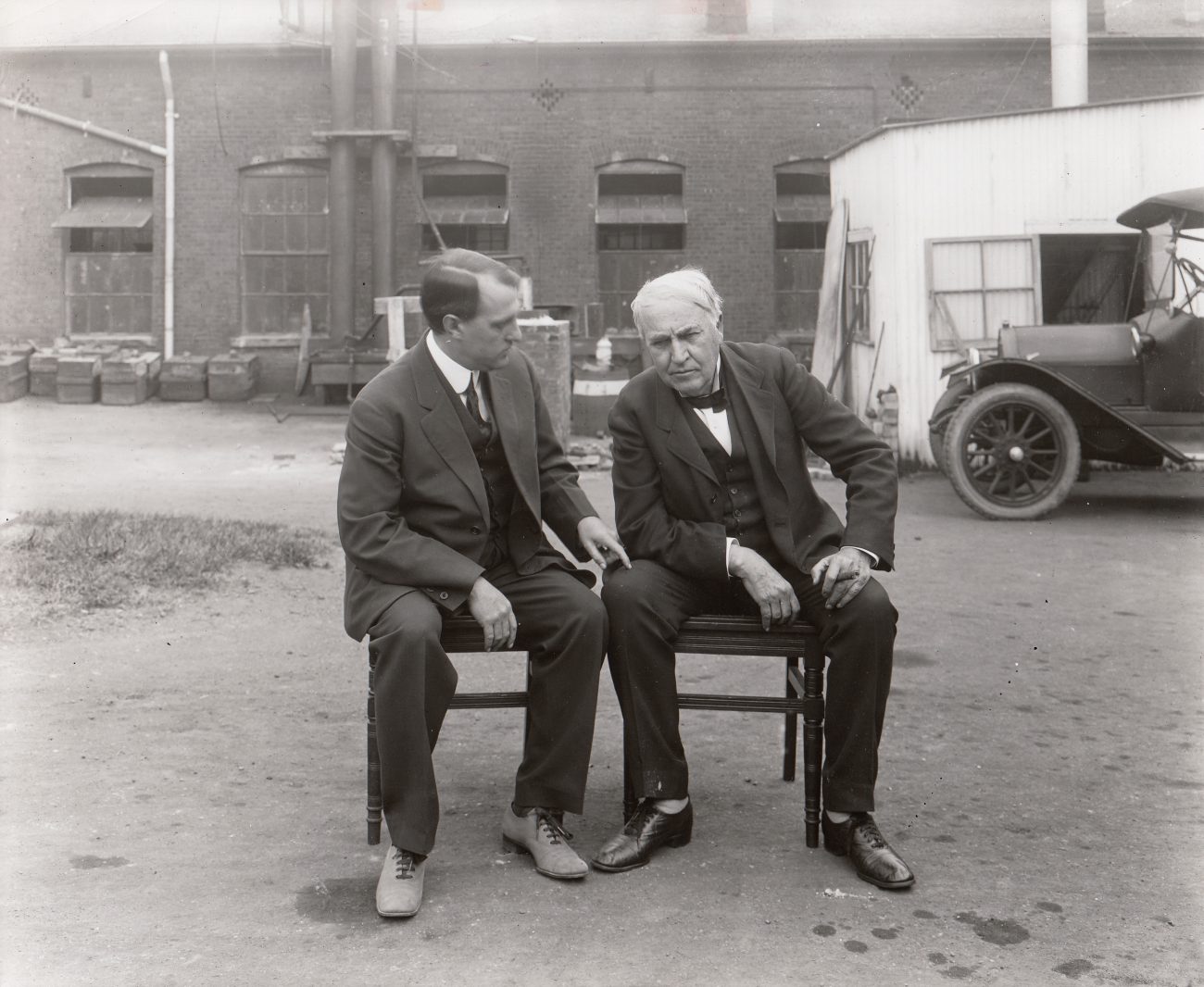
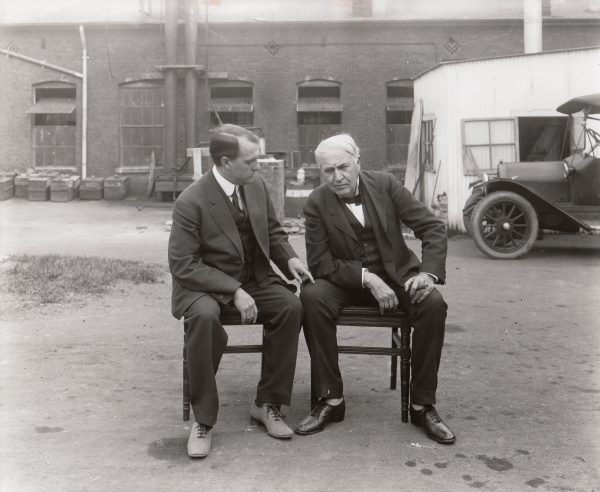
Hutchison’s success and rising fame gained the attention of Thomas Edison, who hired him in 1910 to help develop industrial storage batteries. In 1912, he became Edison’s chief engineer and closest advisor, working to advance sound recording and transmission technologies. He also promoted Edison’s storage battery for use in submarines in negotiations with the U.S. Navy. Both later became members of the Naval Consulting Board, a prestigious civilian board that reviewed inventions by the public that might possess military application. Edison was appointed president and Hutchison became assistant to the president.
Hutchison resigned from Edison Laboratory in 1918 to start his own firm, Miller Reese Hutchison Inc. in New York City to focus on his own inventions and entrepreneurship. Later inventions include a powder-actuated rivet gun (a nail gun used for heavy construction to join steel or concrete materials together), a gasoline additive to reduce carbon monoxide emissions, and the Moto-Vita, a precursor to the automobile oxygen sensor. Motivated by the tragic death of his son Harold in a 1928 airplane crash caused by carbon monoxide poisoning, the Moto-Vita analyzes gas exhaust to measure unburned fuel vapors in internal combustion engines to optimize air-fuel mixtures.
Hutchison died on February 16, 1944, in New York City at the age of 67. He is buried at Fresh Pond Crematory and Columbarium in Middle Village, New York City. His technological innovations successfully shaped hearing, communication, naval, automotive, and numerous other technologies, industries, and professions.