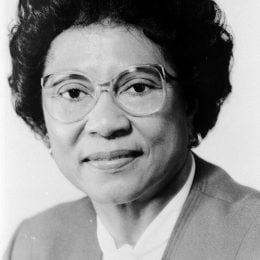
Ethel Harris Hall
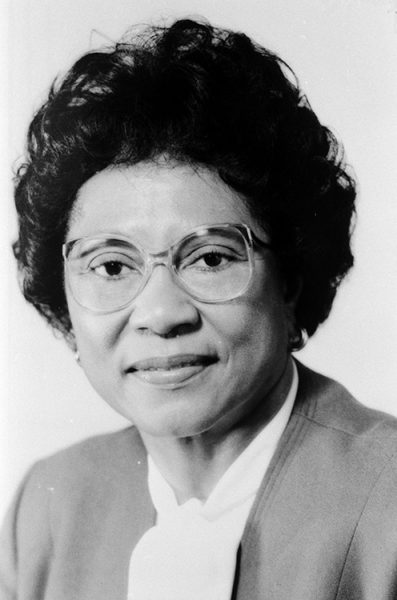
Ethel Harris Hall (1928-2011) was a distinguished educator, writer, and academic leader in Alabama. Her academic career, which included public schools and state universities, spanned five decades, and in 1987, she became the first Black woman elected to the Alabama State Board of Education. During her 24 years on the board, she served an unprecedented 10 years as vice president. She won numerous awards for her leadership and commitment to furthering education in Alabama.
Hall was born Ethel Harris in Decatur, Madison County, on February 23, 1928. Her parents, Harry Harris Sr. and Fannie Mae Breeding Harris, were farmers and devout Christians in Madison County. Her extended family’s ancestry included White relatives and people of Cherokee descent. She was the family’s firstborn child; she had two brothers and two sisters. She met her husband, Alfred James Hall, in 1950, and they were married shortly afterwards. The couple had two children, Alfred J. Hall Jr. and Donna Hall Mitchell, who was also a notable educator in the state of Alabama.
According to Hall, her parents valued academics and supported her pursuit of higher education. In her formative years, she studied at the Hudson School in the Collegeville community of Birmingham and Samuel B. Ullman High School in the city. Hall considered attending Tennessee State University but instead enrolled in Alabama A&M University in Huntsville, Madison County, from which she graduated with a bachelor of arts in education in 1948. She continued her education at the University of Chicago, earning a master’s degree in social sciences in 1953. In her memoir, Hall recalled being the only Black student enrolled in her classes. Hall obtained a second master’s degree from Atlanta University (now Clark Atlanta University) in 1986 in social work. Her final degree was a doctorate in social work from the University of Alabama in Tuscaloosa, Tuscaloosa County, in 1979.
Her first foray into teaching was in the Hale County school system near Tuscaloosa. Both Hall and her husband worked at the Hale County Training School, until Alfred was drafted to serve during the Korean War. To return closer to Birmingham, Hall accepted a position at Westfield High School in Jefferson County, where she primarily taught ninth-grade English and gained a reputation as a successful teacher. While there, Hall witnessed the beginning of the desegregation of city schools in Birmingham and in nearby Jefferson and Shelby Counties after the U.S. Supreme Court’s Brown v. Board of Education decision in 1954.
In 1969, Hall joined the faculty of the University of Montevallo in Shelby County. At the time, she was the institution’s first and only Black professor, and she rose to the rank of associate professor. She then became a professor at the University of Alabama. In 1990, she was named an associate professor emerita by the University of Alabama’s Board of Trustees.
Hall’s public recognition rose when she ran for the Alabama State Board of Education in 1986. She won the election and was sworn into office in 1987 to represent District 4, which would eventually include Jefferson, Bibb, and Hale Counties. She was the first Black woman to hold the position and the first Black member elected to the Alabama State Board of Education since Reconstruction, when Peyton Finley was elected in 1867. For much of her first term, Hall focused on improving post-secondary two-year institutions and expanding student elective opportunities in high schools across Alabama.

During Hall’s second term (1991-95), she was instrumental in strengthening academic requirements for graduation and enhancing dual-enrollment programs. The board also advocated for a “No Pass, No Play” policy, which required students to pass their classes in order to participate in school athletics. In 1994, she began presiding over the board as its vice president. Hall was elected for a third term in 1995. During this period, she had an instrumental role in supporting plans to promote academic accountability, increasing public awareness about the effectiveness of Alabama’s schools. Hall won her fourth election in 1999 and contemplated leaving after the term was completed, but she ran again in 2003 and won a fifth term. She was involved with implementing policies created after the 2002 federal No Child Left Behind Act, which aimed to improve teaching standards and student achievement. For the sixth and final term, Hall ran and won election in 2007. In 2010, she opted not to run for reelection.
Throughout her public career, Hall frequently traveled internationally on behalf of Birmingham’s Sister Cities Commission. She has said that such travel led her to have a greater appreciation for her country and community, and she welcomed the chance to meet new people. Her travels included trips to Israel, Japan, and Senegal. She also served as a board member for a number of community organizations, including the Birmingham Civil Rights Institute, Alpha Kappa Alpha Sorority Inc., American Alliance for Health, Leadership Alabama, and the Alabama Archives & History Foundation.
Hall received more than 200 honors and awards during her public career and service. She was named one of the Top Ten Women Making a Difference by the Birmingham Business Journal. In 1999, Hall was awarded the National Association of State Boards of Education Distinguished Service Award. In addition, she was named an Outstanding Alumnus of Alabama A&M, and she was inducted into the University of Alabama School of Social Work Hall of Fame in 2005. In 2011, the University of Alabama's School of Social Work named its annual African American Heritage Month celebration after Hall. In 2010, she published her memoir entitled My Journey: A Memoir of the First African American to Preside Over the Alabama Board of Education.
Hall died after a brief illness on November 12, 2011, at the age of 83. Her funeral was held at New Bethlehem Baptist Church in Bessemer, Jefferson County. She was interred in Elmwood Cemetery and Mausoleum in Birmingham.
Additional Resources
- Hall, Ethel. My Journey: A Memoir of the First African American to Preside Over the Alabama Board of Education. Montgomery: NewSouth Books, 2010.