Vestal Goodman
Grammy Award-winning vocalist Vestal Freeman Goodman (1929-2003) was known as the “The Queen of Southern Gospel Music.” The evangelist from the Sand Mountain region of Alabama influenced the gospel music industry for more than 50 years with her powerful voice and magnetic stage presence. She performed on 15 number one hit songs on gospel charts and in more than 3,500 concerts.
Vestal was born on December 13, 1929, in Fyffe, DeKalb County, the fourth child of Gordie Moses Freeman, a barber, and Mae Bell Hicks Freeman. She was named in honor of her mother’s best friend. Vestal grew up singing with a Church of God congregation and dreamed of a career as an opera singer. Her older brother Claris (also referenced as Clarence) “Cat” Freeman sang with some of the top male gospel groups of the era, including the Oak Ridge Quartet (later known as the Oak Ridge Boys). He shared his music training with his sister. Additionally, Vestal attended church-sponsored singing schools. She and her younger sisters won singing contests as The Freeman Trio, and Vestal also performed with two church friends in the Highway Church of God Trio.
Vestal met evangelist Willie Howard “Happy” Goodman, from Dora, Walker County, at a tent revival in Albertville, Marshall County, in 1945, when she was sixteen years old. At the time, Howard and Vestal’s brother were affiliated with a radio ministry on WSGN out of Birmingham, Jefferson County. Additionally, Howard managed the Happy Goodman Family, a gospel group that included his seven siblings. The Happy Goodman Family regularly appeared on all-night sings at the Ryman Auditorium in Nashville, Tennessee, and was broadcast daily on WNGO in Mayfield, Kentucky. Vestal and Howard married on November 7, 1949, in Fulton, Mississippi. The couple had two children, a son and a daughter. Vestal became a regular member of the Happy Goodman Family group, after her marriage and the departure of some of the Goodman siblings.
In April 1957, Vestal and Howard moved to Madisonville, Kentucky, to conduct a series of revival services with another evangelist. During a revival meeting in Louisiana, a hurricane destroyed their tent and sound equipment, and Vestal started singing without amplification. After the hurricane, Vestal shared a story about how the loss of amplification at the revival was how God made her aware her voice would carry his message without it.
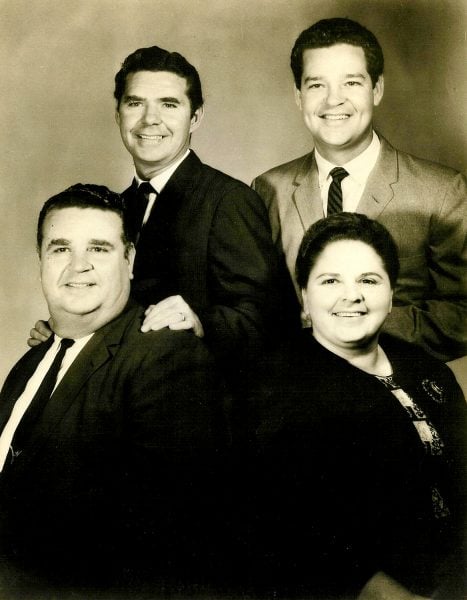
After the Goodmans returned to Madisonville in December 1957, Howard and Vestal founded Life Temple Church, which Howard led until 1984. The family also established a recording studio and formed a music publishing company. Starting in the early 1960s, Vestal, Howard, and his brother Sam performed at revivals and churches as a trio. In 1960, the Goodmans were among the original performers on The Gospel Singing Jubilee, a popular syndicated television show that was a pioneer in gospel music broadcasting. Eventually Rusty Goodman also moved to Madisonville, and the four began performing as The Happy Goodmans.
By 1962, The Happy Goodmans had a weekly segment on WLTV Channel 13 in Bowling Green, Kentucky. They recorded their first album, I’m Too Near Home, in 1962 in Nashville, with the aid of studio musicians led by Harold Bradley, who was influential in establishing the city’s Music Row, the center of music publishing and recording in the city. Their first album sold seven million copies. In 1964, Vestal was one of the founding members of the Gospel Music Association. In 1965, they signed with Word Entertainment’s label Canaan Records and became that subsidiary’s biggest artist over the next 25 years, selling millions of albums. Their 1965 album What a Happy Time was their first album to be nominated for a Grammy Award. The group would go on to be nominated for eight Grammy Awards between 1965 and 1990. They won “Best Gospel Performance” in 1968 with the album The Happy Gospel of the Happy Goodmans, the first Grammy presented to a gospel group for a gospel album. The group earned a second Grammy in 1978 in the “Best Gospel Performance, Traditional” category for the album Refreshing.
By the mid-1960s, The Happy Goodmans were one of the highest paid gospel groups touring the nation, and Vestal’s signature stage presence included floor-length beaded gowns, an ever-present white handkerchief, and a tall beehive hair style, which she acknowledged was a wig. In 1969, Vestal was the first recipient of the “Female Vocalist of the Year” Dove Award from the Gospel Music Association. She and the other members of the Happy Goodman Family were inducted into its hall of fame in 1998. Vestal was posthumously inducted individually in 2004.
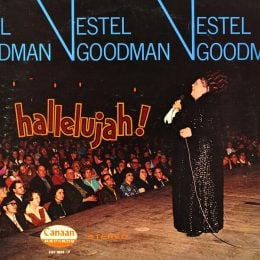
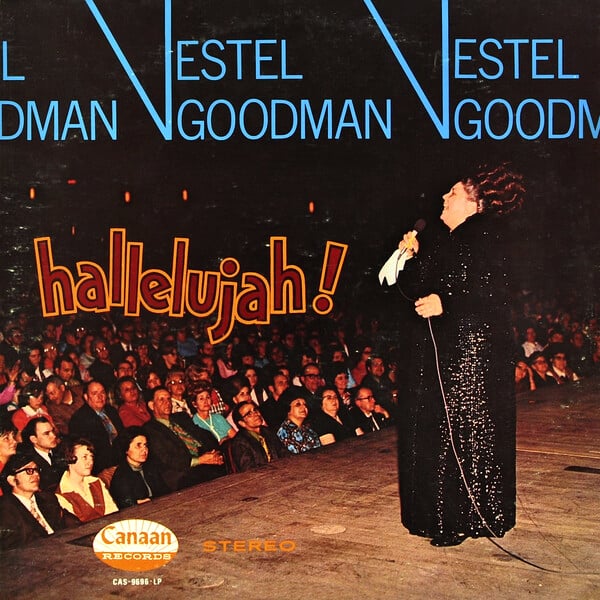
Vestal released her first solo album, Hallelujah!, in 1971. Her solo work also included recordings with other popular gospel artists including CeCe Winans, Jake Hess, George Jones, Vince Gill, Lee Greenwood, Sandi Patty, and Dolly Parton. She was voted by readers as Singing News Magazine’s “Favorite Female Singer” five times in the 1970s. Also in the 1970s, Vestal underwent double bypass heart surgery and developed an addiction to prescription pills. Her recovery from both became part of the story she shared about the power of prayer and Jesus Christ in her life.
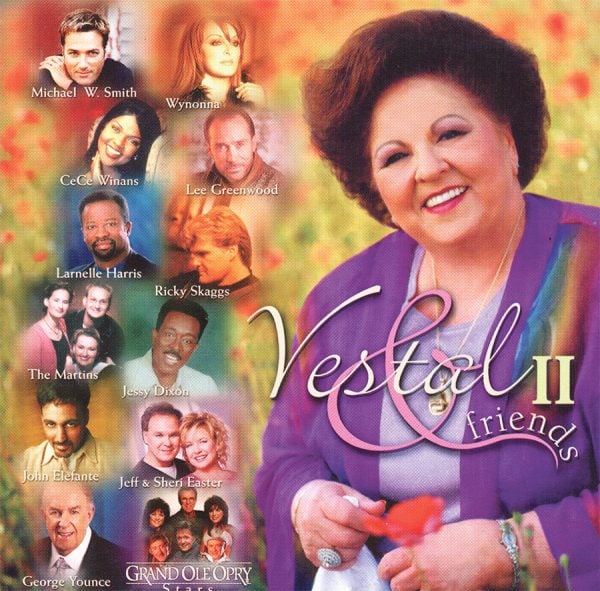
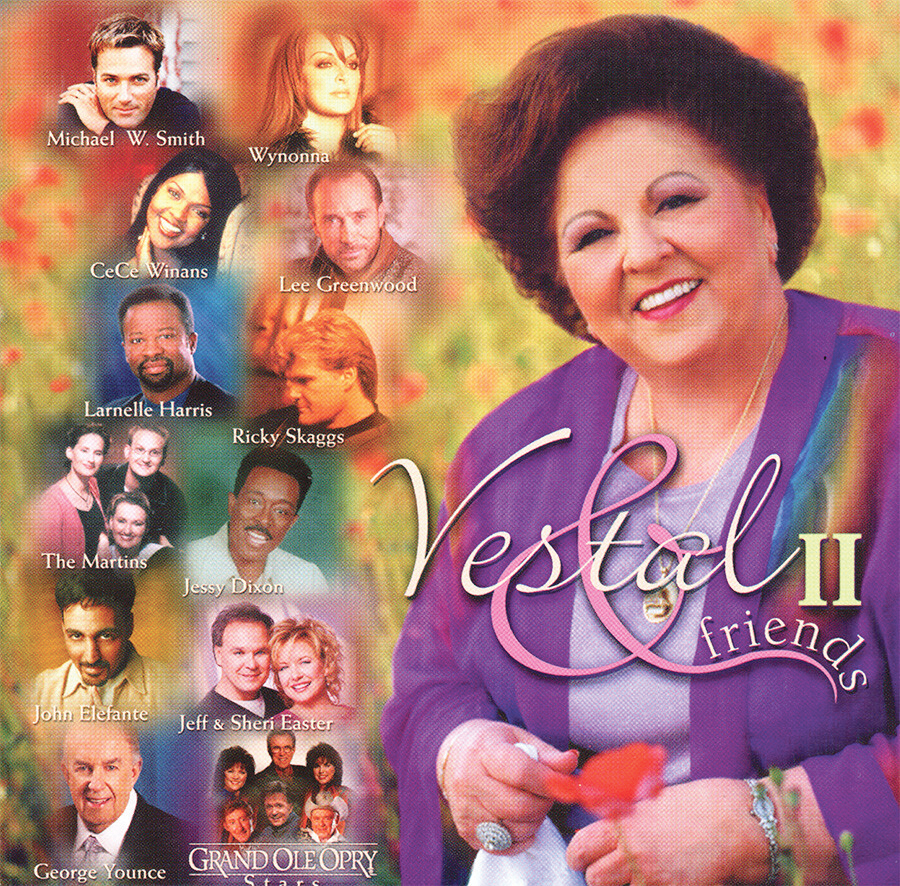
The Happy Goodmans broke up as a group in 1980, in part because of tensions between Vestal and Howard, who preferred to remain focused on traditional gospel, and Sam and Rusty, who pushed to incorporate contemporary Christian music into the performances. In 1985, Vestal and Howard became regulars on the influential gospel program The PTL Club, which was hosted by Jim and Tammy Faye Bakker. Her association with the popular Gaither Homecoming series of gospel concerts, albums, and videos started in 1991 and included more than 60 appearances. The program featured other Alabama gospel artists including Jake Hess and the Speer Family. Vestal was diagnosed with lymphoma in 1992. Her utobiography, Vestal!, co-written with Ken Abraham, was published in 1998. In 1999 and 2000, she released the Vestal & Friends and Vestal & Friends II albums, which featured Vestal with a variety of duet partners. Howard died in November 2002, the same year Vestal was inducted into the Southern Gospel Music Hall of Fame.
Vestal died from complications associated with influenza on December 27, 2003, at age 74, while on a family vacation in Celebration, Florida. In 2005, Vestal was posthumously awarded the Alabama Hall of Honor Special Award by the Alabama State Council on the Arts. More than 1,000 people attended her funeral in Brentwood, Tennessee. She is buried at Christ Church Memorial Gardens in Nashville, Tennessee. In 2022, she was inducted into the Alabama Women’s Hall of Fame. A section of Alabama Highway 75 South through Fyffe is known as Vestal Goodman Highway.
Additional Resources
- Chapman, Beth. She Was My Sister ... Vestal Goodman. Birmingham, Ala.: Beth Chapman & Associates.