George Curry
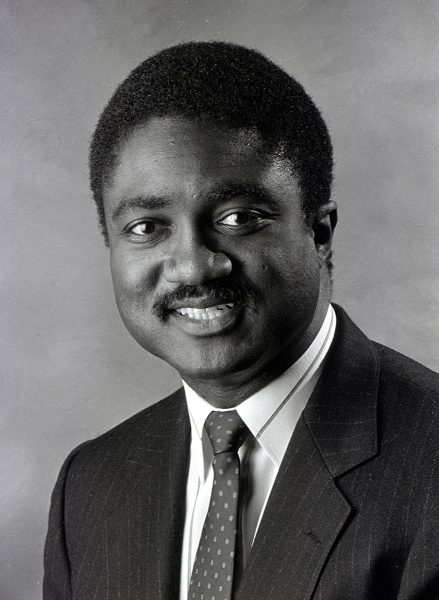
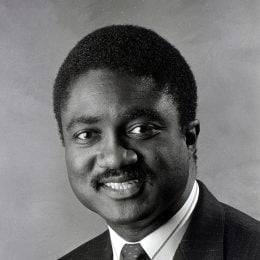
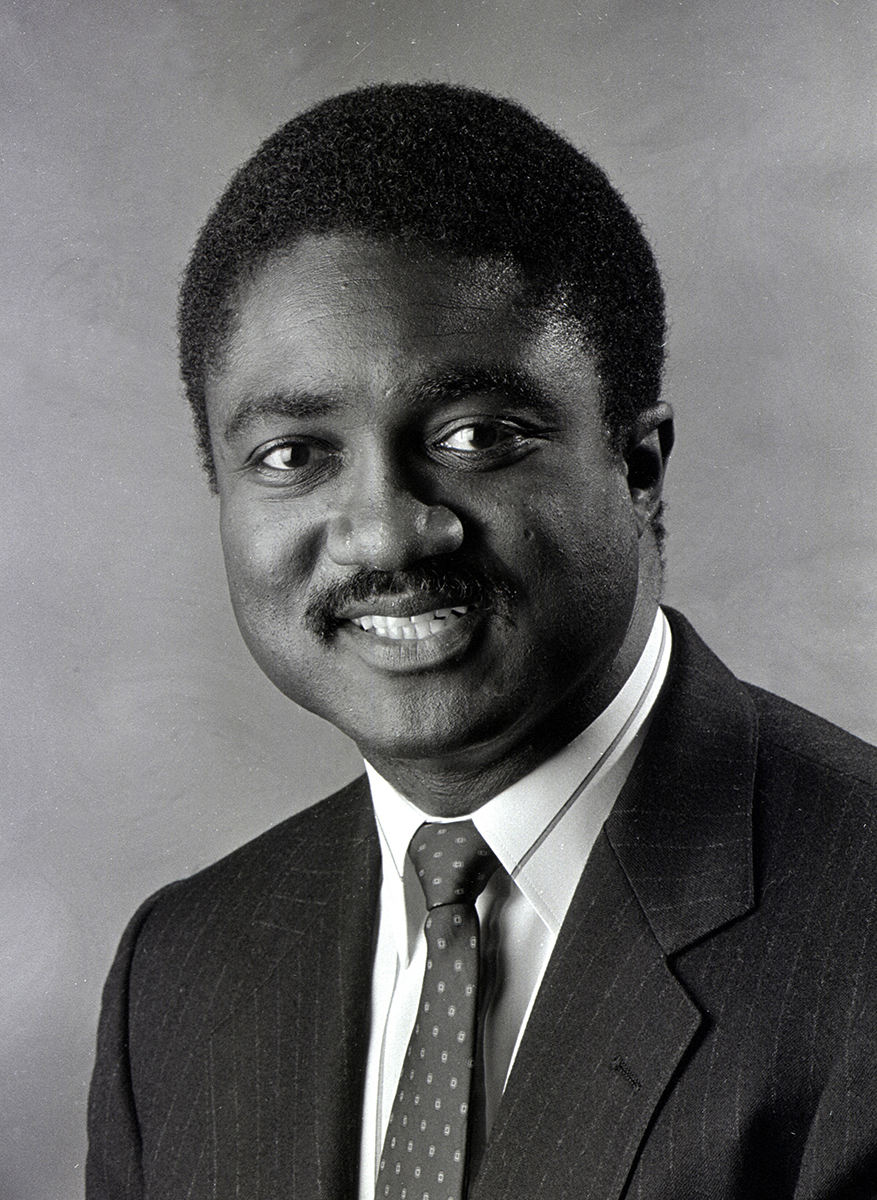
Alabama native George E. Curry (1947–2016) was a prominent Black journalist whose career spanned several decades and included positions at major news organizations such as Sports Illustrated, the Chicago Tribune, and the St. Louis Post-Dispatch. Curry reported extensively on civil rights and national politics, and his widely syndicated weekly columns reached readers across the United States. Often referred to as the “dean of Black press columnists,” he served as editor-in-chief of Emerge magazine and later of the National Newspaper Publishers Association (NNPA) News Service, through which his column appeared in more than 200 African American newspapers nationwide.
George Edward Curry was born on February 23, 1947, in Tuscaloosa, Tuscaloosa County, to Martha Brownlee, a domestic worker, and Homer Lee Curry, an auto mechanic. He had at least three siblings. His father left the family in his youth and a stepfather helped raise him. He graduated from Druid High School in 1965 and attended Knoxville College in Tennessee. While there, he served as a student representative on the Board of Trustees and as sports editor of the campus newspaper. During his college years, Curry also became involved in civil rights activism. After graduation, he spent a year in New York City working for the Southern Christian Leadership Conference (SCLC), one of the preeminent civil rights organizations of the movement, headquartered in Atlanta, Georgia. His involvement with the SCLC was influenced in part by his childhood friend Charles Steele Jr., who would later serve as the organization’s president.
Curry graduated in 1969 and began his journalism career with Sports Illustrated and the St. Louis Post-Dispatch. In his first year at the Post-Dispatch, he wrote 25 front-page stories, establishing himself as a rising reporter. At this early point in his career, Curry demonstrated a strong commitment to mentoring young journalists. In 1975, he founded the Washington Association of Black Journalists, which sponsored an annual high school journalism workshop. Two years later, he became a founding director of the St. Louis Minority Journalism Workshop, a similar initiative aimed at increasing minority representation in print media. In 1977, he also published his first book, Jake Gaither: America’s Most Famous Black Coach, a biography of the influential Florida A&M University football coach. In addition to his print journalism, Curry contributed to broadcast media. He served as chief correspondent for the 1986 PBS documentary The Assault on Affirmative Action and appeared in the 1989 Nightline special America in Black and White, which examined race relations in the United States.
From 1983 to 1989, Curry worked as the Washington, D.C. correspondent for the Chicago Tribune, for which his reporting focused on issues such as racism, poverty, and national politics. He also reported on major political developments, including civil rights activist Jesse Jackson’s 1984 presidential campaign and the vice-presidential campaigns of New York congresswoman Geraldine Ferraro on the Democratic ticket and Vice-President George H. W. Bush on the Republican ticket. In 1989, he became the Tribune’s New York bureau chief, where he later reported on the 1992 Democratic ticket of Arkansas governor Bill Clinton and Tennessee senator Al Gore, running for president and vice-president, respectively.
From 1993 to 2000, Curry served as editor-in-chief of Emerge magazine. Then headquartered in Washington, D.C., it was an African American news magazine founded in 1989 as a competitor to established publications such as Ebony and Essence. Under his leadership, Emerge reached a peak circulation of approximately 160,000 and won more than 40 national journalism awards. In 1995, the Washington Association of Black Journalists named Curry Journalist of the Year. In May 1996, Emerge published “Kemba’s Nightmare,” a 17-page cover story that detailed the case of Kemba Smith, a college student who received a lengthy prison sentence in connection with a drug conspiracy case. The article drew national attention to the severity of federal sentencing laws; in 2000, Pres. Bill Clinton granted Smith clemency.
After Emerge ceased publication in 2000, the following year Curry joined the NNPA at the organization’s offices located at Howard University, an HBCU in Washington, D.C. He served as editor-in-chief until 2007 and as president of the organization. In this role, he continued to report on major national issues, including the Grutter v. Bollinger affirmative action case and U.S. Supreme Court proceedings. His weekly column through the NNPA remained widely syndicated in African American newspapers nationwide.
From May 2000 to January 2001, Curry served as president of the American Society of Magazine Editors, becoming the first African American to hold that position. In 2003, the National Association of Black Journalists named him Journalist of the Year and included him among the most influential journalists of the twentieth century. During the Iraq War, he conducted a notable exclusive interview with U.S. Army general and frequent media spokesperson Vincent Brooks, who discussed his experience as the first Black First Captain at the U.S. Military Academy at West Point.
Curry received honorary doctorates from Kentucky State University and the University of Missouri. Over the course of his career, he appeared on major broadcast outlets, including PBS, CBS Evening News, CNN, ABC World News Tonight, C-SPAN, and NBC’s The Today Show, and frequently on a radio show hosted by noted activist Al Sharpton. He also served as a trustee of the National Press Foundation, where he chaired a committee dedicated to funding journalism training programs modeled on the workshops he helped establish in Washington, D.C., and St. Louis, Missouri.
Curry died unexpectedly of congestive heart failure on August 20, 2016, in Takoma Park, Maryland, the state in which had a home. His death was noted by many, including Jesse Jackson Sr., Bernard Lafayette Jr., and Sharpton, on whose radio show Curry had appeared one day earlier. Both Jackson and Sharpton spoke at Curry’s funeral in Tuscaloosa. He was buried there in Cedar Oak Memorial Park.