French in Alabama: 1699-1763

The French period in Alabama’s history was a short but vital part of the state’s early development. From the initial settlement and port on Dauphin Island, led by Pierre Le Moyne d’Iberville (1661-1706) and his brothers, the French explored the coastline and rivers, befriended local indigenous tribes and developed trade relations. The settlement of Mobile (present-day Mobile County) became the capital of Louisiana, yet struggled to develop in the early decades, hampered by the environment, colonial wars, and administrative challenges. Outposts such as Fort Toulouse (near present-day Wetumpka, Elmore County) and Fort Tombecbe (near present-day Ekes, Sumter County) were constructed as both military stations and trading centers. English traders from South Carolina contested the French intrusions, but the Spanish in Pensacola grudgingly accepted the French presence. By the 1730s, most French settlers had migrated west to Louisiana’s new capital of New Orleans, where trade flourished along the Mississippi River. The French colonial period persisted until the French and Indian War (1754-1763) determined the fate of Louisiana, and it was divided amongst the victors of the war.

The French colonization of present-day Alabama began on April 9, 1682, when explorer Robert Cavelier de La Salle proclaimed the region he had explored along the Mississippi as a colony for King Louis XIV and named it Louisiana after the king. Although La Salle failed to establish a lasting colony, the idea of such a venture took root at the French court and coincided with ongoing struggles with England over dominance of what is now the eastern seaboard of the United States. Louisiana, or New France, was divided into Upper Louisiana (Haute Louisane) and Lower Louisiana (Basse Louisiane), which consisted of present-day Alabama, Arkansas, Louisiana, and Mississippi.
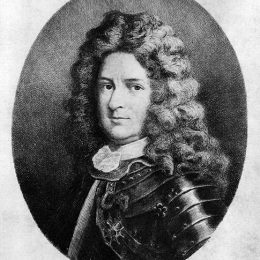
In early 1698, Iberville was commissioned by France’s Minister of the Navy Jérôme Phélypeaux de Pontchartrain to resume La Salle’s efforts on the Gulf Coast. Iberville was keen on finding ways to expand the power of France to new areas of the continent, fueled by his hatred of English efforts to colonize the Mississippi Basin. Iberville faced two problems: establishing the exact location of the mouth of the Mississippi River, which La Salle never reported, and finding a suitable capital for the colony that would allow for access to local Native American groups and serve as an outpost on the Gulf of Mexico.
French Missionaries in Alabama
Although France’s main goal was establishing a colonial presence in southeastern North America, spreading Catholicism was another priority. Four Catholic orders became active in the early years of settlement: the Jesuits, the Franciscans, the Carmelites and the Capuchins. Most members arrived as chaplains serving aboard naval ships, but the Jesuits were already established in the Illinois country and moved down the Mississippi River as the colonial administration allowed. The Le Moyne brothers preferred the Jesuits for their success in Canada, but the Franciscans and Carmelites had a presence in Mobile, which became a parish on July 20, 1703. In 1722, the Company of the Indies, which had recently assumed control of the colony, reorganized the missions, granting the Capuchin Order control of New Orleans and missions south along the river. The Carmelites remained in Mobile and were granted the right to administer missions east of the Mississippi and south of the Ohio.
In practice, the Jesuits tended the northern posts of Basse Louisiane and were active at Forts Toulouse and Tombecbe. After the capital moved to New Orleans, the focus remained on the Native American missions, such as the Natchez and Arkansas on the Mississippi River. Missionaries provided several critical functions for the colony, including managing relations with the Indians, monitoring French traders, and reporting suspicious activities within the tribal towns. Additionally, the missionaries and clergy of the parishes logged baptisms, marriages, and deaths of those under their supervision. Although their presence supported the civil authorities, the two entities often clashed over issues of social policy, such as gambling, taverns, and the use of enslaved Indian women as concubines.
Moving the Capital to Mobile Bay

After years of struggling at Fort Maurepas (near present-day Biloxi, Mississippi), in December 1701, Iberville ordered the French to Île du Massacre (Massacre Island, present-day Dauphin Island) in Mobile Bay. That location offered a natural harbor and maintained access to Native American trade. Strategically, the change offered the chance to expand French settlements northwards, thereby heading off possible British expansion into the interior of the present-day United States. The move was undertaken by his younger brother Jean-Baptiste Le Moyne de Bienville (1680-1767), then-commandant of Fort Maurepas, in January 1702. Dauphin Island would act as a way station for incoming vessels to offload cargo for the next two decades.
Another brother, Antoine Le Moyne de Châteaugué (1683–1747), oversaw the construction of a storehouse and related operations. The French also built a secondary station on the Dog River for other stores. After the warehouses were completed, the emphasis shifted to establishing the main settlement, including a small wooden fort known as Fort Louis de la Louisiane, at Twenty-Seven Mile Bluff. It was soon called La Mobile by most early colonists. So named for its distance up the river, the settlement was built on a high bluff near the main Mobilian village. Indeed, Iberville had planned to model the settlement on the method used along the St. Lawrence in Canada: spread settlements along the banks upriver to maximize their territorial claims and establish larger plantations. But efforts to raise subsistence and cash crops, including indigo and tobacco, failed.
Relations with Spanish America
The French incursion into what was considered the “Spanish Sea” (present-day Gulf of Mexico) was met with hostility from Spanish authorities. Spanish settlements dotted the southern and eastern gulf, from Vera Cruz and Tampico in New Spain (Mexico) to Havana in Cuba, and Spain occupied Pensacola in October 1698, just a few months before Iberville could establish settlements on Pensacola Bay. The Spanish governor of Pensacola, Andrés de Arriola, then warned Iberville’s expedition in 1699 against entering the bay. Iberville ignored the warning, however, first settling at Biloxi in 1699 and then moving the capital to Dauphin Island in 1702. Spain protested, but Queen Anne’s War (1701-1714) had changed the relationship between the two colonies (whose monarchs were related through the royal House of Bourbon), and they united against the English. The alliance lasted through the conflict, but by 1718, Mobile and Pensacola were at war with each other, and France captured Pensacola in 1719. A French garrison remained there until a formal transfer took place in November 1722. Mobile remained untouched by the war, so the French still dominated the upper gulf region. Trade resumed between the two, but much of it turned illicit as a result of various bans issued by the commercial powers in Paris. Official trade resumed in 1723. By the late 1730s, Pensacola owed Mobile a substantial sum of unpaid debt from previous assistance with supplies, which was not repaid until 1741. The two coastal villages continued cooperating until 1763, when the Treaty of Paris ended the French and Indian War, and Spain gained all French possessions west of the Mississippi.
Slavery in French Alabama
The French settlers adopted several different systems of slavery early in Mobile’s history. The local Indian tribes used a limited form involving captives from rival tribes. By the time Iberville established Mobile in 1702, the Indians of the Mobile Bay area, such as the Mobile, Tomeh, and Naniaba, had suffered from attacks by the larger interior tribes, including the Alabamas, Chickasaws, and Choctaws, all of whom took mainly women and children as captives. Captives also were sold to both the English and French colonists, but the Indian slave trade proved disruptive to the alliances Iberville and Bienville had established and was banned by the French in 1710.
The importation of African slaves marked a change in Mobile’s future that influenced all of Louisiana. Colonial administrators in Paris hoped to exploit the colony for its mineral wealth, but that required a stable population with a strong agricultural system and workforce. Enslaved Indians were not considered viable for this because their knowledge of the landscape and their strong social connections eased their ability to escape. As early as 1706, a few enslaved Africans from the Caribbean had been brought to the colony. In 1708, officials in Mobile requested permission to purchase enslaved people from the West Indies, but only a few dozen arrived in the following years. In the spring of 1719, roughly 200 Africans were brought to the colony, representing its full immersion into the international slave trade.
There was no official legal apparatus to merge the new labor force into the colony until the Code Noir, or Black Code, was instituted in 1724, establishing norms for the treatment of the enslaved and the separation of the races. Although the Code forbade marriages between the enslaved and Whites, a free Black man could marry an enslaved woman in certain instances. Additionally, a slave owner found guilty of concubinage with a slave was fined, and both the enslaved woman and any children produced were confiscated by the authorities. The Code also solidified the status of children born into slavery by tracing their legal status through the mothers’ line, allowing children born of a free woman and slave to “be free as she.” In practice, however, children born to enslaved women were also enslaved. The Superior Council occasionally granted the freedom of mixed-race children of plantation owners and enslaved women despite violating Article 6 of the Code. Additionally, the Code held owners accountable for inhuman treatment of slaves but lacked clear definition of punishment for such actions. Any misdeeds by slaves were quickly and severely punished, and this often included mutilation or execution in cases of violence towards their owners.
Populating and Supplying French Louisiana
Initially, the colony was managed by the Ministry of the Navy under direct control of the king. International diplomacy dictated much of early Louisiana’s development after 1697, when English courtiers urged King William III to take possession of the vast wilderness between English colonies on the eastern seaboard and Spanish Mexico. The initial phase of this effort required soldiers and specialist tradesmen employed by the ministry, and thus the settlement was more like a garrison than a village. To become a true extension of European society, French Louisiana would require a substantial number of families, single women, and artisans.

Iberville had hoped to enlist Canadian trappers as scouts and agents to the Indians and, in the process, gain their help in establishing the colony, but they proved too restless. Iberville knew that enlisting families from France was important to boosting the settlement’s growth, and the quickest way to accomplish this was to ship over the wives and children of the soldiers, thus binding them to the venture. He also sought to recruit potential colonists, including unmarried women, from Paris and from poorer areas of the French countryside. By 1702, the numbers were still small; the largest portion of the settlers came from Canada, and the rest came from the western coast of France, particularly from Rochefort, La Rochelle, and Bordeaux.
Supplying the colony was a great challenge. All supplies came from France, with the understanding that the settlers would establish farms and trade relations with the other French or Spanish colonies. In reality, however, Queen Anne’s War meant few to no imported supplies year after year as ships were diverted to fight or resupply military garrisons. In 1703, the supply ship La Loire arrived, but the expected La Pélican, which was to bring unmarried women (later known as “Pelican Girls” for the ship) to help populate the colony, was delayed until 1704. La Renommée made two voyages to Mobile between 1708 and 1711 to bring the much-needed supplies. Delayed during both crossings, the supplies it brought could not help the dire situation. Native Tohome (Tomeh) and Mobilian traders provided some wild game and corn, but such foodstuffs required payment in merchandise the settlers did not have. In 1711, heavy rains flooding their crops and cattle shortages led the colonists to demand that leaders move the settlement downriver.
By the summer of 1711, Bienville and the new commissary of the Navy, Jean-Baptiste Martin Dartaguiette d’Iron, agreed to move the town downriver to a site called the Oignonets, at present-day Mobile. There, the colonists constructed a small wooden fort also named Fort Louis de la Louisiane. This change to a better location coincided with an administrative change that many colonists hoped would bring more support from home.
Change in Governance

After discussions with his ministers, Louis XIV convinced rich financier Antoine Crozat to assume responsibility for the colony and ease the court’s financial burden. Advising Crozat was Antoine Laumet (Antoine de la Mothe, sieur de Cadillac), who had served in the Great Lakes region. Crozat signed a letter of patent on September 14, 1712, that gave him a 15-year monopoly on trade. According to its terms, Crozat was obligated to supply the colony with two ships per year containing at least ten young men and women and 25 tons of goods and munitions. Despite the incentive of financial gain, Crozat could not readily solve the colony’s problems and had difficulties finding willing and suitable potential colonists. Additionally, Crozat’s monopoly on trade had the unintended effects of limiting the commercial opportunities within France’s own overseas trading network. Because the company did not want independent colonists trading with foreign vessels, colonists were limited to trading through Company of the Indies’s ships. This restriction stifled internal growth in the colony.
With Louis XIV’s death on September 1, 1715, the colony’s future shifted towards oversight by the new Regency government of Louis XV. Louis XV was five years old and considered too young to rule, so power was placed in the hands of Phillipe II, duc d’Orléans. The government was largely a failure, and Louisiana remained undersupplied. Crozat relinquished his monopoly on August 23, 1717, and court favorite and supposed financial expert John Law took over exclusive trade and mining rights in the colony through his Company of the West. Law was given a free hand at remedying France’s crippling public debt, with Louisiana seen as a crucial aspect once its resources were properly exploited. All of Law’s schemes failed, however, causing the French economy to crash by early 1720.
Relations with Indigenous Peoples

The critical years of expanding the colony came about through careful diplomacy with the native tribes and the establishment of military forts. Mobile served as the capital of Basse Louisiane, but the French government was keen on constructing forts along key river systems that often intersected with trading paths of the southeastern frontier. After many decades of sporadic warfare with the Alibamons (Alibamu/Alabama Tribe), Bienville carried out a master stroke of diplomacy by gaining permission from the tribe to construct a fort at their main village site at the confluence of the Coosa and Tallapoosa Rivers. In late July 1717, Lt. Vitral de la Tour arrived with 20 men to build Fort Toulouse, one of three forts that would be built along the south bank of the Coosa River. Fort Toulouse acted as a trading house and as an outpost to monitor the activities of traders and missionaries in the backcountry. Because many soldiers were tempted to desert from the remote settlement, the ministry offered discharges to any soldier who remained in the area and became a farmer. A rough estimate from an English source in 1755 cites 100 or so French inhabitants living in the area and 40 soldiers in the garrison. Culturally speaking, the fort possessed the highest concentration of French people outside of Mobile until the establishment of a plantation on the Tombigbee River by former fort commandant Henrí Montault de Monbéraut de Saint-Çivier (1718-1786). Additionally, several soldiers married local Alabama women, had children, and lived within the Alabama village.

Fort Tombecbe was the next French fort built in the Alabama frontier as part of a military campaign against the Chickasaws. Tribal leaders had witnessed the rough state of Mobile in its early years and remained skeptical of the French as trading partners into the early 1700s. They certainly never matched the English, who had been trading partners since the 1680s, in quantity of goods supplied to the tribe. In 1729, tensions increased when the Chickasaws sheltered a band of Natchez who had joined in the massacre of a French garrison at Fort Rosalie near present-day Natchez, Mississippi, and refused to turn them over to the French. At the same time, rumors of English traders influencing the eastern Choctaws hastened the need for an additional French fort. Bienville, who had returned as governor in 1733, responded by organizing a punitive expedition against the Chickasaws, sending Swiss officer Joseph Christophe de Lusser in late 1735 to establish Fort Tombecbe to support the coming campaign in 1736. Bienville’s expedition against the Chickasaws’ main town at Ackia was a disaster, but the fort did provide a crucial trade link with the Choctaws long after the war.
The Capital Moves West

Beginning in 1720, the center of colonial life in Louisiana shifted west as the French government focused on developing the Lower Mississippi Valley. The capital was moved from Mobile to Biloxi and then to New Orleans in late 1721. (With the small wooden fort in Mobile falling into disrepair, in 1723, the French constructed the more substantial Fort Condé, a four-pointed structure of brick and stone set atop defensive earthworks adjacent to the Mobile River.) The shift westward was natural as the Mississippi River was the most important waterway for trade. Mobile, however, remained an important diplomatic station for the next two decades, both for annual meetings with tribal leaders and as a trade center. The settlement’s population increased slowly. The 1704 census recorded 180 soldiers in the garrison and 27 families (roughly 70 people). By 1760, there were 300 people living outside the fort, with disease, agricultural challenges, and government shifts westward hampering greater expansion.
When the French and Indian War began in the summer of 1754, French interests shifted to the British colonies on the eastern seaboard and in Canada, France’s most important territory. The war left the colony virtually ignored. With the Treaty of Paris, signed at the war’s conclusion, the defeated French lost all of their American colonies; French Alabama became British. The inhabitants around Fort Toulouse, former soldiers and their Alabama wives and children, moved with the garrison during evacuation and re-established themselves west of the Mississippi River. Fort Toulouse was never occupied by the British military, but Fort Tombecbe saw limited use between 1766 and 1768 before it too was abandoned. In Mobile, once the transfer of power to the British had been completed, Maj. Robert Farmar busied himself trying to convince as many of the French inhabitants of the town to remain. With the assurance of toleration of their Roman Catholic religion and 18 months in which to take the Oath of Allegiance, 112 Mobile townsfolk took the oath and were well treated by the new British government.
The French influence remains most notable in street names in Mobile, such as Conti, Dauphin, and Bienville, the colonial architecture, and in Mobile’s notable Mardi Gras celebration. French names also dot the lower areas of Mobile County, including Bayou La Batre, Dauphin Island, Mon Louis Island, and Henrí Montault de Monbéraut’s concession Isle-aux Oies (Lisloy) on Fish River (where Bellingrath Gardens is located).
Additional Resources
- Hamilton, Peter J. Colonial Mobile. 1910. Reprint, Tuscaloosa: University of Alabama Press, 1976.
- Higginbotham, Jay. Old Mobile: Fort Louis de la Louisiane, 1702-1711. Tuscaloosa: University of Alabama Press, 1991.
- Howard, Milo B., Jr., and Robert R. Rea. “Introduction: The Coming of the British.” In The Memoire Justificatif of the Chevalier Montault de Monberaut; Indian Diplomacy in British West Florida, 1763-1765. Tuscaloosa: University of Alabama Press, 1965.
- Thomas, Daniel H. Fort Toulouse: The French Outpost at the Alabamas on the Coosa. Tuscaloosa: University of Alabama Press, 1989.