Shelby County v. Holder
The U.S. Supreme Court’s Shelby County v. Holder ruling on June 25, 2013, effectively ended the enforcement of the preclearance system established by the 1965 Voting Rights Act. Before the ruling, many jurisdictions, mostly those in the South, were required to obtain preclearance, or federal approval, before they could change their voting laws. The preclearance system aimed to prevent jurisdictions with a history of restricting voting rights based on race from doing so again in the future. In Shelby County v. Holder, however, the Supreme Court struck down the formula used to determine which states and localities were required to seek preclearance, deeming that the formula was no longer relevant in 2013.
Historical background

The 1965 Voting Rights Act came about due to two competing forces: historical discrimination and mass protest. Black Americans throughout the South, including those in Alabama, had long been denied the right to vote. Alabama’s 1901 Constitution was adopted in large part to prevent Black and poor White men from voting. Various efforts to limit voting included the Whites-only primary, discriminatory application of registration requirements, and the “grandfather clause.” Enacted in the early 1900s, the grandfather clause, in place for one year, held that those whose ancestors had served in the military, or those who could prove an understanding of the Constitution, were allowed to vote even if they could not pass a literacy test. In section 181 of the Alabama Constitution, literacy was required to vote unless a physical disability, such as blindness, prevented a person from reading or writing, except as noted above. The literacy requirement affected approximately twice as many Black citizens as White citizens.
In the early 1960s, mass protests against voting discrimination and the violent backlash against those protests drew national attention. Freedom Summer in Mississippi and the Selma to Montgomery march were the two most well-known efforts. These mass demonstrations led to the passage of the Voting Rights Act of 1965.

The Voting Rights Act aimed to eliminate all race-based barriers to voting and to allow Black Americans to register in large numbers. It sent federal registrars into many sections of the South to directly register voters. The act had a significant effect on voter registration in Alabama. Before the Voting Rights Act, perhaps 23 percent of Black Alabamians were registered to vote (though some sources suggest less than 20 percent), but this percentage increased to 51 percent within two years. The act had several provisions that would eventually become relevant to Shelby County v. Holder, particularly Sections 2, 4, and 5. Section 2 precluded racially discriminatory voting practices. Section 4 provided a formula for determining whether a jurisdiction was “covered” under the Voting Rights Act; states and other localities were subject to federal preclearance if they had a history of racially based tests or barriers to voting and low voter turnout. Based on the formula in Section 4, Alabama was included as one of the historically discriminatory regions subject to federal oversight. Section 5 held that, in states and jurisdictions meeting the criteria for Section 4, any new voting rules required prior federal approval to prove that no discrimination existed. The intention was to prevent, or at least discourage, those states and districts with histories of racially discriminatory restrictions from adopting similar restrictions in the future.
However, this preclearance requirement did not go untested. As early as the 1970s, states began attempting new restrictions, as well as new rationales for voting restrictions, including claims of voter fraud. In 2006, Congress reauthorized the Voting Rights Act but did not change the Section 4 formula deciding which areas were covered.
Case arguments
This case originated with Shelby County’s attempt to have Section 5 declared unconstitutional. In Shelby County’s estimation, the nation had greatly changed from how it had been in 1965 when the act was adopted. The U.S. Supreme Court struck down Section 4(b), which determined which jurisdictions were subject to Section 5. The majority opinion, authored by Chief Justice John Roberts, held that Congress had to pass laws based on present conditions, not the conditions from 40 years earlier. The formula to determine the states and localities covered by the preclearance requirement had not been updated since 1975. The Supreme Court held that, if some localities are to be “singled out” for more federal oversight, the government should do so based on “current conditions” rather than based on the conditions of the past. Thus, the Supreme Court determined that Congress erred when reauthorizing the act in 2006 because the preclearance formula remained based on historical conditions. Justice Clarence Thomas concurred with the majority that Section 4(b) was not enforceable and argued that Section 5 also should be struck down as unconstitutional based on the same rationale. As no other justices joined in this opinion, Section 5 remained in effect.
The four justices in the minority argued that Section 4 was still enforceable. They believed that there was enough evidence to keep the Voting Rights Act in place, and thus Congress was right to reauthorize the law.
Results
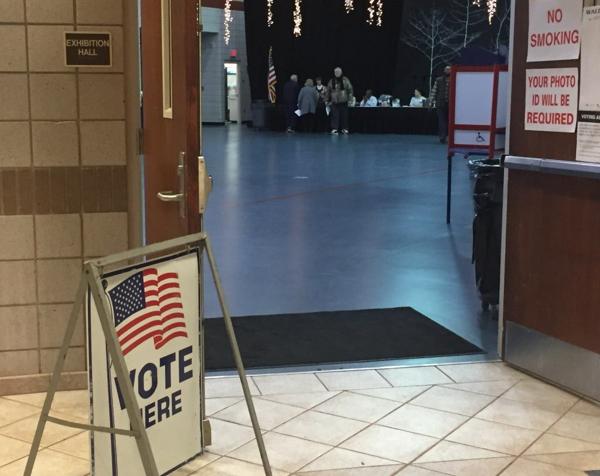
Since Shelby County v. Holder, Alabama and other states have either adopted additional voting requirements or implemented requirements that had previously been blocked. Alabama limited voting locations, limited mail-in voting, strengthened voter identification laws, and purged voting rolls. Texas adopted a new voter identification law, which was blocked, but then adopted a second voter identification law, which was upheld. North Carolina adopted a new voter identification requirement, which was struck down. Mississippi began enforcing laws that it had passed before the Shelby decision. All of this led to stricter voting regulations and, ultimately, fewer people voting. Some analyses found that states that had previously been under preclearance stripped more voters than states that had not.
Additional Resources
- Billings, Stephen B., Nicholas Braun, Daniel B. Jones, and Yao Shi. “Disparate Racial Impacts of Shelby County v. Holder on Voter Turnout.” Journal of Public Economics 230 (2024).
- Bullock, Charles S., Keith Gaddie, and Justin J. Wert. The Rise and Fall of the Voting Rights Act. University of Oklahoma Press, 2018.
- De Rienzo, Salvatore M., Jr. “Shelby County v. Holder and Changes in Voting Behavior.” American Economist 67, no. 2 (2022): 195-210.
- Reed, Kristopher A. “Back to the Future: How the Holding of Shelby County v. Holder Has Been a Reality for South Dakota Native Americans since 1975.” South Dakota Law Review 62, no. 1 (2017): 143-82.
- Schwinn, Steven D. “Shelby County v. Holder: What It Means for the Voting Rights Act.” Social Education 77, no. 5 (2013): 243-46.