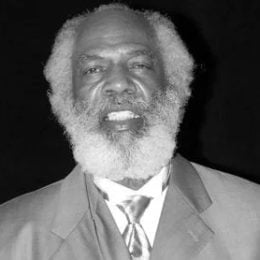
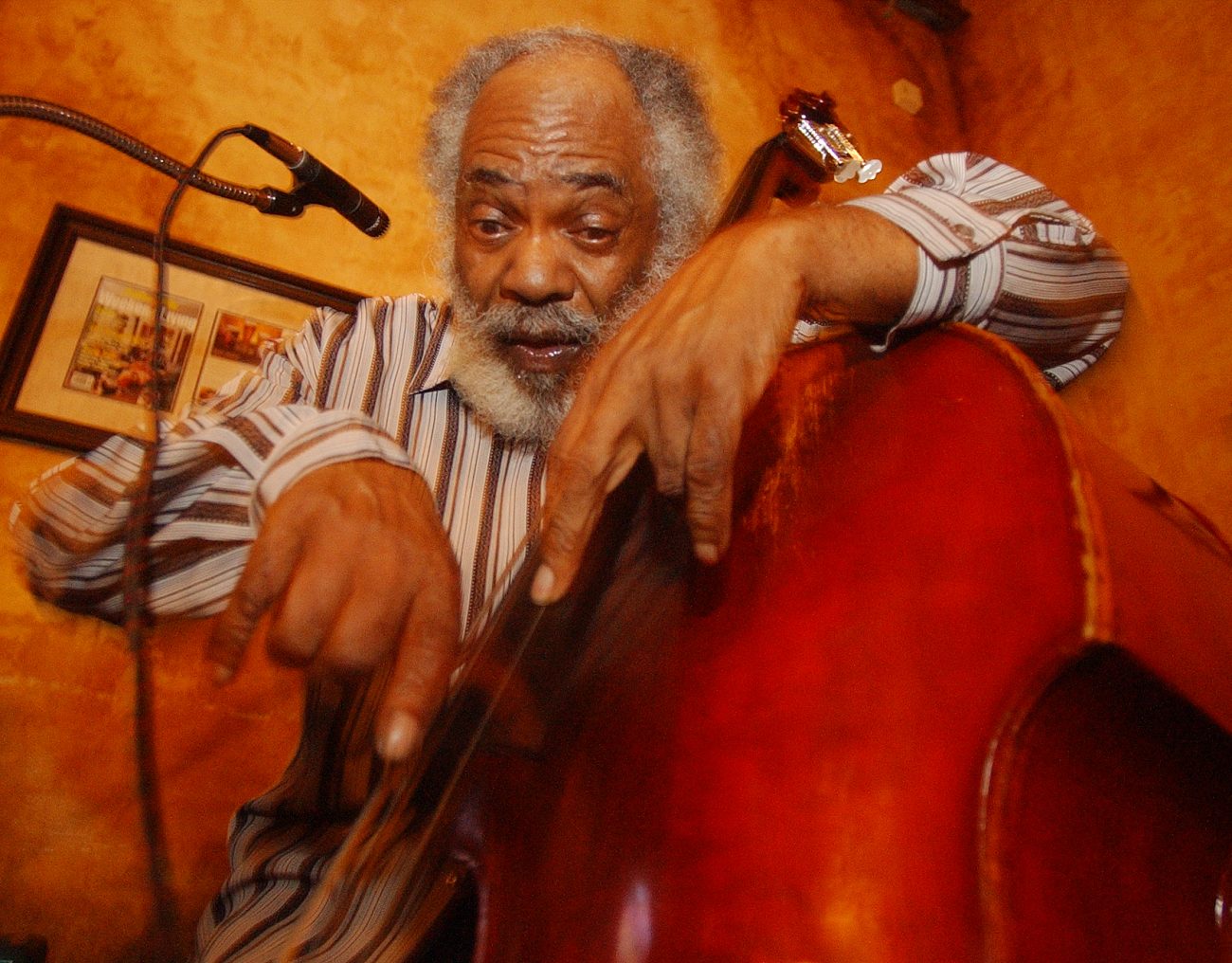
Cleveland "Cleve" Josephus Eaton
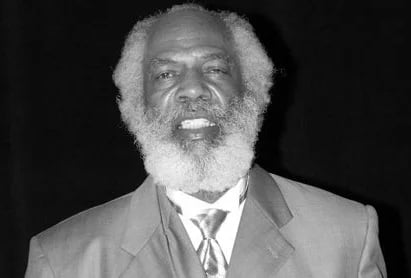
A native of the Birmingham suburb of Fairfield, Jefferson County, Cleveland Josephus “Cleve” Eaton II, (1939-2020) was a prominent jazz bassist, composer, arranger, and bandleader. In addition to long and accomplished tenures in the Ramsey Lewis Trio and the Count Basie Orchestra, Eaton also led his own groups, incorporating sounds from big band swing to bebop, disco, and funk. After years of professional work in bands across the country, Eaton ultimately returned to Birmingham, where for the last decades of his life he was a respected fixture of the local music scene.
Eaton was born on August 31, 1939, to steelworker Cleveland Josephus Eaton and Ethel Shaw Eaton. He grew up in a musical home. His mother and his eldest sister, LaVergne Eaton Comer, were both accomplished pianists and music teachers; his other sister, Ethel Eaton, became a respected pianist and vocalist. Cleve himself began playing piano, trumpet, and saxophone at an early age. As a student at Fairfield Industrial High School, he fell under the influence of music teacher John Springer, who introduced him to the tuba and double bass, the latter of which became his signature instrument.
Eaton attended historically Black university Tennessee Agricultural and Industrial State University (present-day Tennessee State University) on a full music scholarship and, after his 1960 graduation, moved to Chicago, immersing himself in that city’s jazz culture. On Eaton’s first night in Chicago, bandleader Isaac “Ike” Cole (brother of Alabamian Nat “King” Cole) spotted him in a jam session and offered him a job as bassist; Eaton worked with Cole for roughly the next year and a half. Establishing himself quickly as a Chicago staple and jam session regular, he worked as a session musician, taught music, and collaborated with a diverse range of musicians. A stint with the Donald Byrd and Pepper Adams Quintet resulted in a 1961 live recording from Jorgie’s jazz club in St. Louis. The recording, which was commercially released two decades later, is also notable for featuring on piano a young Herbie Hancock, one of Eaton’s regular collaborators in those days.
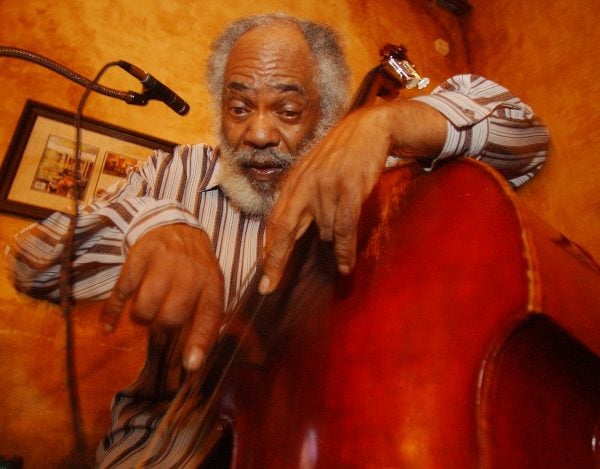
In the mid-1960s, Eaton began a productive decade-long run with the Ramsey Lewis Trio, replacing Eldee Young on bass. The trio’s 1966 single “Wade in the Water” became a summer hit, effectively blending jazz, funk, and pop influences. Eaton’s tenure with the trio was a particularly productive period for the group, resulting in multiple Gold records (500,000 in sales) and two Grammy Awards, in 1966 and 1973. Eaton’s final album with the group, Sun Goddess (1974), was among the trio’s most significant commercial and artistic milestones.
Eaton launched his own eclectic recording career as a solo artist and bandleader in 1973 with the album Half and Half. Other albums from this era include Plenty Good Eaton (1975), Instant Hip (1976), and, with his band, The Garden of Eaton, Keep Love Alive (1979).
In 1979, Eaton began a fruitful relationship with veteran bandleader William James “Count” Basie, who dubbed him “Basie’s bassist” and lauded him as one of the instrument’s top, all-time players. Eaton appeared on the bandleader’s final albums, and through his association with Basie appeared onstage also with such icons as Ella Fitzgerald, Frank Sinatra, and Sarah Vaughan. He remained with the orchestra well after Basie’s death in 1984, ultimately playing 17 years in the band. Eaton’s own albums in this era, including Strolling with the Count in 1981 and A Classic in 1988, reflect a deep engagement with the swing tradition and collaborations with past and present members of Basie’s musical network.
Throughout his life, Eaton remained closely connected to his hometown of Birmingham, where he mentored younger musicians. In the 1970s, he produced the first single by the Soul Controllers, a group of Fairfield Industrial High School students. Their rousing Black pride anthem, “Right On, Brother—Right On,” became a regional hit, and, later rebranded as The Controllers, the group went on to a long recording career.
In 1976, Eaton married Myranell “Myra” Joyce Greene, who for more than four decades would remain his close partner in every respect. As her husband’s manager and booking agent, Myra Eaton was central to Cleve’s subsequent solo career. In the early 1980s, the couple opened Cleve’s Place, a short-lived nightclub located just down the street from Tuxedo Junction, the once-celebrated Ensley, Jefferson County, jazz hub memorialized in the Erskine Hawkins Band song of the same name. In addition to showcasing local talent, Cleve’s Place brought to Birmingham several major national acts, including Basie, saxophonist Bennie Ross “Hank” Crawford, and drummer Bernard “Buddy” Rich.
After years on and off the road, Eaton settled permanently in Birmingham, where he led such groups as Cleveland Eaton & Co., the Cleveland Eaton Orchestra, and the Alabama All-Stars, in addition to teaching music at the University of Alabama at Birmingham.
Cleve Eaton was inducted to the Alabama Jazz Hall of Fame in 1979 and the Alabama Music Hall of Fame in 2008. He died on July 5, 2020, at the age of 80; Myra Eaton followed in 2024. They are buried in Birmingham’s Elmwood Cemetery.
Additional Resources
- Mathews, Burgin. Magic City: How the Birmingham Jazz Tradition Shaped the Sound of America. Chapel Hill: University of North Carolina Press, 2023.