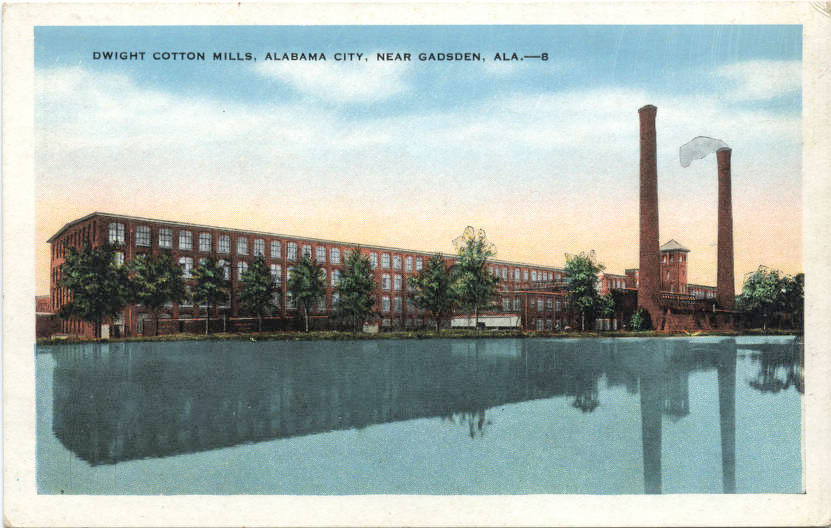
Dwight Manufacturing Company
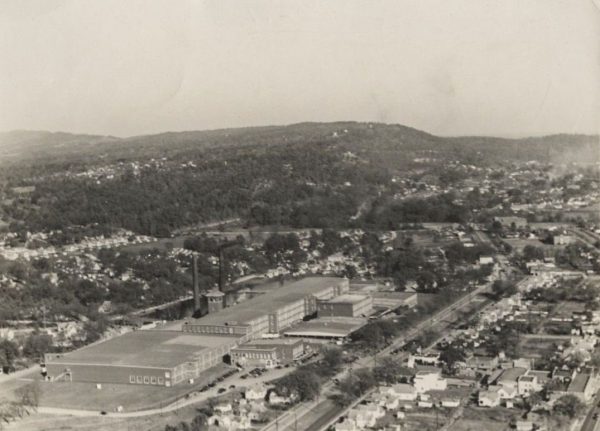
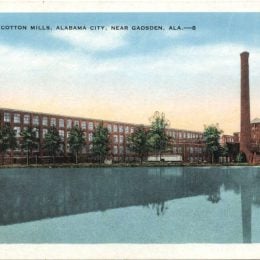
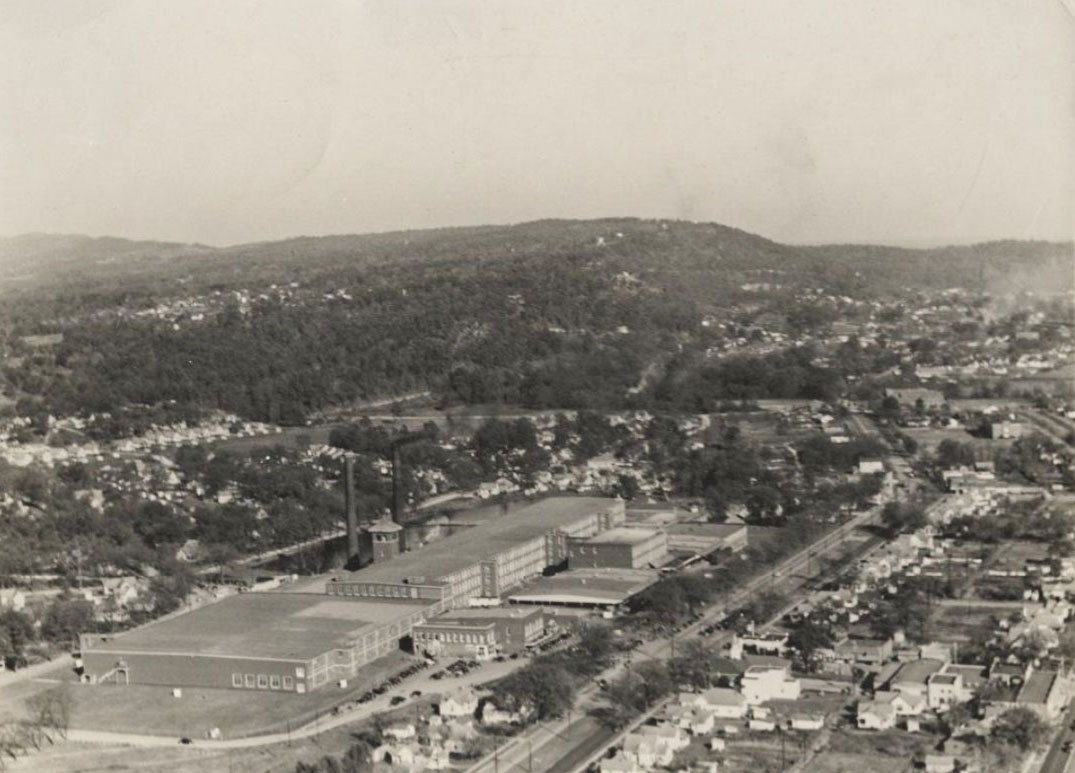
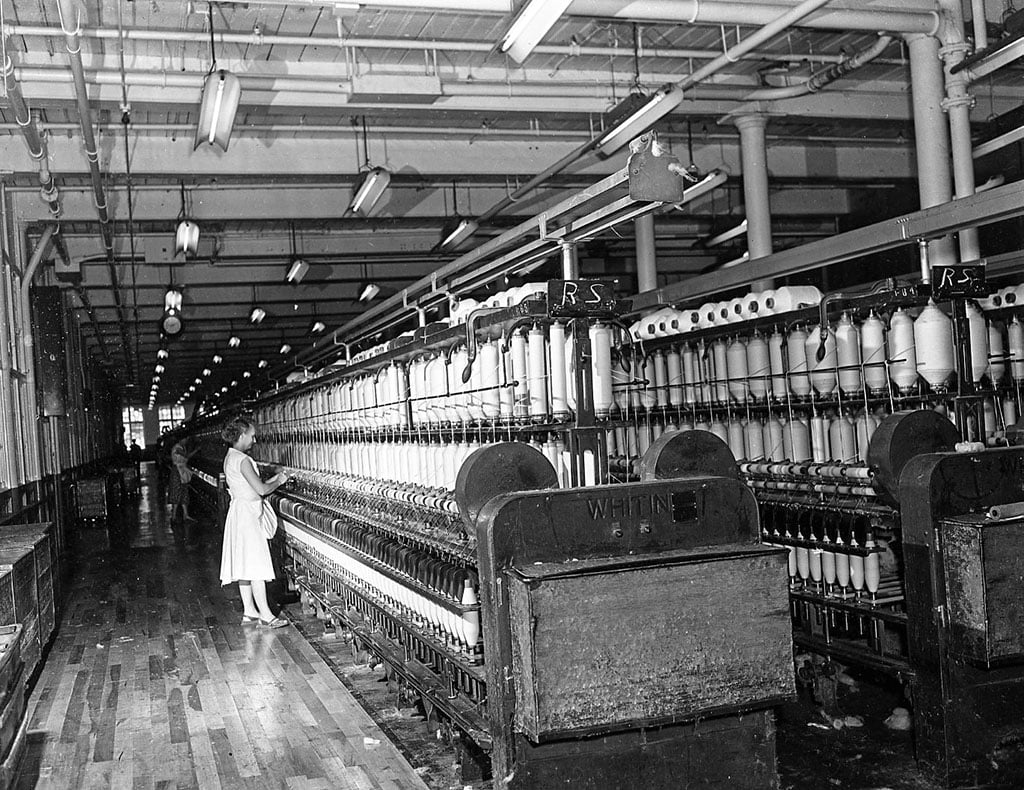
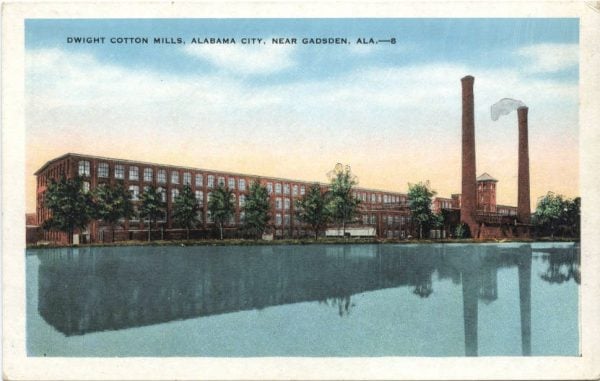
Established in Alabama City (now a neighborhood in Gadsden, Etowah County) in 1895, the Dwight Manufacturing Company was one of the largest textile mills in Alabama. At its height in the late 1930s, the company employed 2,600 workers to operate 86,000 spindles and 2,340 looms, producing upwards of 70 million yards of cloth annually. In its six decades of operation, Dwight Mill employed and housed thousands of mill workers who would leave their mark on the Alabama textile industry and union organizing in the state.
Like many textile mills of the South, Dwight Mill was a southern branch of a well-established mill in the Northeast. Dwight Manufacturing Company’s headquarters and officers were located in Boston, Massachusetts, with its original mills situated 90 miles west in the town of Chicopee. In 1894, John “J.” Howard Nichols, treasurer of Dwight Manufacturing Company, traveled to Etowah County to assess the area as a prospective investment for a new textile mill, allegedly at the prompting of local business leaders. After seeing success in other southern cities, particularly those in the Piedmont region and the Chattahoochee Valley, including the textile mills in Lanett, Chambers County, and in nearby West Point, Georgia, they sought to attract northern textile companies. Noting the large supply of coal and cotton and the abundance of cheap labor in central Etowah County, Nichols decided it was the ideal location to make the mass production of textiles a swift and highly profitable investment. Building a new textile mill required substantial funding, and Nichols hoped to attract financial support from the local business community.
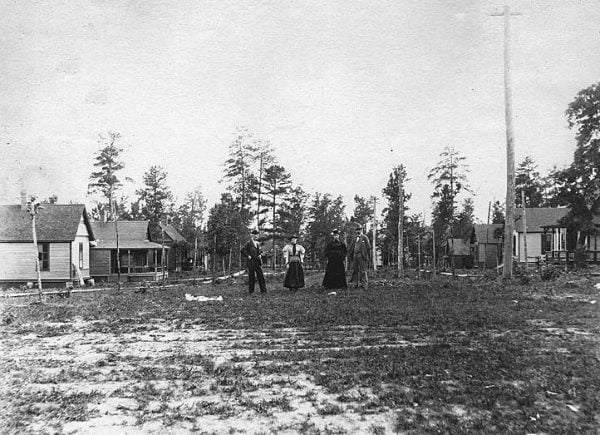
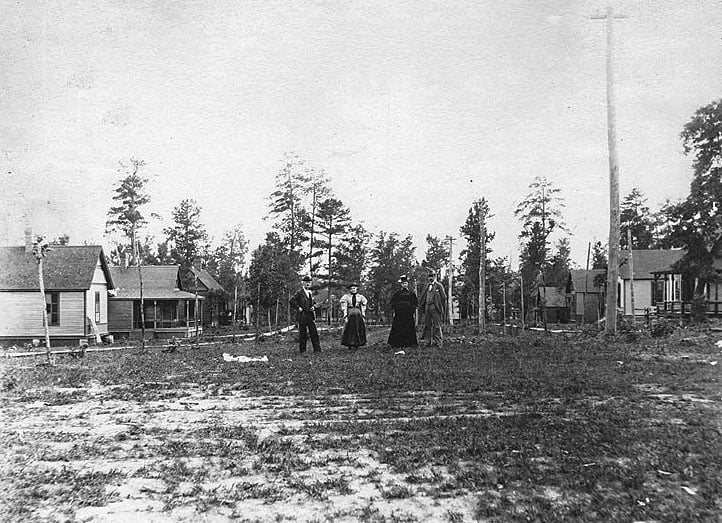
Planning for the new mill involved multiple meetings with local citizens and area businessmen to secure support and to decide on the exact location for the plant. Ultimately, the mill was constructed on the north side of present-day U.S. Highway 278/431 (West Meighan Road) and south of Lakefront Avenue, where a large commercial area and parking are now situated. Together, the mill and its surrounding village covered approximately 240 acres. Nichols enlisted the help of his son, Howard Gardner Nichols, known for his mastery of textile machinery and business knowledge, to assist with choosing a location, building the mill, and serving as its first superintendent. The original plans featured 160 New England style cottages for mill hands and their families, a school, recreation facilities, bath houses, lakes, and medical facilities. The village would also feature Alabama’s first public lending library. (Currently the home of the NorthEast Alabama Genealogical Society, the building is now known as the “Howard Gardner Nichols Memorial Library” in honor of the mill’s first superintendent. It was listed on the National Register of Historic Places in 1974.) The homes and company-provided amenities served to both attract a labor force and retain them by intentionally building company loyalty through investing in the mill village. This paternalistic company practice was a hallmark of textile mills across the country from the late nineteenth century well into the twentieth century.
Construction for the mill began in early 1895, with updates on its progress filling local newspapers. The mill created a ripple effect of economic activity and employment across the region. Gadsden’s Kyle Lumber Company reported that Dwight’s order of two million feet of lumber for the mill required them to expand their workforce to fill the request. In addition to the company houses, the company built a camp house to temporarily house workers until the cottages were completed. Recruited workers had long waits for permanent housing, however, and the cramped conditions in the camp house resulted in rampant disease and sickness across the property. Even after the originally planned 160 cottages were completed, plans to expand to 700 still resulted in insufficient housing during its early years. Construction for new housing continued and in early 1896, a reported 250 additional cottages were being built.
Despite these early challenges to house and keep workers healthy, the mill officially opened on December 25, 1895, and production began over the following few days. With 30,000 spindles and 800 employees, it became the largest in Alabama at this time. Regional newspapers reported on the impressive construction and the workers drawn from other textile mills to work at Dwight Mill. Tragedy struck the mill early on, however, when Howard Nichols died in late June 1896. Weeks prior, he had fallen from scaffolding in the plant, but after a few days, he seemed to be recovering from the injuries and was stable enough for transfer to Atlanta for medical care but succumbed to his injuries. He was buried in Massachusetts.
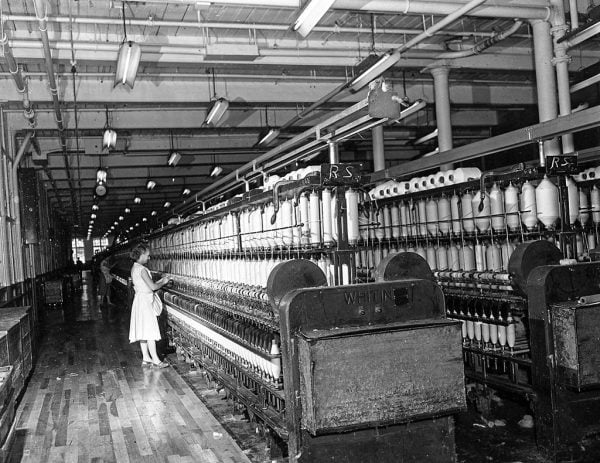
Despite this early loss, the company continued its expansion projects. By 1898, production at Dwight Mill increased further, with more spindles allowing for greater output. Management decided to build an additional three-story high building, cotton warehouse, cloth warehouse, boiler house, and engine rooms to supply power to new machinery. Early on, most of the cloth made in the Dwight Mill was considered to be a high-quality apparel cloth known as Cabot “A” and was in high demand from both national and international buyers. Eventually, Dwight produced a wider variety of twills and more durable fibers for waterproofing and even automotive purposes.
Life for mill workers was anything but easy. Hazardous working conditions, low pay, and long hours made injuries and poor overall health a regular part of life. Millhands during the early 1900s often spent 12 hours a day six days a week on their feet inside the loud, dirty mills. Men made around $100 to $140 a week, but women and children earned far less. Housing and any medical care expenses were deducted from these salaries. Many textile mills paid weekly salaries in company scrip, company-produced tokens that could only be spent within company stores for groceries and other necessities, often at inflated prices. Survival often meant entire families worked inside the mill to make ends meet. At a young age, children often left school to work at the mill in jobs that strained their still-developing bodies. Hearing loss, “brown lung disease” (byssinosis) from the inhalation of cotton dust, and limb amputations were among the many common injuries and medical conditions millhands experienced.

These harsh realities coupled with poor compensation made textile workers an easy target for labor federations, such as the American Federation of Labor (AFL) and the Congress of Industrial Organizations (CIO). Their industry-specific chapters, such as the Textile Workers Union of America (TWUA) which functioned in Alabama as the United Textile Workers of America (UTW) focused on expanding union membership and demanding companies sign union contracts. Dwight Manufacturing Company, like most textile mills, found itself on the front lines of labor organizing throughout the 1930s and 1940s, during which time the General Strike (1934) and Operation Dixie (1947) attempted to accelerate union progress across multiple industries. Union activity during these periods responded to the challenges of common textile mill cost-cutting tactics, such as shortened hours and “stretch outs,” in which management increased hours without providing additional pay.
The Great Depression exacerbated financial challenges and provided little opportunity for workers to leave or challenge these unfair labor practices. The company intentionally controlled the workers by making housing conditioned on their satisfactory work habits and behavior. Other common anti-union strategies included firing employees with known union membership, particularly those who recruited and were identified as “agitators.” This tactic was widely used by Dwight management throughout the 1934 strike and resulted in employees losing their jobs and company homes. On July 12, 1934, workers at Dwight Manufacturing Company walked off the job to protest failed promises of pay increases and the firing of five millhands for joining the union. Well-attended picket lines formed immediately at the mill gates, and production came completely to a halt. The estimated 1,500 workers on strike at Dwight were among the first of thousands of others across the state, including employees of the notoriously anti-union Avondale Mills in Birmingham, Jefferson County, and others in Guntersville and Albertville in Marshall County, and in Gadsden. Dwight workers also remained on strike despite the UTW calling off the strike weeks later. The mill only went back into operation following a court order by Judge John H. Disque Jr. against 60 millhands, effectively ending the strike.
On September 25, the mill reopened with one shift to start. Little was solved through this strike, and union activity continued throughout the decade. Numerous employees were fired following the return to business, prompting the union to file a complaint with the National Labor Relations Board (NLRB). The official investigation in March 1936 found that the company dominated the employee association and ordered an election to determine if union representation was desired by the majority of mill workers. Soon after, a contract was signed with CIO’s UTW. Under the contract’s terms, the UTW negotiated on behalf of the workers, making gains, including a 10 percent wage increase in February 1947.
Operation Dixie was another union effort to break the notoriously pro-labor South across the textile, steel, iron, and lumber industries, among others. The failures of the General Strike crippled unions for many years. In 1947, the passage of the Taft-Hartley Act further limited the power of unions by removing many of the protections enacted during the New Deal era, such as the NLRB and other rights to organize, strike, and collectively bargain for improved conditions without company interference. The Taft-Hartley Act established “right-to-work” laws that limited the power of unions to require membership for employees within a company operating under a union contract and prohibited nearly all strikes. Like many mills, Dwight Manufacturing Company employees struggled to strike at the levels of 1934 during this period and smaller strikes failed to garner change or much notice.
Despite union representation, the 1950s proved a tumultuous decade for Dwight Manufacturing Company. In 1950, early plans to sell the mill to Cone Mill Corporation of Greensboro, North Carolina, were first announced. After votes by directors and boards of both companies, the merger was finalized in 1951. This same year witnessed some of the most widespread and constant union activity. A six-week strike and picket line prevented railroad cars from entering Dwight with raw goods shipments or exiting with finished cloth. Another 59-day strike in May sought better wages and employee benefits. And in 1952, another complete shutdown came after 2,600 employees walked out for three days.
In March 1959, Dwight Manufacturing Company announced its closure, citing union activity and ongoing disputes as the reason for the company’s significant financial losses. The closure proved challenging for the community as substantial tax revenue and hundreds of jobs were lost. The final months were spent filling final orders. The mill’s 2,100 millhands workers all were notified that the mill would close its doors for the last time within the next few months.
Following many years of neglect, demolition plans for the old mill were put into action in 1978. The iconic smokestacks proved a formidable challenge and required multiple rounds of demolition with dynamite to finally bring them down. Dwight Manufacturing Company was fully demolished on September 18, 1980. There are several historical markers in the area noting Howard Nichols, the mill, and its village.
Additional Resources
- Martin, Charles H. “Southern Labor Relations in Transition: Gadsden, Alabama, 1930-1943.” The Journal of Southern History 47 (November 1981): 545-568.