Church of the Highlands
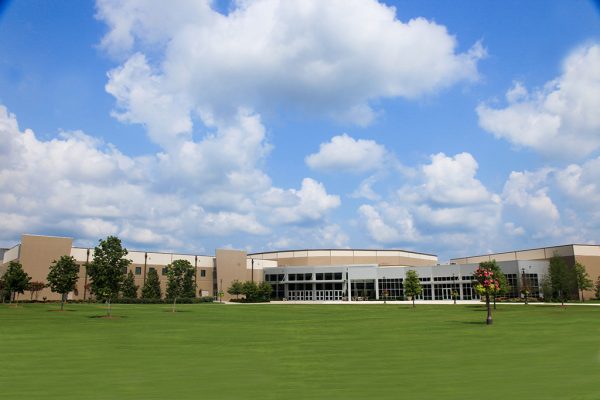
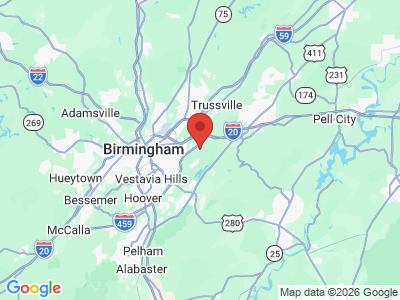
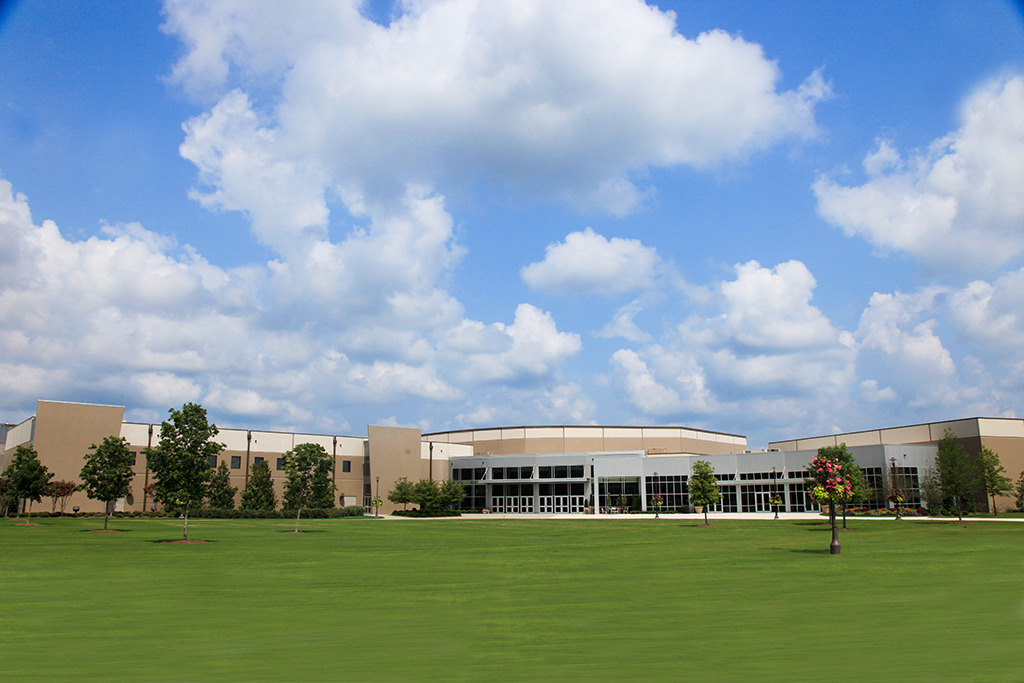
Church of the Highlands, a nondenominational evangelical megachurch consisting of numerous campuses, was founded in Mountain Brook, Jefferson County, in 2001. Within ten years it was the largest congregation in the state. As of 2026, the Church of the Highlands had 60,000 congregants across 26 campuses in Alabama and Georgia, making it the nation’s second largest megachurch (defined as a church with more than 2,000 regular attendees). As of 2026, the church had 23 satellite campuses throughout Alabama and two campuses in Georgia, in addition to its main campus, the Grants Mill campus in Irondale, Jefferson County. Sermons delivered by the lead pastor are livestreamed to satellite campuses each week.
Church of the Highlands was officially founded on February 4, 2001, by then 38-year-old pastor Chris Hodges and 34 other charter members. Following months of preparation and prayer, as well as a mass mailing campaign, 300 people convened for the Church’s first official service in the Fine Arts Center at Mountain Brook High School in the Birmingham suburb. Layne Schranz, an associate pastor, became the first full-time staff member, raising financial support to cover his salary. Church attendance hovered around 200 to 300 for months, but the September 11, 2001, terrorist attacks in New York City and at the Pentagon in Arlington, Virginia, sparked an increase in church attendance throughout the nation, including at Church of the Highlands, where the 1,000-seat high school auditorium was soon full. In 2005, Church of the Highlands purchased 125 acres of land in Irondale with cash. In 2007, construction of the building was completed.
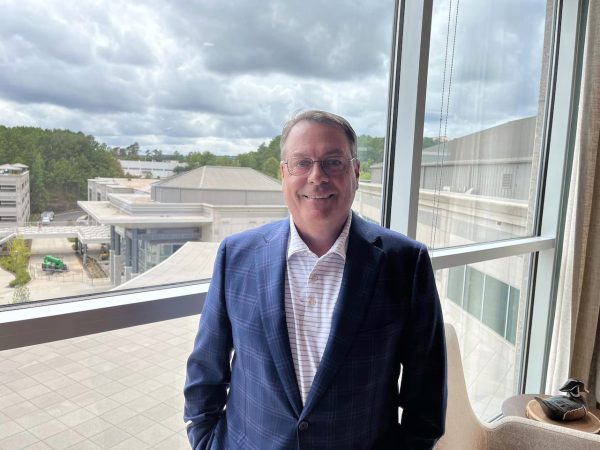
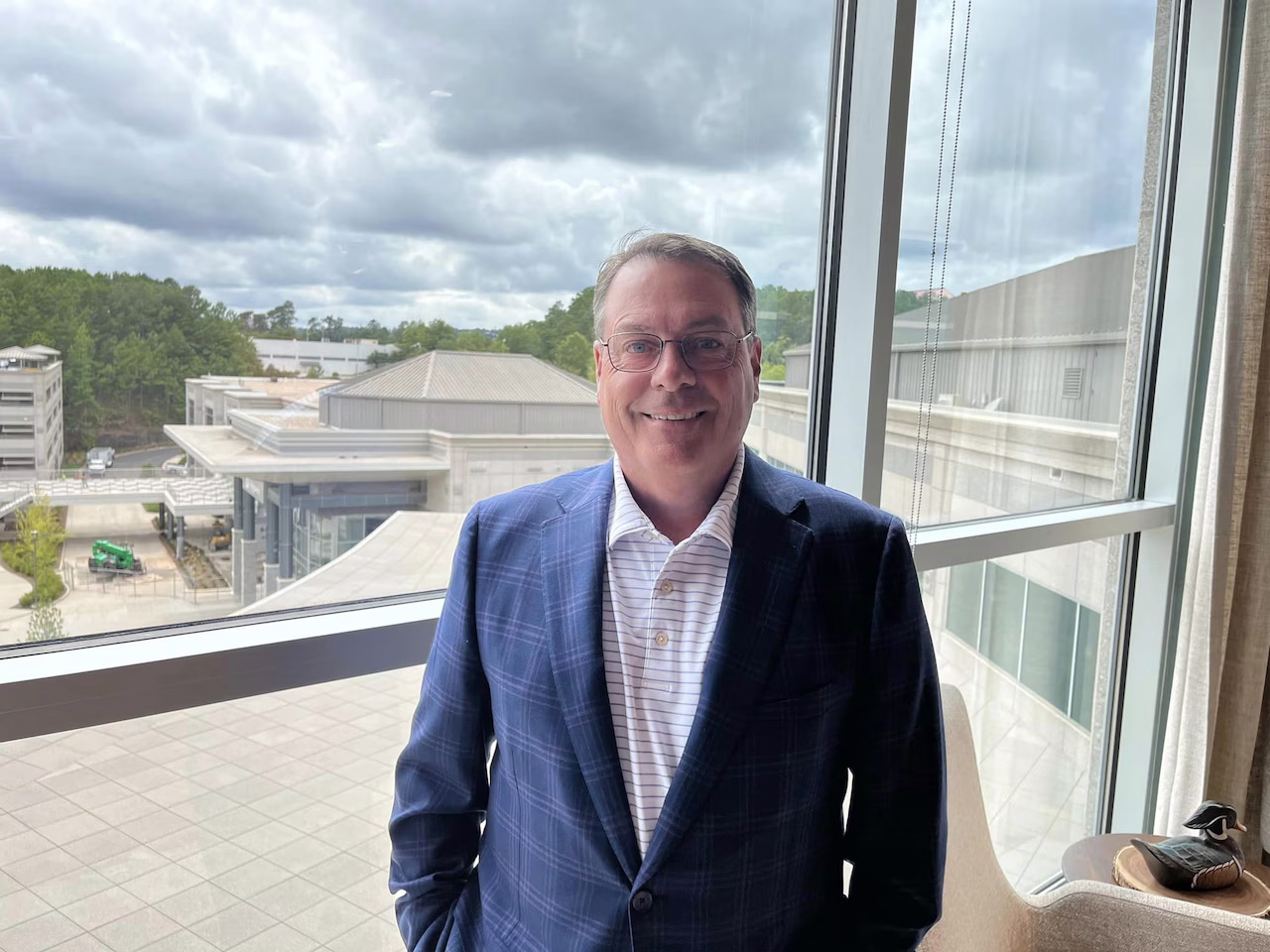
For 25 years, Chris Hodges not only served as Church of the Highlands’ founder, but its lead pastor and chief executive. Hodges was born on June 21, 1964, in Baton Rouge, Louisiana. He was raised in a Southern Baptist family but left the Southern Baptist Church and began attending and then working for Bethany World Prayer Center. The church’s Pentecostal theology and “cell-based” ministry (a model that relies on small groups for growth and care in large congregations) would influence Hodges as he began to plan Church of the Highlands. At Bethany World Prayer Center, Hodges became close friends with Rick Bezet, with whom he would co-found the Association of Related Churches (ARC), an organization offering a structure, network, and money for nondenominational evangelical church start-ups, in 2000. That same year, Hodges and his family relocated to Birmingham to establish one of the ARC’s first two churches; Bezet founded the other, New Life Church in Conway, Arkansas, on the same day.
Theologically, the Church of the Highlands aligns with most conservative evangelical tenets and practices, including belief in the infallibility of the Bible, the Trinity, salvation in Christ alone, water baptism for new believers, a Lord’s Supper of bread and grape juice, and a conservative definition of marriage. But Church of the Highlands also emphasizes more traditionally Pentecostal beliefs, such as an emphasis on the role of the Holy Spirit, spiritual gifts, and healing the sick. In a view that is commonly associated with the prosperity gospel, the church also asserts that spiritual, mental, physical, and financial success reflect God’s blessing. While these theological tenets certainly influence the church’s teaching, the church is noncreedal, and assent to these doctrines is not necessary for church participation.
Like many megachurches, Church of the Highlands emphasizes being welcoming, informal, and entertaining in its worship services. Music plays a large role in worship services, and each campus has its own team of musicians (typically including singers, guitarists, and drummers) who lead the congregation in contemporary-style worship music. Campuses also provide childcare and youth programming, college ministry, and small-group opportunities for prayer, Bible study, and other activities. Although individual campus pastors assume leadership for local services and organize campus congregants, the sermon is given by the lead pastor and live streamed from Grants Mill to each campus, which ensures a singular message across campuses and gives the lead pastor an almost celebrity status. Sermons usually consist of accessible messages that apply biblical concepts to practical life, with an emphasis on anecdote, humor, and emotional appeal. Small groups constitute the main source of community for congregations, which tend to be young, suburban, and notably interracial. Campus pastors and elders, as well as outside pastors known as overseers, are all male and mostly White.
Since its founding, the church has continued to add members and campuses. This exponential growth, typical of multi-site megachurches, and an emphasis on generous tithing (financial contributions to the church), have also led to significant revenue, which, in turn, has funded more growth and new campuses. New campuses are paid for up front, as was the case in 2024, when the Church paid $4.6 million for 27 acres for the campus in Daphne, Baldwin County. The church built its pastoral retreat center, The Lodge at Grants Mill, in Irondale in 2001.
Another area of emphasis for the church has been missions and community service. Church of the Highlands has had a decades-long presence in state prisons and other correctional facilities, where it hosts worship services and small groups. It also runs Dream Centers, which provide underserved communities with clothing and other goods, and holds regular “Serve Days” that mobilize church volunteers to meet local community needs.
In 2011, the Church established Highlands College, a ministry and leadership college. Mark Pettus, who joined Church of the Highlands as a University of Alabama at Birmingham student in 2001, became a youth pastor in 2006 and the college’s first president. Initially small and unaccredited, in 2016, Church of the Highlands bought the Grandview Building in Birmingham, which can accommodate up to 1,000 students on a 70-acre campus. In 2023, Highlands College was accredited by the Association of Biblical Higher Education Commission on Accreditation, and, in 2024, it received authorization from the state of Alabama to confer bachelor’s degrees. Highlands College has a School of Ministry, which offers bachelor’s degrees in family ministry, global ministry, pastoral ministry, and student ministry; a School of Worship, which offers a B.S. in worship ministry; a School of Media, which offers B.S. degrees in technical arts and visual arts; and, as of 2025, the Dunn School of Business, which offers a B.S. and a minor in business leadership. Students can also earn certificates in Christian leadership, ministry leadership, and biblical and theological studies.
The Church of the Highlands’ history has not been without controversy. Early on, much of this centered on its relationship with the city of Birmingham and its existing churches. Initially, Church of the Highlands developed a positive working relationship with the city, renting local high schools for Sunday gatherings, but the relationship soured in 2018 when Hodges announced his intent to reach out to Black neighborhoods, which he characterized as high crime and in need of spiritual help; his statements offended many Black pastors and elicited public criticism. Then, in 2020, at the height of the Black Lives Matter protests following the murder of George Floyd, Hodges faced scrutiny when he “liked” several of activist Charlie Kirk’s social media posts, including ones that criticized former Pres. Barack Obama and First Lady Michelle Obama and referred to COVID-19 as a “China Virus.” Although Hodges publicly apologized and expressed a commitment to opposing racism, the Birmingham Housing Authority terminated their partnership, as did the Birmingham Board of Education.
Other controversies stemmed not from the church’s politics, but from practices regarding pastoral leadership and allegations of enabling sexual abuse. After several instances of “restoring” fellow ARC pastors to ministry following sexual infidelity or other moral failings, Hodges formalized this process as a core part of Church of the Highland’s mission and the aim of the 4.5-million-dollar project, The Lodge at Grant Mills. There, many pastors have sought Church of the Highlands’ counsel and spiritual guidance after moral scandal or even formal allegations of wrongdoing, such as sexual harassment, abuse, and even rape. Many have successfully resumed pastoral responsibilities after a period of time, although some of the rehabilitations have not been successful, producing further allegations and opening the Lodge to criticism as enabling abusers.
In 2025, Hodges stepped down as lead pastor of Church of the Highlands, and Highlands College president Mike Pettus stepped into that role. Hodges then assumed the chancellorship of Highlands College and focused on his for-profit enterprise, GrowLeader, a consulting service for pastors and executives.
From its beginning in 2001, Church of the Highlands has expanded to become an influential part of religious life in Alabama. Church of the Highlands’ marketing, use of technology, contemporary worship, Pentecostal roots, interracial congregations, and public controversy reflect new shifts in Christianity in Alabama and throughout the nation.