Pete Carr
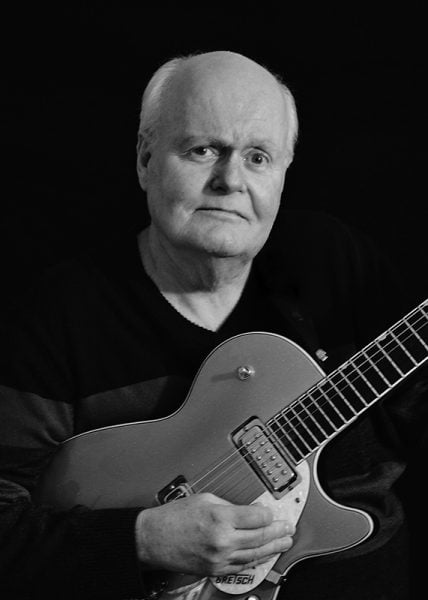
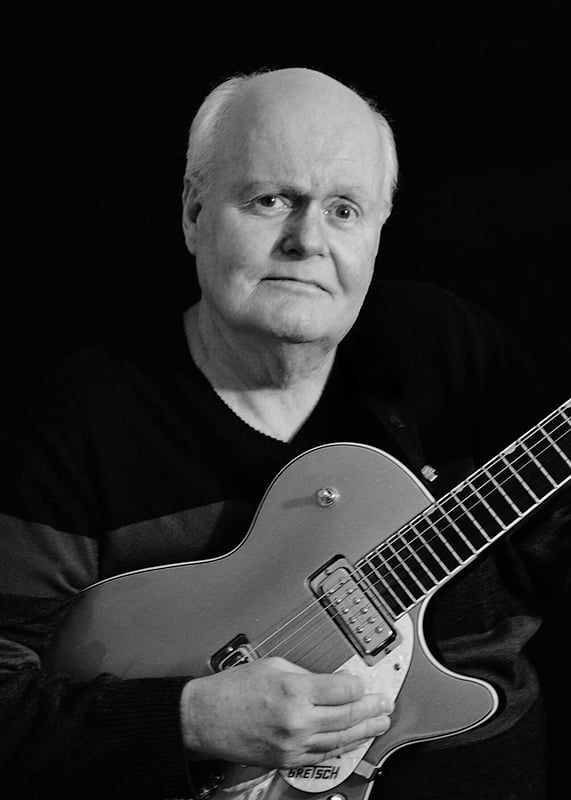
Jesse Willard (“Pete”) Carr Jr. (1950-2020) was a guitarist, record producer, and recording engineer who had a significant career as a session musician in the recording studios of Muscle Shoals and Sheffield, Colbert County. His 35-year career spanned from 1968 to 2003, during which time he worked with such acclaimed musicians as Paul Simon, Art Garfunkel, Luther Ingram, Bob Seger, Millie Jackson, Rod Stewart, Percy Sledge, Mel & Tim, The Staple Singers, and many others.
Carr was born on April 22, 1950, to Jesse Willard Carr Sr. and Pauline Brooks Carr in Daytona Beach, Florida; he had five siblings. He grew up in the burgeoning music scene of his hometown, quickly becoming associated with Scott Boyer’s The 31st of February and acquaintances Duane and Gregg Allman. In 1968 he joined the band Hour Glass, playing bass guitar on the album The Power of Love by the Daytona-based band fronted by Duane and Gregg Allman. Though recorded in Los Angeles for Liberty Records, the album and band maintained strong ties to Muscle Shoals, offering songs by Muscle Shoals songwriters Dan Penn and Eddie Hinton, but the band was constrained by producer Dallas Smith’s attempts to shape them into a psychedelic pop image. Hour Glass returned to Muscle Shoals in April 1968 and recorded a seven-minute B.B. King medley titled “Sweet Little Angel,” a paean to deep Delta blues; Liberty Records rejected the song, effectively ending the relationship with the band.
Duane Allman, who had been moonlighting at Florence Area Music Enterprises Recording Studio (better known as FAME Studios), then joined Johnny Sandlin’s team at Capricorn Records in Macon, Georgia. Carr, however, stayed on in Muscle Shoals and between mid-1968 and late-1971, honing his skills as a guitarist and record producer. During this brief period, Carr played with The Five Men-Its (5 Menits/Five Minutes) and recorded with Z.Z. Hill and Jerry (“Swamp Dog”) Williams. In late 1971, Carr produced and engineered a surprising hit record with the Decatur-based band Sailcat. Their 45-RPM single “Motorcycle Mama,” recorded at Widget Studio in Sheffield, charted at number 12 on Billboard’s Hot 100 in April 1972.
The chart success of the Sailcat recording caught the attention of Jimmy Johnson at Muscle Shoals Sound Studio (MSSS). Johnson invited Carr to join him and the MSSS house band, the Muscle Shoals Rhythm Section (MSRS), as lead guitarist, a propitious move since Carr’s captivating wah-wah guitar opening to Luther Ingram’s “(If Loving You Is Wrong) I Don’t Want to Be Right” catapulted the 45-RPM single to the top of Billboard’s R&B singles chart for four weeks and to number three on the Hot 100 chart. Carr’s contribution to the success of MSSS was indelibly confirmed when Ingram’s follow-up single “Always” reached number 11 on the R&B charts. In Memphis, Stax Records executive Al Bell engineered the “soul explosion” of the early 1970s, bringing in a host of Stax artists to Muscle Shoals. As a result, Carr notably played on two Stax albums backing the duo Mel & Tim. Produced by MSRS musicians Barry Beckett and Roger Hawkins in the spring of 1972, “Starting All Over Again” climbed the charts to number 19 on the Hot 100. And as Millie Jackson’s 1973 hit “It Hurts So Good” charted (number three on Billboard’s R&B chart) and found its way onto the soundtrack of the film Cleopatra Jones, Carr’s taste for soul guitar figures became an essential exponent of the studio’s hit-making potential for the rest of the decade.
In 1973, singer-songwriter Paul Simon came to Muscle Shoals to record the album There Goes Rhymin’ Simon. Carr and Simon collaborated closely on song arrangements. The result can be heard on the song “Kodachrome” which peaked at number two on Billboard’s Hot 100. Also on the album, “Take Me to the Mardi Gras” finds Carr exemplifying the concept he called “presentation,” a Carr signature, in which his guitar arrangement introduces the style and feel of a song, in this case a dramatic and expressive acoustic guitar flourish that prepares the gentle reggae groove he sets up with muted electric guitar patterns. Concurrently, soul singer Bobby Womack recorded the albums Facts of Life (1973) and Lookin’ for a Love Again (1974) at Muscle Shoals, both of which featured considerable input from Carr on guitar. Then, in 1974 Capricorn Records’ co-founder Phil Walden brought Sheffield singer Percy Sledge into MSSS to record the album I’ll Be Your Everything, on which Carr contributed “Make It Good and Make It Last,” co-written with Sailcat’s Court Pickett. The following year, Carr graced Rod Stewart’s spectacular Atlantic Crossing album, inventing the passionate solo on Stewart’s hit, “Sailing.”
Not to be outdone by his former partner Paul Simon, Art Garfunkel came to Muscle Shoals in 1975 to record the solo album Breakaway. Paul Simon joined him to record just one track, the hit song “My Little Town,” which reached number one on the Adult Contemporary chart in late 1975 and features Carr’s sensitive acoustic guitar accompaniment. Overall, the track is a veritable showcase of the MSRS as a totality. And almost simultaneously, Paul Simon recorded “Still Crazy After All These Years,” which peaked at number four on the Adult Contemporary chart in December 1975. Both songs were included on the Grammy Award-winning album Still Crazy After All These Years, which featured other members of the MSRS. All told, Carr’s work with Simon and Garfunkel helped reconcile the duo’s professional relationship, and he was then invited to appear with them at their Central Park concert in September 1981.
In 1976, Bob Seger recorded side two of his album Night Moves at MSSS, recordings which exemplify Carr’s signature opening hook on the tragic “Mainstreet,” a narrative of midwestern small-town life. Two years later, Seger returned to record the Stranger in Town album, on which Carr supplies supple acoustic rhythm guitar accompaniment. His signature dominates the “Till it Shines” track with two independent electric guitar themes that function as orchestral architecture, on top of which he solos magnificently. The coda is dominated by compressed motifs tying together the separate themes. In sum, this sequence of Carr’s career is definitive.
In the latter 1970s, producers Jerry Wexler and Barry Beckett brought The Staple Singers to MSSS to record “Unlock Your Mind,” a disco-insinuated gospel track, on which Carr’s reggae-tinged choked riff pattern carries the groove forward yet sits comfortably in the rhythm section. Reaching number 16 on the R&B chart, the single prompted Beckett and Wexler to invite Mavis Staples to return in 1979 for a solo outing on which she cut the single “Oh What a Feeling.” Carr plays triple duty with clean John Tropea-like slinky funk accompaniment, doubling the horns on the rapid ascending scales, and soloing in counterpoint with his rhythm guitar groove. Carr’s ability to invent complex guitar textures made his style definitive, such that he was contracted to record and produce two solo albums, Not A Word on It (1976) and Multiple Flash (1978), a highly regarded recording for collectors. In 1977, Carr teamed up with singer-songwriter Lenny LeBlanc and produced Midnight Light. Calling the studio band simply LeBlanc-Carr, the ensemble toured with and warmed up for Lynyrd Skynyrd on its Street Survivors tour. The tour was cut short on October 20, 1977, when the chartered plane carrying Lynyrd Skynyrd crashed, taking the lives of three band members, as well as the assistant road manager, pilot, and copilot, and injuring 20 other people.
Following the LeBlanc-Carr project, Carr deliberately scaled back his national recording career, choosing to work more selectively as a producer, engineer, and guitarist at Kingsnake Studios in Sanford, Florida. Although he continued to record and perform, his legacy rests primarily on the recordings he made at Muscle Shoals Sound Studio during the 1970s.
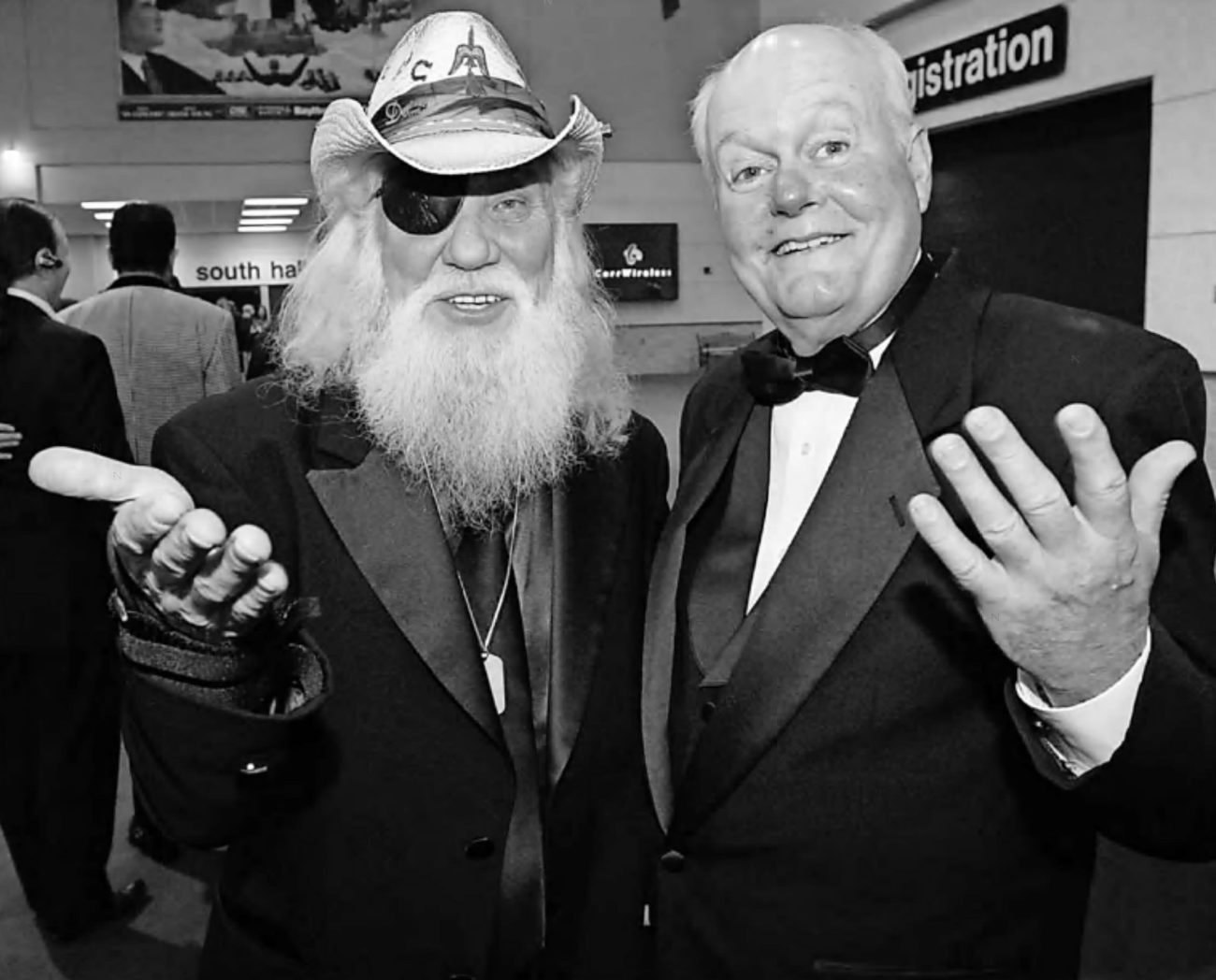
Carr died on June 27, 2020, in Florence. He was married to Charlotte Price Carr, with whom he had a son. Carr was inducted into the Alabama Music Hall of Fame (2023), the Florida Music Hall of Fame (2020), the Southern Rock Hall of Fame (2019), and the Musicians Hall of Fame (2008).