Brittany Howard
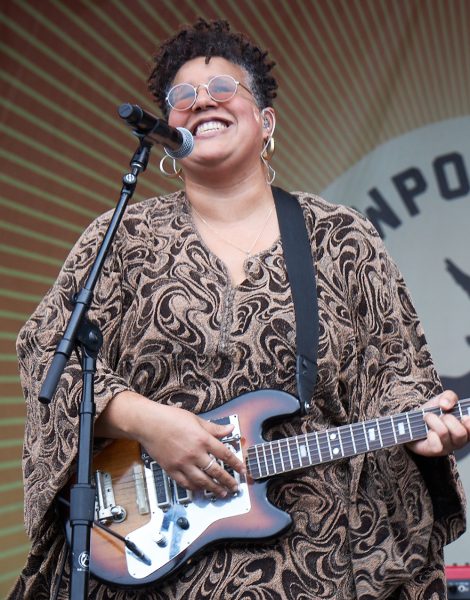
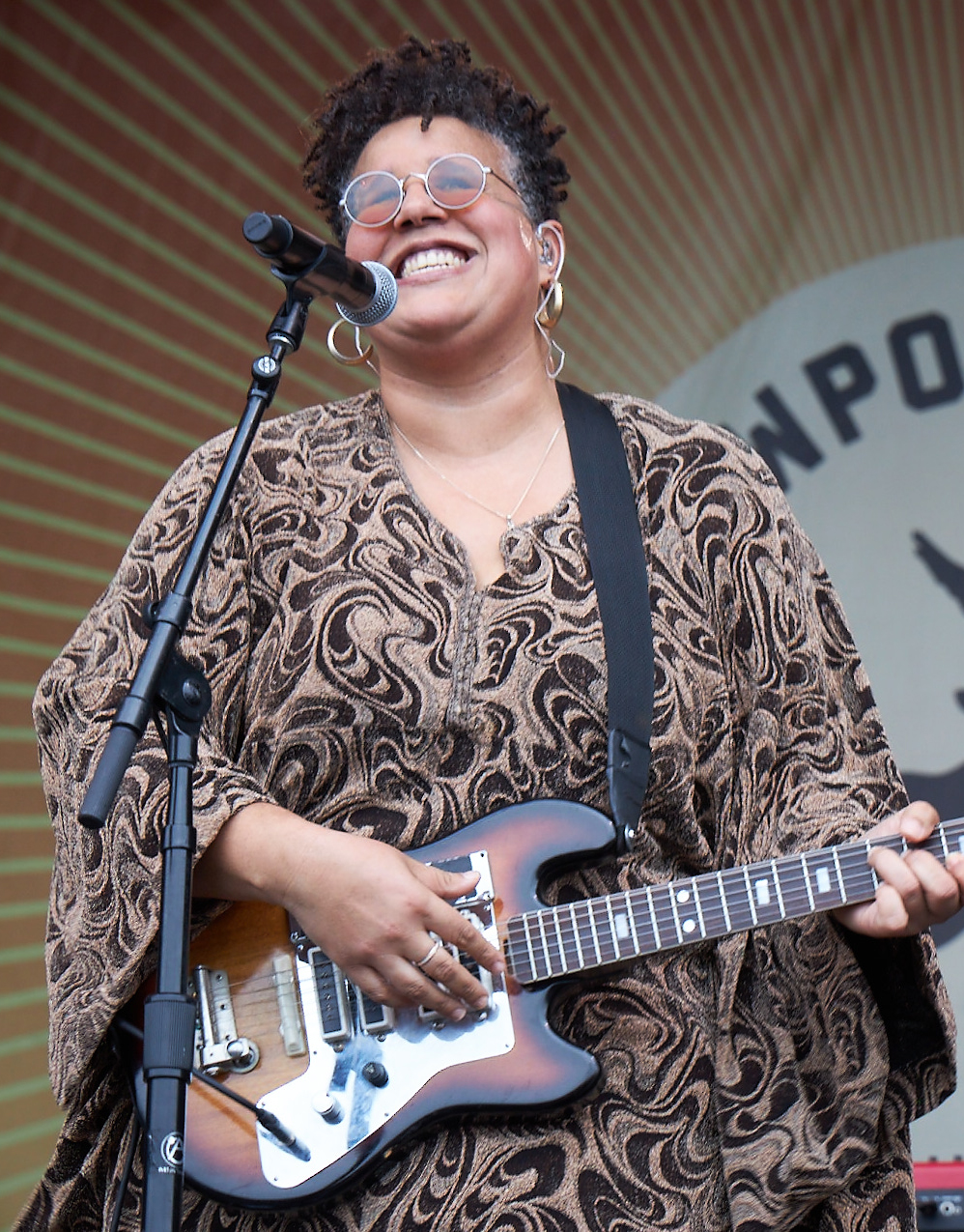
Grammy Award-winning Brittany Amber Howard (1988- ) is a nationally and internationally acclaimed American singer, songwriter, and musician from Athens, Limestone County. Best known as the lead singer, guitarist, and founding member of the Alabama Shakes, she also has been widely recognized for her solo career. Howard’s music, a complex and distinct combination of rock, blues, gospel, country, soul, and rhythm and blues, reflects the rich cultural landscape and social heritage of northern Alabama.
Howard was born on October 2, 1988, to K.J. Howard, who worked as a mechanic, and Christi Carter, who worked in a plant. Her father was Black and her mother was White. Howard’s experience growing up in a multiracial family informed her awareness and understanding of race, identity, and belonging, subjects she would later explore with complexity and candor in her songwriting. Her father’s deep appreciation of soul and rhythm and blues and her mother’s eclectic musical taste shaped her artistic voice as a songwriter. When Howard was around 11 years old, a fire destroyed her family’s home, compounding a childhood already marked by the serious illness and eventual death of her older sister, Jaime, who died of retinoblastoma, a rare form of eye cancer, at the age of 13. Howard has described her sister’s death as a defining experience and a profound source of inspiration for her musical career. Howard credits her sister with teaching her how to play the piano and write poetry. She later named her debut solo album, Jaime (2019), in her honor.
As a teenager, Howard developed as a musician, writing songs, teaching herself to play guitar, and playing the bass drum in her high school band. She attended East Limestone High School, where she met classmate Zac Cockrell; together they began to explore music. After graduating from high school in 2007, Howard joined Cockrell, Heath Fogg, and Steve Johnson to form The Shakes in 2009. The band developed a distinctive sound that blended southern rock, rhythm and blues, soul, and the musical traditions of nearby Muscle Shoals. Anchored by Howard’s powerful, emotionally expressive vocals, The Shakes signed with ATO Records and, after learning that several other bands were already using their name, became Alabama Shakes. While the addition of “Alabama” grew from practical necessity, the name fittingly reflected the band’s deep Alabama roots and the southern musical traditions that helped shape its sound. Howard’s commanding voice, enthusiastic guitar playing, and passionate and evocative songwriting quickly distinguished the group in the world of contemporary rock music.

Alabama Shakes released their debut album Boys & Girls in 2012, introducing a wider audience to the band’s distinctive blend of rock and soul, which drew from the musical traditions of Motown and nearby Muscle Shoals. The album peaked at number six on the Billboard 200, while the breakout single “Hold On” was named Rolling Stone’s 2012 Song of the Year and earned a 2013 Grammy nomination for Best Rock Performance. The band also received a Grammy nomination for Best New Artist. With their second album, Sound & Color (2015), Alabama Shakes incorporated elements of funk, psychedelia, and punk. The album debuted at number one on the Billboard 200 and earned four Grammy Awards in 2016: Best Alternative Music Album and Best Engineered Album, Non-Classical, along with Best Rock Performance and Best Rock Song for “Don’t Wanna Fight.” Sound & Color reflected the collective musicianship and creative work of Alabama Shakes, and its success further established Howard as a distinctive artistic voice for her generation. In 2026, the band released its third album, I Must Be Dreaming, after an 11-year hiatus.
In addition to her work with the Alabama Shakes, Howard has achieved success recording with other bands and as a solo artist. She explored a harder-edged rock sound as lead vocalist for the rock band Thunderbitch, which formed around 2012 and released its self-titled album in 2015. Howard later developed a musical collaboration with the group Bermuda Triangle, further demonstrating her versatile musical range. Her solo career expanded her creative scope. Jaime, her first solo album, explores family, personal history, and the political and racial dynamics of the American South. It received numerous honors recognizing Howard’s songwriting, musicianship, and vocal performance, including a 2021 Grammy Award for Best Rock Song, “Stay High.” Her second album, What Now (2024), further established her reputation as a solo artist and continued her exploration of themes of personal identity, reflection, and indignation.
As a guitarist, vocalist, and songwriter, Howard has received acclaim for her originality and technical artistry. Her talent reflects a rare combination of authenticity, musical precision, and experimentation. Critics have frequently noted her ability to move smoothly between heartfelt ballads and heavy rock and roll while maintaining her unique vocal style. Howard’s artistry draws from a vast array of influences. She has cited James Brown, Sister Rosetta Tharpe, Tina Turner, Prince, David Bowie, Curtis Mayfield, Pink Floyd, and Mavis Staples among those who helped to shape her musical prowess and imagination. Howard’s distinctive form of lyrical storytelling is rooted in both her southern heritage and her wide-ranging musical influences. In recognition of her contributions to Alabama’s cultural and creative landscape, she was named a 2024 Alabama Humanities Alliance (AHA) Fellow, the organization’s highest honor.
Although Howard enjoys a worldwide reputation, Alabama remains central to her musical identity. Her music reflects the complexities of growing up in a state shaped by a difficult racial history and evolving ideas about race, identity, and belonging. In “Goat Head,” from her 2019 solo album Jaime, Howard recounts an attack against her Black father because of his relationship with her White mother. Another dimension of Howard’s larger public exploration of identity includes her sexuality and personal relationships. Howard has spoken publicly about her identity as a lesbian. She married fellow musician Jesse Lafser in 2018, and the couple divorced in 2019. Overall, her work expands the state’s rich musical legacy while demonstrating that the stories, traditions, and cultural richness of north Alabama continue to shape some of America’s most compelling contemporary music.