Southern Museum of Flight
 Southern Museum of Flight
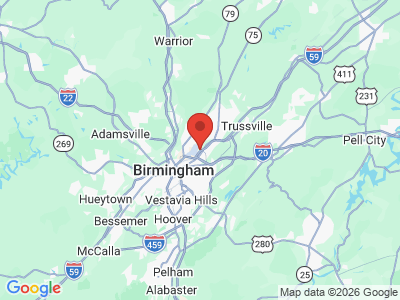
The Southern Museum of Flight, located in Birmingham, is the Southeast’s largest civilian aviation museum. It houses collections that include military, commercial, and experimental aircraft, memorabilia, and other flight-related artifacts. The museum operates as a public-private partnership, co-managed and co-funded by the city of Birmingham and the Southern Museum of Flight Foundation.
Southern Museum of Flight
The Southern Museum of Flight, located in Birmingham, is the Southeast’s largest civilian aviation museum. It houses collections that include military, commercial, and experimental aircraft, memorabilia, and other flight-related artifacts. The museum operates as a public-private partnership, co-managed and co-funded by the city of Birmingham and the Southern Museum of Flight Foundation.
Originally known as the Birmingham Museum of Aviation, the museum began with a collection of flight-related artifacts and memorabilia acquired by early Alabama aviator Mary Alice Beatty, wife of famed pilot, explorer, and inventor Donald Croom Beatty. In the 1960s, they established the first exhibits in six display cases at Samford University. The displays remained at Samford for three years, during which time Mary Alice Beatty served as the curator. In 1967, the displays were moved to the main lobby of the Birmingham Airport Motel, which stood at the location of the present short-term parking deck across from the old terminal at Birmingham-Shuttlesworth International Airport. The Birmingham Aero Club became interested in the project during those years and began a campaign to build a permanent museum.
In 1976, the Birmingham Aero Club bought land in Birmingham’s East Lake neighborhood near the airport, and construction began in 1978. Two of the planned four hangar wings opened in 1983, and soon thereafter the facility was donated to the city of Birmingham in exchange for an operating budget.
The museum currently features 75,000 square feet of display space in four hangars and houses the Alabama Aviation Hall of Fame; the Shadow Gallery, which features reproductions of selected artworks on display at the Central Intelligence Agency to commemorate missions that have been declassified (including the Bay of Pigs Invasion); the Aviation Workforce Initiative classroom and offices, a Federal Aviation Administration (FAA) Testing Center, and a Museum and Aircraft Restoration Facility. There is also a Little Pilots Playroom for young children and a gift shop. The museum frequently rents out space for special events.
 Wright Brothers Flyer Replica
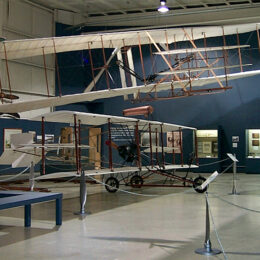
The museum’s collections celebrate some of the earliest events of aviation history in the South. One exhibit chronicles the brief life of the Wright Brothers Flying School, the first flight school in the United States located at what is now Maxwell Air Force Base outside of Montgomery. A full-sized replica of one of their planes, the 1903 Wright Flyer, is displayed in a diorama in the museum’s Early Aviation Hangar. Other significant artifacts in this exhibit include a piece of fabric from the original Wright plane, and a note from Orville’s niece, Ivonette Wright Miller, who flew with him. Close by the Wright exhibit is the Art and Design of Flight Exhibit, which chronicles the timeline of flight inventions and experiments beginning from the time of Leonardo da Vinci up to the time of the Wright Brothers.
Wright Brothers Flyer Replica
The museum’s collections celebrate some of the earliest events of aviation history in the South. One exhibit chronicles the brief life of the Wright Brothers Flying School, the first flight school in the United States located at what is now Maxwell Air Force Base outside of Montgomery. A full-sized replica of one of their planes, the 1903 Wright Flyer, is displayed in a diorama in the museum’s Early Aviation Hangar. Other significant artifacts in this exhibit include a piece of fabric from the original Wright plane, and a note from Orville’s niece, Ivonette Wright Miller, who flew with him. Close by the Wright exhibit is the Art and Design of Flight Exhibit, which chronicles the timeline of flight inventions and experiments beginning from the time of Leonardo da Vinci up to the time of the Wright Brothers.
Through World War II, Birmingham was the center of Deep South aviation. Displays record early air shows held at the Alabama State Fairgrounds from 1912 to 1924. Others focus on local World War I flying aces James Meissner and William Badham, the formation flying squadron of the Alabama National Guard, and “wing walker” Glenn Messer, a barnstormer, inventor, aircraft designer, and historian who donated much of his personal memorabilia to the museum.
 Huff Daland Crop Duster
The Early Aviation Hangar showcases several early airplanes, including an Alexander Eaglerock “Long Wing” once owned by Nellie Willhite, the first deaf pilot, a Huff Daland crop duster that was one of the first aircraft owned by today’s Delta Airlines, and a replica of a German Fokker D.VII used in the 1966 film The Blue Max. Displayed alongside these aircraft are several cars from the early twentieth century, including a 1903 Cadillac and a 1927 Ford Model T. The museum also features two large scale models of the aircraft carrier USS Enterprise (CV-6), complete with model aircraft, and the USS Birmingham (CL-62).
Huff Daland Crop Duster
The Early Aviation Hangar showcases several early airplanes, including an Alexander Eaglerock “Long Wing” once owned by Nellie Willhite, the first deaf pilot, a Huff Daland crop duster that was one of the first aircraft owned by today’s Delta Airlines, and a replica of a German Fokker D.VII used in the 1966 film The Blue Max. Displayed alongside these aircraft are several cars from the early twentieth century, including a 1903 Cadillac and a 1927 Ford Model T. The museum also features two large scale models of the aircraft carrier USS Enterprise (CV-6), complete with model aircraft, and the USS Birmingham (CL-62).
One of most storied aircraft in the museum’s collection is a Lockheed A-12 Cygnus, a spy plane that could fly at more than three times the speed of sound at over 80,000 feet. It is the centerpiece of the Memorial Airpark, which is located two blocks from the main museum building. The Airpark includes more than 30 military and commercial aircraft, such as an F-111 Aardvark, a TF-102 Delta Dagger, a T-37 Tweety Bird, an S-2 Tracker, an F-104 Starfighter, a CH-54B Skycrane helicopter, and a Soviet MiG-21. Overall, the museum displays more than 100 aircraft in the various indoor display areas, on the museum grounds, and at the outdoor Memorial Airpark. Also on display is a large collection of rare aircraft engines throughout the first-floor hangars.
 Aviation Hall of Fame
The South Wing Hangar centers on an extensive Tuskegee Airmen exhibit that features videos, rare photos and objects, three training airplanes, and the last remaining North American B-25 Mitchell flown by the Airmen. The South Hangar also includes a B-25 bomber that was recovered from Lake Murray, South Carolina, where it crashed during training maneuvers in 1943; a Korean War diorama built around an F-86 Sabre jet fighter and a Soviet MiG-15; a Vietnam diorama featuring a hunter-killer helicopter team; a rare D-21 pilotless reconnaissance aircraft; a Soviet Mi-24 Hind helicopter; an extensive collection of general aviation aircraft; and a large piece of the Berlin Wall.
Aviation Hall of Fame
The South Wing Hangar centers on an extensive Tuskegee Airmen exhibit that features videos, rare photos and objects, three training airplanes, and the last remaining North American B-25 Mitchell flown by the Airmen. The South Hangar also includes a B-25 bomber that was recovered from Lake Murray, South Carolina, where it crashed during training maneuvers in 1943; a Korean War diorama built around an F-86 Sabre jet fighter and a Soviet MiG-15; a Vietnam diorama featuring a hunter-killer helicopter team; a rare D-21 pilotless reconnaissance aircraft; a Soviet Mi-24 Hind helicopter; an extensive collection of general aviation aircraft; and a large piece of the Berlin Wall.
The museum is home to the Alabama Aviation Hall of Fame, which features plaques honoring the accomplishments of Alabama’s pioneers of aviation. Inductees include inventors, teachers, corporate executives, astronauts, and war heroes, including Medal of Honor recipients William Robert Lawley Jr. and David McCampbell.

In 2023, the Southern Museum of Flight partnered with the Aviation College at Snead State Community College to launch the Aviation Workforce Initiative program. The program is an innovative educational curriculum that trains students to repair and maintain aircraft and work towards earning FAA certification in airframe and power plant maintenance. The program caters to three different populations who want to pursue careers in the aviation industry: high school students via dual-enrollment courses, traditional post-secondary students, and members of the U.S. Armed Forces who need credentials for the civilian labor force as they transition out of the military.
Additional Resources
- Dodd, Don. "Birmingham Aviation: From Fairgrounds Airshows to the Southern Museum of Flight." Alabama Review 57 (January 2004): 44-61.
- Dodd, Don, and Amy Dodd. Deep South Aviation. Charleston, S.C.: Arcadia, 1999.