Mildred Westervelt Warner Transportation Museum
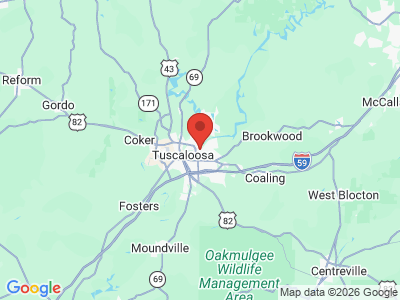
The Mildred Westervelt Warner Transportation Museum operated in Tuscaloosa, Tuscaloosa County, from 2011 to 2024, when the building was named the new headquarters for the Kentuck Art Center. The property is former home of the historic Queen City Pool and Pool House on the banks of the Black Warrior River. It was operated by the University of Alabama Museums.
 Mildred Westervelt Warner Transportation Museum
The building in which the museum is located was the pool house for Tuscaloosa's first community pool. It was constructed in 1943 through the efforts of Herbert David and Mildred Westervelt Warner, whose son David died at age 15 in a swimming pool accident. (Mildred Westervelt Warner was inducted to the Alabama Women's Hall of Fame in 1984 for her work as president of her father's Tuscaloosa-based Gulf States Paper Corporation from 1938 until 1957.) The park in which it was constructed was created in 1932, during the Great Depression, with support from the Civil Works Administration relief program and the pool complex through the Works Progress Administration and its contribution of $100,000. The Warner family raised an additional $25,000 through the foundation created in their son's memory.
Mildred Westervelt Warner Transportation Museum
The building in which the museum is located was the pool house for Tuscaloosa's first community pool. It was constructed in 1943 through the efforts of Herbert David and Mildred Westervelt Warner, whose son David died at age 15 in a swimming pool accident. (Mildred Westervelt Warner was inducted to the Alabama Women's Hall of Fame in 1984 for her work as president of her father's Tuscaloosa-based Gulf States Paper Corporation from 1938 until 1957.) The park in which it was constructed was created in 1932, during the Great Depression, with support from the Civil Works Administration relief program and the pool complex through the Works Progress Administration and its contribution of $100,000. The Warner family raised an additional $25,000 through the foundation created in their son's memory.
 Native American Canoe
Known as the Queen City Pool and Pool House, the complex was designed by architect Don Buel Schuyler, an apprentice to Frank Lloyd Wright. (Schuyler designed many buildings in Tuscaloosa as well as Bellingrath Gardens and Home in Mobile County.) The complex featured a concrete Art Moderne bathhouse, wading pool, and Art Deco fountain. The original pool house was circular with two small rectangular sections on either side. On the north and south sides, it featured two clerestories, or raised sections of the upper walls that contain numerous windows. The interior was lined with tile and had showers for 15 men and 11 women.
Native American Canoe
Known as the Queen City Pool and Pool House, the complex was designed by architect Don Buel Schuyler, an apprentice to Frank Lloyd Wright. (Schuyler designed many buildings in Tuscaloosa as well as Bellingrath Gardens and Home in Mobile County.) The complex featured a concrete Art Moderne bathhouse, wading pool, and Art Deco fountain. The original pool house was circular with two small rectangular sections on either side. On the north and south sides, it featured two clerestories, or raised sections of the upper walls that contain numerous windows. The interior was lined with tile and had showers for 15 men and 11 women.
The pool, measuring 168 feet by 60 feet, was closed in 1989 because of safety issues and was filled with concrete. The building remained vacant for several years. Because of its architectural and historical significance, the site was added to the National Register of Historic Places in 1992. It was not until 2005 that plans to convert the bathhouse into a local history museum were executed, however. The city was awarded a $1.04 million grant from the Federal Highway Administration's Transportation Enhancement Program to establish a museum that emphasized the history of transportation in Tuscaloosa. The renovation project was designed by the Eclectic Group, Inc. of Huntsville, Madison County, and also Ward Scott Veron Architects of Tuscaloosa. The Mildred Westervelt Warner Transportation Museum officially opened on December 13, 2011.
 1909 Maxwell Runabout
Exhibits in the museum focused on the region's geology, various modes of transportation, and the history of the Black Warrior River. The museum exhibits traced the city's history through the development of its transportation systems, particularly rivers, roads, and rail lines, and featured artifacts, replicas, photographs, interactive media displays, and other digital media.
1909 Maxwell Runabout
Exhibits in the museum focused on the region's geology, various modes of transportation, and the history of the Black Warrior River. The museum exhibits traced the city's history through the development of its transportation systems, particularly rivers, roads, and rail lines, and featured artifacts, replicas, photographs, interactive media displays, and other digital media.
The museum was operated and maintained by the University of Alabama Museums, which also oversees the Gorgas House Museum, the Alabama Museum of Natural History, and Moundville Archeological Park. One of the first exhibits displayed at the transportation museum was titled Courage Under Fire: The 1961 Burning of the Freedom Riders' Bus. It was a collection of photos documenting the event. Other exhibits included Lost Antebellum Alabama, Lost and Found Treasures of Alabama, the South, and the United States, and Requiem for Steam: The Railroad Photographs of David Plowder.