Alabama State Council on the Arts
The Alabama State Council on the Arts (ASCA) is the state's official arts agency. The organization works to enrich and preserve the cultural heritage of the state and acts as the primary grant-making organization for a range of artistic endeavors, including folk art, theatre, and literature. ASCA manages and distributes state and federal funding for projects by Alabama-based arts organizations, educational institutions, municipal entities, and individuals.

The Alabama State Council on the Arts was given initial operating status through a 1966 executive order by Gov. George C. Wallace and was formally established by a legislative act the following year. The primary purpose of the council is reflected in its mission statement. It aims to "enhance the quality of life and economic vitality for all Alabamians by providing support for the state's diverse and rich artistic resources." In addition, the council receives and disburses federal funds from the National Endowment for the Arts (NEA) as part of a federal-state partnership aimed at providing grant support to nonprofit arts and arts-programming organizations, schools, and artists.
ASCA came into existence during a national movement to promote artistic achievement that also saw the creation of the NEA in Washington, D.C., in 1965. Part of the NEA's mission was to provide a percentage of its budget to each state with an administering agency. The law also stipulated that participating states had to match the funds, at least dollar for dollar. Within a few years of ASCA's creation, every U.S. state and territory had established an arts agency to receive NEA grants. Alabama and other states gradually increased appropriations, and by the mid-1970s, state arts agencies were providing substantial funding for the arts in the United States. Between 1968 and 1978, for example, ASCA's budget increased from $50,000 to $300,000. The financial commitment from Alabama's legislature has continued to grow, and for fiscal year 2027, the agency's budget reached $9.1 million.
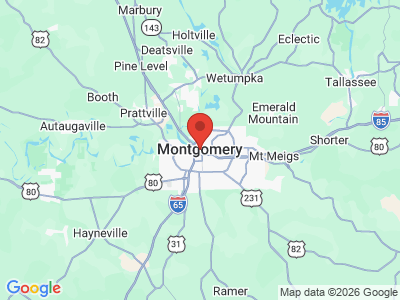
As an independent state agency, ASCA is governed by established state administrative policies but is also overseen by a 15-member council appointed by the governor. The council, similar to a board of directors, assigns grant funds and approves programs; adopts long-range plans that establish agency goals and objectives; hires the executive director; and formulates bylaws that provide an operational structure for a unique state function. The agency is located in Montgomery and has 17 full-time staff positions responsible for administering programs and providing services to grantees. Grant programs and services include the performing, visual, and literary arts and encompass arts education, folk arts, and community arts development, as well as assistance to underserved communities, arts facilities, and individual artists.

The bulk of ASCA's annual budget comes from an annual appropriation from Alabama’s Education Trust Fund, which provides funding to schools, state universities, and agencies with a strong education function. The remainder is derived from a partnership grant awarded annually by the NEA and contributions from a tax check-off program, which offers taxpayers the option to donate to the Arts Development Fund when they fill out their state of Alabama income tax returns. In turn, ASCA typically awards grants that range between $500 and $150,000 and support a broad range of arts organizations, community arts activities, arts education projects, and the work of individual artists. In 2025, the council awarded 570 grants, totaling more than $8 million, to more than 350 different nonprofit organizations, educational institutions, municipalities, and arts programming groups. Grants have ranged from operating support for the Alabama Ballet and facility construction support for the Kelly Fitzpatrick Center for the Arts, to programming support for the Monroeville Literary Festival and the Kentuck Arts Festival. Since its inception in 1967, ASCA has awarded nearly 20,000 grants totaling $135 million.
Over the course of its history, the council has forged numerous partnerships with statewide arts-service organizations with mutual goals, including Alabama Writers’ Forum, the Alabama Arts Alliance, DesignAlabama, the Alabama Dance Council, Amp Up Arts, and the Alabama Folklife Association. Such partnerships expand the agency's ability to address needs and accomplish major objectives without overburdening its resources and staff. Programs sponsored by the partnerships include the Alabama Arts Summit, the Philip A. Morris Mayors Design Summit, Writing Our Stories (a creative writing program for justice-involved students), a traditional artist-in-residence program at Auburn University, and the Alabama Dance Festival.
In 1992, ASCA began producing A State Blueprint for Supporting the Arts in Alabama, a strategic planning document that describes directions in the agency's funding philosophy, mission, goals, and strategies for nurturing Alabama's cultural resources. The report includes an assessment of needs, issues, conditions, and priorities relative to public policy and financial assistance and serves as a guide for grants, program development, and start-up initiatives.

ASCA's ongoing long-range planning includes a variety of special projects aimed at addressing particular needs in areas such as arts education, health and well-being, professional development for artists and arts organizations, outreach to underserved communities, cultural tourism, the preservation of folk traditions, and the cultivation of strong arts advocacy partnerships.
Thus, the council has adopted a proactive strategy to address areas of local need with limited resources and to target goals for statewide growth. Such initiatives include the creation of the Alabama Center for Traditional Culture, the Bill Bates Leadership Institute for arts administrators, annual shape note singing events at Old Alabama Town and the Alabama Department of Archives and History, the Georgine Clarke Alabama Artists Gallery, the All Across Alabama student exhibition program, the biennial Celebration of Alabama Arts, and the Arts Fell on Alabama podcast and radio series. Looking ahead, ASCA has identified arts and health as areas of need, as evidence has increasingly shown that arts programming and cultural engagement provide direct benefits across a range of key health concerns.
Public funding for arts is a high-return investment and is proven to build the capacity of arts organizations to meet local needs, engage audiences with arts experiences, nurture working artists, and preserve living cultural heritage. Support for the arts in Alabama has grown at every level, which suggests that public officials, business executives, and community leaders have been influenced by the principles advocated by the strategic planning document and ASCA's commitment to enhancing the quality of life and economic vitality for all Alabamians.