Nat "King" Cole
 Nat "King" Cole
 (1919-1965) was a leading figure in American popular music in the 1940s and 1950s. A jazz pianist, composer, and singer, he was widely beloved for his smooth, silky voice. He was the first African American artist to host his own television program and fought for civil rights in a determined but understated manner. He remains one of Alabama's most famous sons. Cole was inducted into the Alabama Music Hall of Fame in 1985 and the Rock & Roll Hall of Fame in 2000.
Nat "King" Cole
Nat "King" Cole (1919-1965) was a leading figure in American popular music in the 1940s and 1950s. A jazz pianist, composer, and singer, he was widely beloved for his smooth, silky voice. He was the first African American artist to host his own television program and fought for civil rights in a determined but understated manner. He remains one of Alabama's most famous sons. Cole was inducted into the Alabama Music Hall of Fame in 1985 and the Rock & Roll Hall of Fame in 2000.
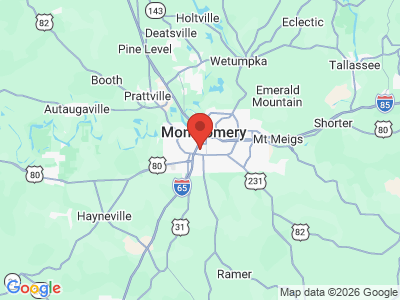
Nathaniel Adams Coles was born on March 17, 1919, in Montgomery. His parents were Edward James Coles, a minister at Beulah Baptist church, and Perlina Adams Coles, who sang in the choir. Cole had four siblings, all of whom had musical talent. Hoping to seek opportunities and escape the extreme racial discrimination in the Deep South, Coles moved his family to Chicago, Illinois, in 1923 as part of the Great Migration of southern Blacks to the Midwest and East.
 Nat "King" and Maria Cole
Chicago was a lively center for jazz, the first truly American form of popular music, and young Nat was captivated by the genre. The great trumpeter Louis Armstrong was a neighbor, and the young Nat heard pianists Earl "Fatha" Hines, Art Tatum, and Teddy Wilson at nearby clubs. He was also influenced by music in his father's church. Like many others in the Great Depression, Coles did not finish high school, but his mother taught him piano. By age 17, he was writing songs and playing jazz piano in his older brother's group, Eddie Cole's Solid Swingsters, and making his first recordings with Decca Records. When the group joined the touring show "Shuffle Along" in 1937, Cole, who now had dropped the "s" from his name, met and married, against his parents' wishes, a dancer named Nadine Robinson. The newlyweds settled in Los Angeles, where Cole met guitarist Oscar Moore and bassist Wesley Prince and formed the Nat Cole Trio.
Nat "King" and Maria Cole
Chicago was a lively center for jazz, the first truly American form of popular music, and young Nat was captivated by the genre. The great trumpeter Louis Armstrong was a neighbor, and the young Nat heard pianists Earl "Fatha" Hines, Art Tatum, and Teddy Wilson at nearby clubs. He was also influenced by music in his father's church. Like many others in the Great Depression, Coles did not finish high school, but his mother taught him piano. By age 17, he was writing songs and playing jazz piano in his older brother's group, Eddie Cole's Solid Swingsters, and making his first recordings with Decca Records. When the group joined the touring show "Shuffle Along" in 1937, Cole, who now had dropped the "s" from his name, met and married, against his parents' wishes, a dancer named Nadine Robinson. The newlyweds settled in Los Angeles, where Cole met guitarist Oscar Moore and bassist Wesley Prince and formed the Nat Cole Trio.
The group played without drums to highlight Cole's elegant improvisational style on the piano and was much admired in jazz circles. It was at this time that Cole earned the affectionate nickname "King," which was both honorary and a reference to the Mother Goose rhyme incorporated into one of their novelty tunes. From its inception, the trio played steadily in Hollywood and in 1939 appeared in New York on a bill with the legendary Billie Holiday. For the next two years, the trio performed in Los Angeles, New York City, Chicago, Washington, D.C., and other eastern cities. For variety, Nat began singing as well as playing piano. In June 1942, the group became the house band at the 331 Club in Los Angeles. This brought increasing fame and wages and opportunities to record with such greats as saxophonist Lester Young, his drummer brother Lee, and bassists Red Callender and Johnnie Miller. Success on the jazz labels, however, did not bring in enough money or exposure to support three ambitious musicians and their families.
 St. Louis Blues
Cole's big break came in 1943 with the song "Straighten Up and Fly Right." A departure from the usual pop fare, the song's lyrics describe a monkey on the back of a treacherous buzzard, from a fable that Cole said he heard from his preacher father. America was in the midst of World War II, weighed down with racial strife, and "getting the monkey off your back" proved to be an appealing image with the public. With that tune, the King Cole Trio suddenly had a hit on the pop charts (rather than the limited jazz market), a new and capable manager named Carlos Gastel, and a contract with Capitol Records. At age 25, Cole had "crossed over" to popular appeal and big money. This period also marked the beginning of Cole's film career, and he would appear in a number of Hollywood films, typically playing a musician.
St. Louis Blues
Cole's big break came in 1943 with the song "Straighten Up and Fly Right." A departure from the usual pop fare, the song's lyrics describe a monkey on the back of a treacherous buzzard, from a fable that Cole said he heard from his preacher father. America was in the midst of World War II, weighed down with racial strife, and "getting the monkey off your back" proved to be an appealing image with the public. With that tune, the King Cole Trio suddenly had a hit on the pop charts (rather than the limited jazz market), a new and capable manager named Carlos Gastel, and a contract with Capitol Records. At age 25, Cole had "crossed over" to popular appeal and big money. This period also marked the beginning of Cole's film career, and he would appear in a number of Hollywood films, typically playing a musician.
 Nat "King" Cole and W. C. Handy
Radio had much to do with Cole's success. Capitol marketed him as a singer of love ballads, an excellent match for his velvety, sweet voice and restrained personality. By 1946, Cole had emerged as a soloist rather than ensemble member and had two songs topping the pop charts: Mel Torme's "The Christmas Song" ("Chestnuts Roasting on an Open Fire") at the number three position and "I Love You for Sentimental Reasons" at number one. That same year, he entered the Billboard charts with "Route 66." These hits were followed by the surprise success of the mystical ballad "Nature Boy" in 1948, a series of bebop-influenced recordings including Billy Strayhorn's "Lush Life" in 1949, and the smash hits "Mona Lisa" in 1950 and "Too Young" in 1951. In 1952, Cole reached the number 12 spot in Billboard with "Unforgettable," which has become one of his best-known songs. The King Cole Trio became a mere accompaniment for Cole's songs and disbanded in 1955.
Nat "King" Cole and W. C. Handy
Radio had much to do with Cole's success. Capitol marketed him as a singer of love ballads, an excellent match for his velvety, sweet voice and restrained personality. By 1946, Cole had emerged as a soloist rather than ensemble member and had two songs topping the pop charts: Mel Torme's "The Christmas Song" ("Chestnuts Roasting on an Open Fire") at the number three position and "I Love You for Sentimental Reasons" at number one. That same year, he entered the Billboard charts with "Route 66." These hits were followed by the surprise success of the mystical ballad "Nature Boy" in 1948, a series of bebop-influenced recordings including Billy Strayhorn's "Lush Life" in 1949, and the smash hits "Mona Lisa" in 1950 and "Too Young" in 1951. In 1952, Cole reached the number 12 spot in Billboard with "Unforgettable," which has become one of his best-known songs. The King Cole Trio became a mere accompaniment for Cole's songs and disbanded in 1955.
This era also brought personal change. On the road in 1946, Cole fell in love with singer Maria Ellington, leading to divorce and a second marriage in 1948. The couple bought a house in the all-white Hancock Park neighborhood in Los Angeles, prompting strong protests from white neighbors and questionable investigations by tax authorities. They settled in, however, adopting Maria's niece Carol after the death of her parents and later welcomed daughter Natalie, son Nat Kelly Cole, and twin girls Timolin and Casey.
 North Alabama Citizens Council Defendants
Success continued through the 1950s, with international tours and a renewed interest in jazz, specifically the 1956 "After Midnight" sessions, in which Cole made it clear he could perform vocal improvisations and not just popular crooning. This same year, he endured a national controversy resulting from a visit to his native state of Alabama. His group was to participate in the first racially mixed performance in Birmingham, with White and Black musicians on the same stage. Several white men decrying the "Negro music" stormed the stage and knocked Cole down. He was forgiving of the incident, prompting criticism from the Black community, but was soon widely praised for his dignity. Cole clearly supported the civil rights movement, as he brought many lawsuits against hotels in Pennsylvania and Illinois for denying rooms to himself and his musicians on the basis of race. Cole was criticized by civil rights leaders, however, for continuing to play in segregated venues, a practice he defended by arguing that he had a responsibility to perform for his fans, no matter their color.
North Alabama Citizens Council Defendants
Success continued through the 1950s, with international tours and a renewed interest in jazz, specifically the 1956 "After Midnight" sessions, in which Cole made it clear he could perform vocal improvisations and not just popular crooning. This same year, he endured a national controversy resulting from a visit to his native state of Alabama. His group was to participate in the first racially mixed performance in Birmingham, with White and Black musicians on the same stage. Several white men decrying the "Negro music" stormed the stage and knocked Cole down. He was forgiving of the incident, prompting criticism from the Black community, but was soon widely praised for his dignity. Cole clearly supported the civil rights movement, as he brought many lawsuits against hotels in Pennsylvania and Illinois for denying rooms to himself and his musicians on the basis of race. Cole was criticized by civil rights leaders, however, for continuing to play in segregated venues, a practice he defended by arguing that he had a responsibility to perform for his fans, no matter their color.
 Nat "King" Cole Birthplace
Perhaps Cole's most visible contribution to change was the television variety show he hosted on the National Broadcasting Company network from 1956 to 1957. No other African American had appeared in such a visible role. Although critically acclaimed, the program was cancelled after 30 shows for lack of a sponsor. In 1958, Cole played fellow Alabamian and jazz legend W. C. Handy in St. Louis Blues, a film based on Handy's life. He earned a Grammy Award in 1959 for the song "Midnight Flyer." In the early 1960s, Cole mounted a Broadway show based on his concept album Wild Is Love. It was unsuccessful and drained Cole's finances, and in 1964, after a lifetime of heavy smoking, he fell ill with lung cancer. Cole died on February 15, 1965, in Los Angeles and was buried at the city's Forest Lawn Memorial Park. Natalie Cole went on to a successful career as a musician, and twins Timolin and Casey Cole run the Nat King Cole Generation Hope charitable foundation in Boca Raton, Florida, which provides instructional materials, technical assistance, and funding for music education. In November 2000, Cole's childhood home was moved to the campus of Alabama State University in Montgomery and placed next to the former home of civil rights leader Ralph Abernathy. In 2019, a play about Cole's television show, Lights Out: Nat "King" Cole," was performed in Los Angeles.
Nat "King" Cole Birthplace
Perhaps Cole's most visible contribution to change was the television variety show he hosted on the National Broadcasting Company network from 1956 to 1957. No other African American had appeared in such a visible role. Although critically acclaimed, the program was cancelled after 30 shows for lack of a sponsor. In 1958, Cole played fellow Alabamian and jazz legend W. C. Handy in St. Louis Blues, a film based on Handy's life. He earned a Grammy Award in 1959 for the song "Midnight Flyer." In the early 1960s, Cole mounted a Broadway show based on his concept album Wild Is Love. It was unsuccessful and drained Cole's finances, and in 1964, after a lifetime of heavy smoking, he fell ill with lung cancer. Cole died on February 15, 1965, in Los Angeles and was buried at the city's Forest Lawn Memorial Park. Natalie Cole went on to a successful career as a musician, and twins Timolin and Casey Cole run the Nat King Cole Generation Hope charitable foundation in Boca Raton, Florida, which provides instructional materials, technical assistance, and funding for music education. In November 2000, Cole's childhood home was moved to the campus of Alabama State University in Montgomery and placed next to the former home of civil rights leader Ralph Abernathy. In 2019, a play about Cole's television show, Lights Out: Nat "King" Cole," was performed in Los Angeles.
Additional Resources
- Epstein, Daniel Mark. Nat King Cole. New York: Farrar, Straus and Giroux, 1999.
- Hunt, Ian A, et al. American Masters: The World of Nat King Cole. DVD. Arlington, Va.: Public Broadcasting Service, 2006.