Arthur P. Bagby (1837-41)
 Arthur P. Bagby
 (1794-1858) was Alabama's governor from 1837-41. A lawyer and powerful state legislator, Bagby became governor during a time of serious financial crisis in the state and faced strong opposition to his efforts at financial reform from the state's entrenched banking interests. A staunch supporter of Pres. Andrew Jackson, Bagby oversaw the forced removal of Native Americans in the state, in accordance with federal mandates. After his term as governor, Bagby served as a U.S. senator and ambassador to Russia.
Arthur P. Bagby
Arthur P. Bagby (1794-1858) was Alabama's governor from 1837-41. A lawyer and powerful state legislator, Bagby became governor during a time of serious financial crisis in the state and faced strong opposition to his efforts at financial reform from the state's entrenched banking interests. A staunch supporter of Pres. Andrew Jackson, Bagby oversaw the forced removal of Native Americans in the state, in accordance with federal mandates. After his term as governor, Bagby served as a U.S. senator and ambassador to Russia.
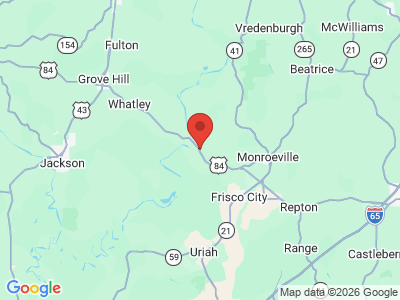
Arthur Pendleton Bagby was born in 1794 in Louisa County, Virginia, to James M. and Mary Jones Bagby. The family remained in Virginia through Bagby's educational years, but financial problems ultimately caused his family to migrate to Claiborne, Monroe County, in the Alabama Territory. Here the future governor read law, opened a legal practice in 1819, and married Emily Steel.
In 1821, Bagby was elected to represent Monroe County in the state House of Representatives. After his reelection in 1822, he was named Speaker of the House at the exceptionally young age of 28. Over the next 15 years, he served in both the state House and the Senate and was elected to several terms as President of the Senate. In the early 1820s, Bagby was a National Republican who supported Pres. John Quincy Adams. His loyalties soon changed, and by the end of the decade, he became a committed Jacksonian Democrat, advocating expanding the power of the state and expanding the political power of poor whites. In the Nullification Crisis of the late 1820s and early 1830s, Bagby supported Pres. Andrew Jackson's position that federal law trumped state law and openly opposed a bill committing Alabama to support an expanded national bank. Bagby married Anne Elizabeth Connell of South Carolina, in 1828, with whom he had at least five children. One son, Arthur P. Bagby Jr., became a Confederate general.
 Arthur P. Bagby Jr.
In 1837, Bagby ran for governor on the Democratic ticket. A gifted orator, he defeated former speaker of the house Samuel W. Oliver, who ran as an independent opposing the Whigs. Bagby's immense popularity led to a decisive reelection victory in 1839 over a weak Whig opponent. When Bagby took office, he inherited serious economic problems resulting from the depression of 1837 and its intertwined effect on the banking system in Alabama. Private banks were reeling from charges of mismanagement and corruption from all quarters. Additionally, banking executives and pro-bank legislators kept information about the state's financial institutions from Bagby, as they had from the previous administration. In his first year as governor, Bagby naively assumed the legislature would act seriously on his cautious and conservative agenda, and he failed to press actively for his program among the lawmakers. Bagby may not have understood fully the complex economic issues, and in pursuing his anti-bank program, as his predecessors, made far-reaching mistakes. During this period, he also oversaw the removal of Native Americans from Alabama.
Arthur P. Bagby Jr.
In 1837, Bagby ran for governor on the Democratic ticket. A gifted orator, he defeated former speaker of the house Samuel W. Oliver, who ran as an independent opposing the Whigs. Bagby's immense popularity led to a decisive reelection victory in 1839 over a weak Whig opponent. When Bagby took office, he inherited serious economic problems resulting from the depression of 1837 and its intertwined effect on the banking system in Alabama. Private banks were reeling from charges of mismanagement and corruption from all quarters. Additionally, banking executives and pro-bank legislators kept information about the state's financial institutions from Bagby, as they had from the previous administration. In his first year as governor, Bagby naively assumed the legislature would act seriously on his cautious and conservative agenda, and he failed to press actively for his program among the lawmakers. Bagby may not have understood fully the complex economic issues, and in pursuing his anti-bank program, as his predecessors, made far-reaching mistakes. During this period, he also oversaw the removal of Native Americans from Alabama.
His first major crisis came in 1838, when the state bank proposed a plan to advance funds to planters in return for profit shares from the sale of their cotton harvest in Europe. Whigs and most big planters favored the approach, but Bagby opposed it. In addition, he tried to limit the sale of state bonds to provide capital for the banks' continued operations, but the state legislature ignored his recommendations and approved a new $2.5 million issue. When Alabama cotton found only a small market in Europe, the state was plunged deeper into debt.
Political maneuvering kept Bagby from making much headway with the crisis, and the token steps made by the legislature toward controlling the banks did little to give the state government more control over them. As one result, in 1840 the Merchants Bank of New York submitted a shocking financial report stating that Alabama owed $11.5 million on state bonds with no apparent way of paying. The state could barely keep up with the annual interest on these bonds, which was more than $600,000, and suffered under a debilitating debt that remained a political issue for years.
 William Lowndes Yancey Portrait
Economics were not Bagby's only woes. An ambitious and loyal Democrat, Bagby was faced with increased Whig power after their presidential candidate William Henry Harrison was elected in 1840 and Democrats in Alabama won their narrowest majority even in the legislature. In an effort to limit Whig power, Bagby signed the General Ticket Bill, originally proposed by state senator William Lowndes Yancey, which provided for the election of congressmen on the basis of each party's overall returns rather than congressional district votes. Whigs, who controlled three of the state's five congressional districts, understandably fought the bill, asserting that it was unconstitutional and "an unrighteous attempt at disfranchisement." The General Ticket Bill was enacted in January 1841, but Whig outrage forced the legislature to include a rider that required a popular referendum on the bill in August. The new system resulted in five Democrats being sent to the U.S. Congress in 1841, but the victory was short lived. The public voted in the August referendum to restore the district system, and in November 1841 the legislature repealed the general ticket legislation. Bagby, ever the faithful Democrat, continued to support the failed system, devoting half of his last annual message before the legislature to its defense.
William Lowndes Yancey Portrait
Economics were not Bagby's only woes. An ambitious and loyal Democrat, Bagby was faced with increased Whig power after their presidential candidate William Henry Harrison was elected in 1840 and Democrats in Alabama won their narrowest majority even in the legislature. In an effort to limit Whig power, Bagby signed the General Ticket Bill, originally proposed by state senator William Lowndes Yancey, which provided for the election of congressmen on the basis of each party's overall returns rather than congressional district votes. Whigs, who controlled three of the state's five congressional districts, understandably fought the bill, asserting that it was unconstitutional and "an unrighteous attempt at disfranchisement." The General Ticket Bill was enacted in January 1841, but Whig outrage forced the legislature to include a rider that required a popular referendum on the bill in August. The new system resulted in five Democrats being sent to the U.S. Congress in 1841, but the victory was short lived. The public voted in the August referendum to restore the district system, and in November 1841 the legislature repealed the general ticket legislation. Bagby, ever the faithful Democrat, continued to support the failed system, devoting half of his last annual message before the legislature to its defense.
Bagby's other notable accomplishments, for good or ill, were the completion of Indian removal as well as the mustering of state troops to help fight the Seminole War in Florida. He also introduced a chancery court and created a commission to finalize the boundary between Alabama and Georgia. In 1839, the legislature finally authorized construction of a penitentiary, which opened in Wetumpka in 1841. Imprisonment for debt was abolished except in the case of fraud, and the penitentiary system abolished branding and whipping.
Bagby was strongly pro-slavery, and his annual message to the legislature in November 1840 foretold the typically patronizing position of many in the later antebellum period. He compared the condition of slaves to that of free laborers in other regions and made the assertion that slave laborers enjoyed more of the necessities of life than their free counterparts in the north and that the lives of slaves would deteriorate if they were emancipated.
After completing his second term as governor, Bagby was selected to fill the vacancy in the U.S. Senate created by the resignation of Clement Comer Clay, and in 1842 the legislature elected him to a full term. As a senator, Bagby supported the expansion of the U.S. frontier, the annexation of Texas, and the extension of slavery to the territories. In 1848, Pres. James K. Polk appointed him minister to Russia, a position he resigned from after Whig candidate Zachary Taylor was elected president later that year. Bagby's last public activity was to serve on a committee to codify the laws of Alabama.
After retiring from public life, Bagby lived in Wilcox County for a few years and then moved to Mobile, where his financial problems continued, caused by a habit of living on borrowed money. At his death from yellow fever in the fall of September 21, 1858, he owed the Alabama bank at Mobile more than $3,000, and he had no property to cover his debt.
Additional Resources
- Bagby, Arthur P. Administrative Files. Alabama Department of Archives and History, Montgomery.
- Brantley, William H. Banking in Alabama, 1816-1860. 2 vols. Birmingham: Birmingham Printing Co., 1961.
- Garrett, William. Reminiscences of Public Men in Alabama for Thirty Years. Atlanta: Plantation Publishing, 1872.